The standard: ‘met’ or ‘not met’
Ofsted’s school inspection toolkit, which with its operating guide replaced the school inspection handbook from 10 November 2025 and was reissued for use from September 2026, treats safeguarding as an evaluation area with a binary grade. The area “considers whether the school establishes an open and positive safeguarding culture that puts pupils’ interests first” and whether “leaders and those responsible for governance … take an effective, whole-school approach to safeguarding”; the same standard applies to a school’s early years and key stage 1 provision, where inspectors “will adapt their language when talking about safeguarding and online safety to reflect the pupils’ ages”. “The safeguarding standards have been developed from the requirements of ‘Keeping children safe in education’ and ‘Working together to safeguard children’”, and safeguarding is ‘met’ when all the following apply, among them: “Leaders and those responsible for governance have established an open culture in which safeguarding is everyone’s responsibility”; “Leaders actively try to learn from safeguarding cases and incidents and take any action needed”; “Pupils are kept safe and feel safe. Their voices are heard”; “All staff are vigilant and carry out their responsibilities effectively to keep pupils safe. Staff understand the signs of possible safeguarding concerns. They respond by following the school’s systems confidently and consistently”; and, the line that names the records, “Leaders know and fulfil the statutory requirements for safeguarding. These include managing safer recruitment, reporting, referrals, record-keeping and the ‘Prevent’ duty.”
“Not met” is “likely” when any of a list applies. The list includes “serious and/or widespread failures in safeguarding”, leaders who “are not open to challenge and/or do not learn from issues or incidents”, a school that cannot say where pupils who are not on site are or “demonstrate that they have taken steps to safeguard them”, leaders who “do not fulfil their responsibilities in relation to safer recruitment, reporting, referrals, record-keeping and the ‘Prevent’ duty”, and leaders who “do not handle safeguarding allegations against adults in line with requirements” or “do not fulfil their duty to refer allegations or concerns to the appropriate authority”. A ‘not met’ grade, on its own, places the school in a category of concern. The ‘met’ column ends with the concession that matters on the day: “Where appropriate, leaders have resolved any minor safeguarding issues identified during the inspection or are taking steps to resolve them.”
Two things follow for evidence. The standard is about leaders’ knowledge and action as much as about documents, so the documents are read for what they show leaders knew and did. And record-keeping is named in both columns: it is a statutory requirement leaders must “fulfil” for ‘met’, and a failure to fulfil it is a ‘not met’ trigger in its own right.
The clock: the call, the letter, 8am, day one
The inspection information for state-funded schools sets the sequence. For a full Ofsted inspection “the lead inspector usually contacts the school by telephone between 9.30 and 10am on a Monday morning” (a Tuesday after a bank holiday or in the first week after a long holiday), and the example it gives is that the inspection “can take place as early as the following Tuesday (and we would notify the school on the Monday)”. Ofsted encourages the headteacher to have “at least one other senior leader with them” on the calls. The school then receives a letter by email that “sets out the information that will need to be available at the start of the inspection”, together with links to the staff, pupil and parent surveys and instructions for the portal, where documents can be uploaded in advance. Full inspections “normally last 2 days”.
On site, the operating guide for inspectors is direct about the order of business. “The lead inspector must look at the single central record (SCR) and any other records relating to disqualification under the Childcare Act 2006 as soon as possible at the start of the inspection.” In all inspections the lead inspector must “review the SCR early on day 1” and “meet the designated safeguarding lead and review a sample of casework on day 1 (typically, you should do this personally rather than delegating to a member of the inspection team)”. An inspector must also “meet briefly with a group of staff selected at random to discuss safeguarding”, and “when asking pupils questions about safeguarding, do this without another adult present”. In an academy the lead inspector meets the chief executive and the chair of trustees on “governance oversight and arrangements for areas such as safeguarding”.
Two rules at the end of the process matter for how the evidence is read. Minor problems do not fail a school: inspectors “may identify minor improvements that the school needs to make to its safeguarding practices, such as correcting small administrative errors in paperwork or updating policies”, and can still grade safeguarding ‘met’ if leaders “have taken the necessary steps to resolve the issues – for example, where training has been booked but will not take place for a number of weeks”. Larger ones can pause it: where “more significant safeguarding improvements are needed, and leaders cannot make them before the end of the on-site inspection”, the inspection “can be suspended” if inspectors believe “leaders are capable of resolving the safeguarding issues within 3 months, and there are no significant risks to children”.
What must be ready by 8am on day one
The letter’s document list is published in advance in the inspection information. “Schools must make the following information available to inspectors by 8am on the first day of the inspection”, and the safeguarding items, “with secure access”, are:
- “the single central record and any other records regarding disqualification under the Childcare Act 2006”
- “any records relating to Disclosure and Barring Service (DBS) and other safeguarding checks for volunteers who engage in regulated activity with pupils”
- “a list of any referrals made to the designated safeguarding lead in the school and any that were subsequently referred to the local authority, along with brief details of the resolution (a very short summary of how the school dealt with the matter and assurance that pupils have received the appropriate help)”
- “any referrals made to the local authority designated officer regarding staff or other adults”
- “a list of all pupils who have open cases with children’s services or social care and all pupils who have a multi-agency plan”, with the note that “inspectors may speak with some of these pupils as part of their inspection activity to make sure the school is doing what is required by the Keeping children safe in education guidance”
Alongside those sit records that are not headed safeguarding and are read as it: “records and analysis about behaviour and attendance” including “any pupils taken off roll, including the reasons why”, suspensions and exclusions, “any bullying, harassment, or directly or indirectly discriminatory or prejudiced behaviour”, “any sexual harassment and/or sexual violence”, “any restrictive physical intervention”, information about alternative provision and pupils directed off site, and the inclusion lists for case sampling. Under strategic documents come the minutes of the governing body or trust board. “A school may choose to share a safeguarding audit with inspectors, but this is not a requirement.”
The same page says what is not wanted, and it is worth quoting to the colleague who wants to build a folder overnight: “We do not want schools to do any additional work or to ask pupils to do work specifically for the inspection”, and schools “do not need to provide” “any information beyond what we ask for” or “information in any specific format (as long as it is easily accessible for inspectors)”. The list is what Ofsted expects to see, and nothing else. The test is whether each item exists on the Monday afternoon in a form the designated safeguarding lead (DSL) can hand over by 8am, which is a question about the school’s ordinary records of concerns and checks, not about preparing for inspection.
What “evidence” means once the documents are open
The toolkit’s section headed “Gathering evidence about safeguarding” says what inspectors look for under four headings. Under leadership and culture, whether leaders “establish a culture in which staff, pupils and parents feel comfortable raising and discussing concerns” and “know and are assured that policies and procedures are understood, applied and have a positive impact on pupils”. Under “Safeguarding information for all staff to know and act on”, whether leaders “ensure that staff know, understand and uphold their safeguarding responsibilities” and that “the school has policies and procedures for reporting safeguarding concerns about adults, poor safeguarding practices and whistleblowing”. Under management, whether they “appoint an appropriate senior member of staff to the role of designated safeguarding lead” and work “in partnership with other local agencies to identify, help and protect pupils”. Under safer recruitment, whether they “know and understand the checks required for all staff, and all other adults in the school, including visitors, volunteers and contractors”. Safeguarding policies and procedures are read for whether they are effective in practice, not for whether they exist.
The operating guide then tells inspectors that “when determining whether safeguarding is ‘met’, it is important to go beyond reviewing documents and ensuring that the school meets statutory requirements”. To evaluate the safeguarding culture they must “probe further than simply the information a school presents”, “take account of a range of evidence to evaluate the effectiveness of safeguarding arrangements over time”, and “through sampling, review decisions made by the school, any incidents that have occurred since the previous inspection, and whether the school has taken appropriate action to deal with them”. The key records they review “should include safeguarding records, attendance data, behaviour logs and complaints records” and “may also include training records and/or a safeguarding audit”.
That is a description of a method, and the method is sampling a case and reading it as a chronology. The DSL’s casework sample is the centre of it: for a concern about a child the inspector picks, what was noticed, by whom, when it reached the DSL, what was decided and why, when the referral to the local authority went, what came back from social workers and other professionals, and what the school did next. That is what inspectors want to see when they say evidence: not the child protection policy, but the school’s safeguarding procedures for responding to concerns, working in one case. KCSIE 2026 paragraph 74 is the standard the record is held to: “All concerns, discussions and decisions made, and the reasons for those decisions, should be recorded in writing”, in a record that includes “a clear and comprehensive summary of the concern”, “details of how the concern was followed up and resolved” and “a note of any action taken, decisions reached and the outcome”. The toolkit’s factors list makes the same point from the inspector’s side: “making sure all safeguarding decisions are accessible for scrutiny”.
- The single central record, checked first, for everyone who works at the school and for the checks the toolkit names: “the single central record indicates that all the required pre-appointment and vetting checks for staff have been made”, with volunteers, contractors, visitors and alternative provision staff covered by “written confirmation that the required safeguarding checks have been carried out”. Our single central record guide sets out the columns.
- Referrals and their outcomes, on the 8am list as a summary and in the casework as the detail: the referral, the one-working-day acknowledgement KCSIE describes, the outcome, and what the school did if it disagreed or heard nothing.
- Allegations and low-level concerns about adults: the toolkit asks whether leaders “manage safer recruitment and allegations about adults who may pose a risk to pupils”, and KCSIE Part four supplies the record: every low-level concern “recorded in writing” with “details of the concern, the context in which the concern arose, and action taken” (paragraph 520), reviewed “so that potential patterns of inappropriate, problematic or concerning behaviour can be identified” (paragraph 522), and referrals to the local authority designated officer where the harm threshold is met.
- Staff training: whether “all those who work with pupils are trained well”, whether staff know how to keep children safe and what to do with a concern, and whether leaders “receive suitable training in safer recruitment”, tested against the staff training records and against what the random group of staff say. Our safeguarding training records guide covers what that record has to show.
- Online safety: whether “the school’s information systems safeguard pupils effectively from online harm”, which in practice is the annual filtering and monitoring review KCSIE requires and the record of its checks.
- Pupils not on site: alternative provision, part-time timetables, children missing education, and whether leaders can show they know where those pupils are and “have taken steps to safeguard them”.
None of these is a document a school produces for the inspection. They are the records the school keeps anyway, sampled, and read for whether the decision inside them can be seen.
Where schools fall down: the record that shows a decision
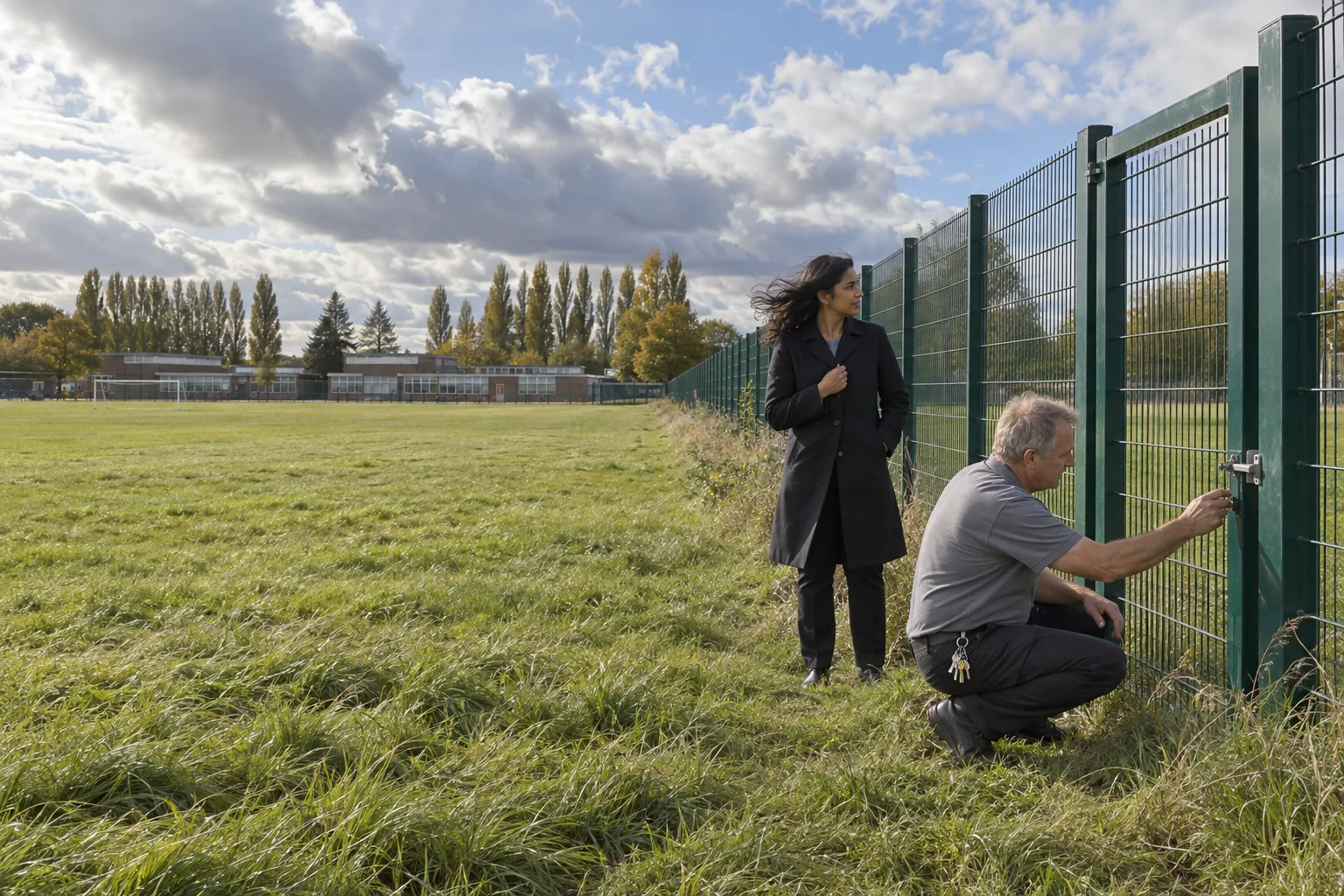
Schools rarely fail safeguarding for want of a policy. The ‘not met’ triggers are about action and knowledge: allegations not handled “swiftly and appropriately”, concerns not referred, pupils whose whereabouts leaders cannot account for, leaders who did not “learn from issues or incidents”. Each of those is judged from a chronology of cases since the last inspection, and a chronology is only as good as its earliest entry.
The common gap is between the first moment a concern existed and the first entry in the safeguarding system. A teaching assistant notices something on a Thursday afternoon; the designated safeguarding lead is told; a conversation happens; the entry is made on Friday, or Monday. The inspector, reading the case, sees Friday. Whether the school acted well on Thursday, which it usually did, cannot be shown, and “actively try to learn from safeguarding cases” cannot be evidenced from a record that starts after the learning happened. The same is true of a concern about an adult: the low-level concern policy says it must be shared with the headteacher “in a timely fashion”, and the record is supposed to show the context in which it arose. If the sharing happened by message and the record was written up later, the timing that matters most is the part with no evidence.
Three habits close most of the gap and cost nothing. Record the time a concern was first raised, not only the time the entry was written. Record decisions not to act, with the reason, because paragraph 74 asks for “the reasons for those decisions” and an inspector sampling a closed case reads the absence of a reason as the absence of a decision. And keep the summary that the 8am list asks for, referrals with “brief details of the resolution”, as a living document rather than something compiled on the Monday afternoon, so that it is the same document the governing body’s safeguarding governor has been reading all year.
The chronology the inspector reconstructs, and the messages that are not in it
The chronology an inspector rebuilds from the casework sample starts before the safeguarding system does, and in most schools it starts on a phone. The first raising of a concern is a message: “have you noticed anything with J this week?” between two teachers at half past four; a photograph of a bruise sent to the designated safeguarding lead; the headteacher told at nine on a Sunday evening that a parent has made an allegation about a member of staff; the local authority designated officer’s call arranged by text; the site manager’s message that the field gate was found unlocked again. Every one of those is a safeguarding record within the meaning of paragraph 74, and every one is a decision point the toolkit says must be “accessible for scrutiny”.
Almost none of them is anywhere the school controls. They sit in a group chat on personal phones, in an app the school does not run, and when the inspector asks the designated safeguarding lead how the concern first reached her, the honest answer is “she messaged me”, followed by a search of a personal phone for a conversation that may have been deleted or is on a device that has left. The safeguarding system shows the entry that was typed up afterwards, and the timing that decides whether the school acted promptly is the part that cannot be produced.
The fix is not to stop staff messaging each other about children; that message is the concern being raised, which is exactly what KCSIE Part one asks every member of staff to do, and a policy that bans it without providing something equally quick simply moves it. It is to give those conversations a channel the school owns, so the first message is in the record with its time, the decision that followed it is next to it, and the entry in the safeguarding system can point at both. Two limits, stated plainly and including for products like ours: nothing lawful can read a member of staff’s personal phone or recover conversations that have already happened, and no channel is a safeguarding system; the concern still has to be recorded, referred and followed up by the people responsible for it.
A question for the next governing body meeting: take the last case the designated safeguarding lead would show an inspector. Can the school show the first hour of it, from a record the school holds?
Official guidance and your next step
The primary sources are Ofsted’s school inspection toolkit, operating guide and inspection information on GOV.UK, in the versions for use from September 2026; the education inspection framework; Keeping children safe in education 2026, particularly paragraphs 74 to 75 on records, Part three on safer recruitment and the single central record, and Part four on allegations and low-level concerns; and Working together to safeguard children, the multi-agency guidance that applies to educational settings alongside every other agency working with children and young people. Independent schools are inspected under a separate toolkit and, for many, by the Independent Schools Inspectorate; the safeguarding standards are the same, the process is not.
This guide is a summary of Ofsted’s published documents and statutory guidance for state-funded schools in England, not a substitute for them and not legal advice. Where a question concerns a specific child, adult or case, follow your own procedures and speak to your designated safeguarding lead.
Then do one thing: on a Monday afternoon with no inspection, ask the designated safeguarding lead to produce the five safeguarding items on the 8am list by 8am the next day, and note which ones already existed and which had to be made.
We build ComplyChat for the work conversations organisations need to keep. A concern about a child raised between two members of staff is the sharpest example there is: it is the start of the chronology an inspector reads, and it is almost always sent on a channel the school does not own. ComplyChat gives those conversations a channel your school does own, on the record from the first message, filing into your own Microsoft 365 once your tenant is connected. There is no WhatsApp, Signal or Meta anything in the path, and we cannot see a personal phone. It is not a safeguarding system and it does not replace one; it makes the first message, and the decision that followed it, part of the record the safeguarding system can point at.
How it works · Why us · Pricing · FAQ