
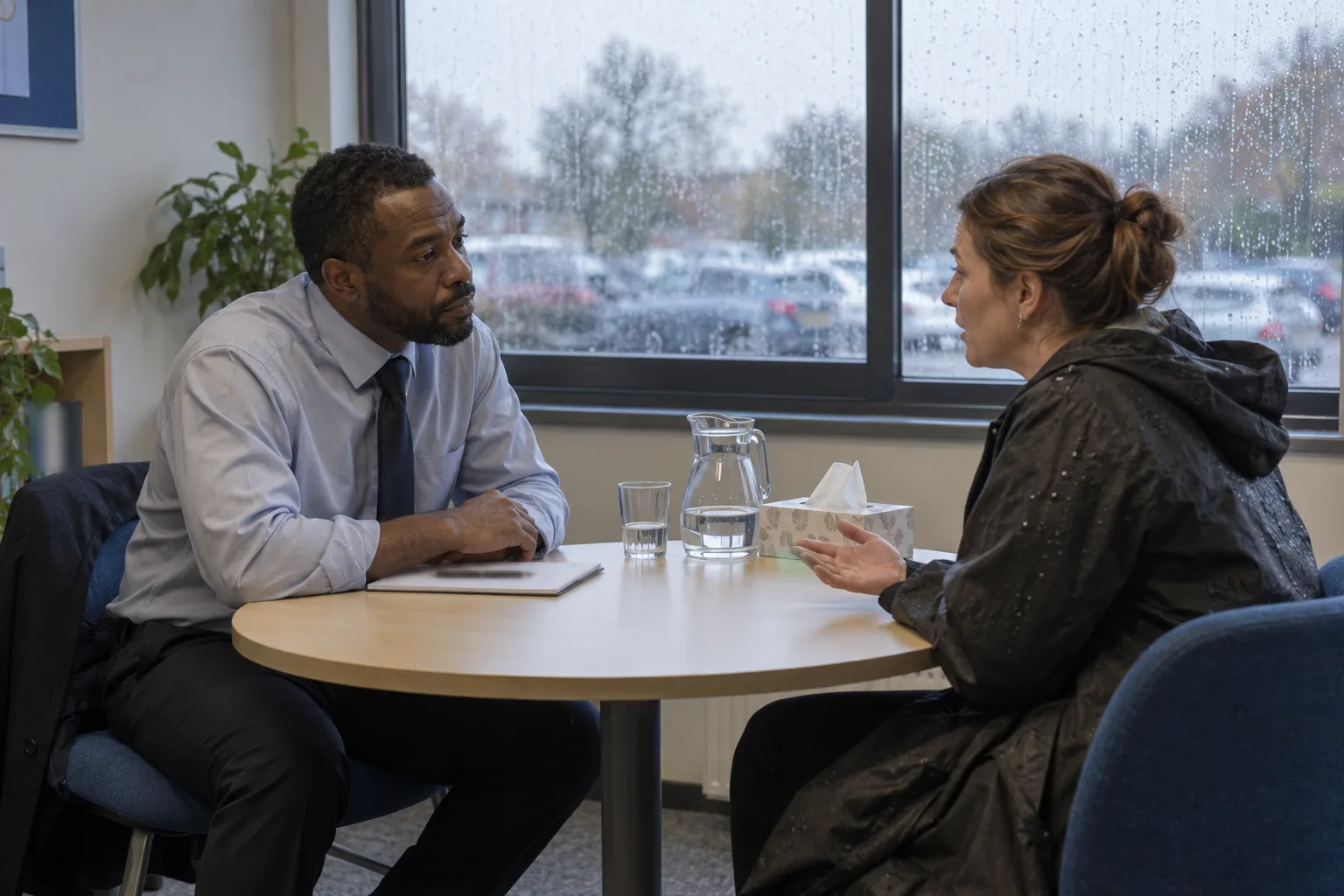
The definition most schools use, “any incident which is perceived to be racist by the victim or any other person”, comes from the 1999 Stephen Lawrence Inquiry and is a threshold for recording, not a finding. Scotland and Wales set clearer expectations; in England the form of the record is the school's to decide.
The rule in England, and the one that does not exist
No statute or national guidance in England requires a school to record racist incidents as a category or to report them to its local authority. The DfE's advice Preventing and tackling bullying answers the question “Should I record incidents of bullying?” by saying staff “should develop a consistent approach to monitoring bullying incidents in their school and evaluating whether their approach is effective”, then: “For some schools, that will mean recording incidents so that they can monitor incident numbers and identify where bullying is recurring between the same pupils. Others do not want to keep written records. We want schools to exercise their own judgment as to what will work best for their pupils.” That advice dates from July 2017 and predates the current safeguarding wording on racism.
The duty many school policies still describe comes from recommendation 68 of the Stephen Lawrence Inquiry report (1999), which proposed “that schools record all racist incidents; that all recorded incidents are reported to the pupils' parents/guardians, school Governors and LEAs; that the numbers of racist incidents are published annually, on a school by school basis”. It was never made a statutory duty. For years afterwards government guidance expected schools to record racist incidents and report them to their local authority, which is why so many council schemes and school policies exist; that national expectation has gone, and there is no national requirement now.
What does bind a school in England is safeguarding guidance and, for state-funded schools, equality law:
- Racism between pupils is child-on-child abuse. Paragraph 37 of Keeping children safe in education 2026 (KCSIE), in force from 1 September 2026, says child-on-child abuse is most likely to include “bullying (including cyberbullying, prejudice-based and discriminatory bullying), discriminatory behaviour, including racism, faith-targeted abuse, and other prejudice-based incidents”.
- Staff should treat it as a safeguarding matter where appropriate. KCSIE paragraph 32: “All staff should recognise that racism, faith-targeted abuse, and other forms of discriminatory behaviour may have a significant impact on a child's welfare, wellbeing and sense of safety and should be considered within safeguarding practice where appropriate.” Paragraph 17 says the same of “prejudice-based harm”.
- Concerns and decisions should be written down. KCSIE paragraph 74: “All concerns, discussions and decisions made, and the reasons for those decisions, should be recorded in writing.”
- The policy should say how. KCSIE paragraph 193: governing bodies and proprietors “should ensure that their child protection policy includes: ... how allegations of child-on-child abuse will be recorded, investigated, and dealt with”.
- The public sector equality duty. KCSIE paragraph 101: “Compliance with the PSED is a legal requirement for state-funded schools and colleges.” What it asks is covered below.
Scotland and Wales go further. The Scottish Government's guidance Schools – addressing racism and racist incidents (June 2025) says: “All reports of racist incidents should be recorded. It is not necessary for an allegation to be investigated before it is recorded.” The Welsh Government's statutory guidance Challenging bullying and harassment (2026) says “It is vital that all hate incidents motivated by prejudice towards a person's Protected Characteristic are accurately recorded to enable schools to monitor patterns and prevent discrimination.” A school in England can sensibly adopt the same standard; it is not required to.
What counts as a racist incident
Most schools and councils use the definition in recommendation 12 of the Stephen Lawrence Inquiry report: “A racist incident is any incident which is perceived to be racist by the victim or any other person.” It is not a legal definition. It is a threshold for recording: an incident goes in the log because someone perceived it as racist, before anyone has decided what happened. Recording it on that basis is not a finding that the pupil responsible is racist, or that a crime was committed.
Incidents range widely, and the record should say which kind it is, because how the school should respond differs:
- A single remark or act: a slur in the corridor, mocking a pupil's name, accent, food or dress, graffiti, or a racist joke repeated in class.
- Racist or faith-targeted bullying: behaviour repeated over time and aimed at a pupil because of their race, ethnicity, nationality or religion. The headteacher of a maintained school must determine measures which aim to “prevent all forms of bullying (including cyberbullying, prejudice-based and discriminatory bullying)”, according to the DfE's Behaviour in schools advice.
- Online and off-site incidents: messages, images and comments in pupils' group chats or on social media. KCSIE paragraph 33 asks staff to speak to the designated safeguarding lead (DSL) about child-on-child abuse concerns “whether these concerns are thought to have taken place on or off-site”.
- Incidents that may be crimes: the Crime and Disorder Act 1998 creates racially or religiously aggravated forms of offences such as assault, criminal damage, public order offences and harassment. Whether the police are involved is normally for the DSL to decide: KCSIE asks staff to take child-on-child abuse concerns to the DSL (paragraph 33), and says that if, in exceptional circumstances, the DSL is not available, “this should not delay appropriate action being taken” (paragraph 61).
- Incidents involving adults: a parent's racist abuse of a pupil or of staff, or a racist remark by a member of staff. An allegation against staff follows the school's allegations procedure instead.
Faith-targeted abuse sits beside racism throughout KCSIE, and many schools log racist, religious and other prejudice-based incidents in the same place, by category, so that one log can show patterns across protected characteristics.
What a good racist incident record holds
KCSIE paragraph 74 says records should include “a clear and comprehensive summary of the concern; details of how the concern was followed up and resolved, and a note of any action taken, decisions reached and the outcome.” Paragraph 75 adds that staff in doubt about recording should discuss it with the DSL. For a racist incident, a useful entry holds:
- the date, time and place, including online, and how the school found out;
- who was targeted, who was responsible, and any witnesses;
- what was said or done, in the words used: “racist language” alone tells a later reader nothing about seriousness or pattern;
- the targeted pupil's own account, and how it affected them;
- the category: racist, faith-targeted, or another prejudice, and whether it was a single incident or part of a pattern;
- what was done with the pupil responsible, and the support offered to the pupil targeted;
- whether the DSL was told and treated it as a safeguarding concern, with the reasons;
- who else was told, including parents, and when;
- follow-up: whether it stopped, and the date the case was closed.
Fictional example. Wednesday 14 October, 12.40pm, field at lunch · Reported by a lunchtime supervisor who heard it, and by the targeted pupil (Year 6) at 1pm · Year 6 pupil told the targeted pupil to “go back to” another country and called him a racial slur; two pupils present · Targeted pupil said it had happened “loads” this term and he did not want to come out at lunch · Category: racist; possible pattern · DSL informed 1.15pm; earlier entries checked, one in September from a different pupil; not referred outside school · Pupil responsible: conversation with head of year, parents phoned 3.30pm, sanction under the behaviour policy · Targeted pupil: check-ins with class teacher for three weeks; parents phoned 3.45pm · Reviewed 4 November: no further reports; closed.
Where the incident is a safeguarding concern, it also belongs in the child's child protection file: KCSIE paragraph 74 says “It is good practice to keep concerns and referrals in a separate child protection file for each child”. KCSIE paragraph 619 notes that records can be kept “in either writing or digitally”, and that they “should be reviewed so that potential patterns of concerning, problematic or inappropriate behaviour can be identified, and addressed.”
Using the records: patterns, the equality duty and governors
The log earns its keep when someone reads it. A single remark looks minor; the same pupil targeted by four different classmates in a term does not, and only a record shows that.
For state-funded schools, the record also serves the public sector equality duty. Under section 149 of the Equality Act 2010 a public authority must have due regard to the need to “eliminate discrimination, harassment, victimisation and any other conduct that is prohibited by or under this Act”, advance equality of opportunity and foster good relations, which section 149(5) says involves having due regard to the need to “tackle prejudice, and promote understanding”. KCSIE paragraph 102 makes the link to records: whenever significant decisions are made or policies developed, the equality implications must be considered, including the need to eliminate unlawful behaviours such as “racism and faith-based prejudice”, and “This is one reason why good record-keeping and monitoring of all forms of abuse and harassment is essential.” The Behaviour in schools advice says that “Analysing the data by protected characteristic and using those findings to inform policy and practice may help a school ensure that it is meeting its duties under the Equality Act 2010.”
The specific duties are narrower than many policies suggest. Under regulations 4 and 5 of the Equality Act 2010 (Specific Duties and Public Authorities) Regulations 2017, the governing body of a maintained school and the proprietor of an academy must publish information to demonstrate compliance with the duty at intervals of not more than one year, and publish one or more equality objectives, which “must be specific and measurable”, at least every four years. Nothing in them requires a school to publish the number of racist incidents, and the element on employee information does not apply to an authority with fewer than 150 employees.
Independent schools that are not academies are outside the PSED: Schedule 19 to the Equality Act 2010 lists the governing bodies of maintained schools and the proprietors of academies, not other independent schools. KCSIE's recording expectations apply to them all the same.
Governors and trustees oversee this without seeing names. A termly summary by type, year group and outcome, with what the school has changed in response, lets the board ask whether incidents are being reported, recorded and followed up. The DfE's 2017 bullying advice notes that “Ofsted will not routinely mark a school down where it has recorded incidents of bullying”, so a rising count is not in itself a reason to stop recording.
Local authority schemes, and who is told
Many local authorities run their own prejudice-related or racist incident reporting schemes for schools and other settings working with children and young people, with a form, categories and a termly return. Joining one is local practice, not national law, but if the school has signed up, or its policy says it reports to the council, follow that scheme and record that the return was made. Check that the data sent is anonymised where the scheme asks only for numbers.
Inside the school, the DSL is told of any incident that may be a safeguarding concern, as KCSIE paragraph 33 asks of child-on-child abuse. Beyond that, no national rule says who must be told about a racist incident, so the school's behaviour, anti-bullying and child protection policies should settle it:
- Parents of the pupil targeted, so they hear it from the school first, and what the school is doing;
- parents of the pupil responsible, with the sanction and the support;
- children's social care or the police, where the DSL judges that a child is at risk of harm or a crime may have been committed;
- governors, through the anonymised summary.
The record is personal data about every pupil named in it. Keep each pupil's entry to what concerns them, share it on a need-to-know basis, and follow the school's retention schedule; the guide to KCSIE records covers the child protection file.
When a parent complains that the school did nothing, the log is the school's answer: what it knew, when, what it did and why. A complaint about a racist incident is usually a complaint about the record as much as the incident.
The first report is usually a message
Racist incidents rarely reach the log first. A parent texts the class teacher on Sunday evening with a screenshot from a pupils' group chat. A lunchtime supervisor posts in the staff group chat that the same Year 5 boy has been called names again. A teaching assistant messages the head of year from the bus home about something she heard on the field. Each is a concern, and the replies are discussions and decisions, which is exactly what KCSIE paragraph 74 says should be recorded.
When those exchanges live on personal phones, two things go wrong. The log is written later from memory, without the words used or the time the school first knew. And the staff group chat becomes a second, informal record full of pupils' names that the school does not hold, cannot search and cannot produce when a parent complains, Ofsted asks, or a subject access request arrives.
ComplyChat is designed to keep those conversations on the school's record. Staff, including lunchtime supervisors and support staff without a school account, and parents where the school chooses, talk in a channel the school holds; everyone added is told it is on the record and can object or leave; and a mobile number verified by SMS is an identity. On paid plans the lasting record files into the school's own Microsoft 365 once its tenant is connected, under its own retention rules. ComplyChat is not a behaviour or safeguarding management system, it does not keep the incident log or analyse it by protected characteristic, and it has no view into pupils' own group chats.
A question for the next leadership or governors' meeting: if a parent complained tomorrow that a racist incident last term was ignored, could we produce the first message the school received about it, and what we did next?
Questions people ask
Do schools have to record racist incidents?
No national law in England requires schools to record or report racist incidents as a category: the DfE's bullying advice leaves written records to each school's judgement. But KCSIE 2026 expects the child protection policy to say how allegations of child-on-child abuse, which include racism, will be recorded, and for state-funded schools the public sector equality duty makes analysing the log good evidence of due regard; independent schools that are not academies are outside the PSED. Scotland and Wales expect schools to record such incidents.
How to deal with a racist incident in school?
KCSIE 2026 lists “discriminatory behaviour, including racism, faith-targeted abuse, and other prejudice-based incidents” as a form of child-on-child abuse (paragraph 37): racism should be recognised, challenged and addressed (paragraph 119), considered within safeguarding practice where appropriate (paragraph 32), and any concern raised with the designated safeguarding lead (paragraph 33). All concerns, discussions and decisions, with the reasons, should be recorded in writing (paragraph 74).
What comments are considered racist?
The definition most schools and councils use comes from recommendation 12 of the 1999 Stephen Lawrence Inquiry report: “A racist incident is any incident which is perceived to be racist by the victim or any other person.” It is a threshold for recording, not a finding that the person who said it is racist or that a crime was committed.
Can I report a school incident to the police?
Yes. Anyone can report a suspected crime to the police, and some racist conduct is a crime: the Crime and Disorder Act 1998 creates racially or religiously aggravated forms of offences such as assault and harassment. Inside a school, staff take the concern to the designated safeguarding lead, who decides whether to involve the police or children's social care.
Official guidance and your next step
The primary sources are paragraphs 17, 32, 33, 37, 74, 75, 101, 102, 119, 193 and 619 of Keeping children safe in education 2026; section 149 of the Equality Act 2010 and the Specific Duties Regulations 2017; the DfE's Preventing and tackling bullying and Behaviour in schools; and recommendations 12 and 68 of the Stephen Lawrence Inquiry report. For comparison, see the Scottish Government's guidance on racist incidents and the Welsh Government's Challenging bullying and harassment. Your local authority may publish its own reporting scheme. Quotations are from those pages as published on 8 October 2026.
This guide summarises law and guidance for schools in England and is not legal advice. Where an incident may be a crime or a child may be at risk, the DSL should follow the school's child protection policy and local safeguarding arrangements.
Then do one thing: open your child protection and anti-bullying policies and check they say, in one place, how a racist incident is recorded, who reads the log and how often, and whether the school reports to the local authority.
We build ComplyChat for the work conversations organisations need to keep. The first report of a racist incident usually arrives as a message to a teacher's phone, and the log is only as good as what reaches it. Explore Free personal messaging, or compare the paid plans if your school needs a lasting Microsoft 365 archive.
Sources
Every document this guide quotes or links to, in the order it first cites them.
- Preventing and tackling bullying gov.uk
- Stephen Lawrence Inquiry report gov.uk
- Keeping children safe in education 2026 gov.uk
- Schools – addressing racism and racist incidents gov.scot
- Challenging bullying and harassment gov.wales
- Behaviour in schools gov.uk
- Crime and Disorder Act 1998 legislation.gov.uk
- Section 149 of the Equality Act 2010 legislation.gov.uk
- Equality Act 2010 (Specific Duties and Public Authorities) Regulations 2017 legislation.gov.uk
- Schedule 19 to the Equality Act 2010 legislation.gov.uk