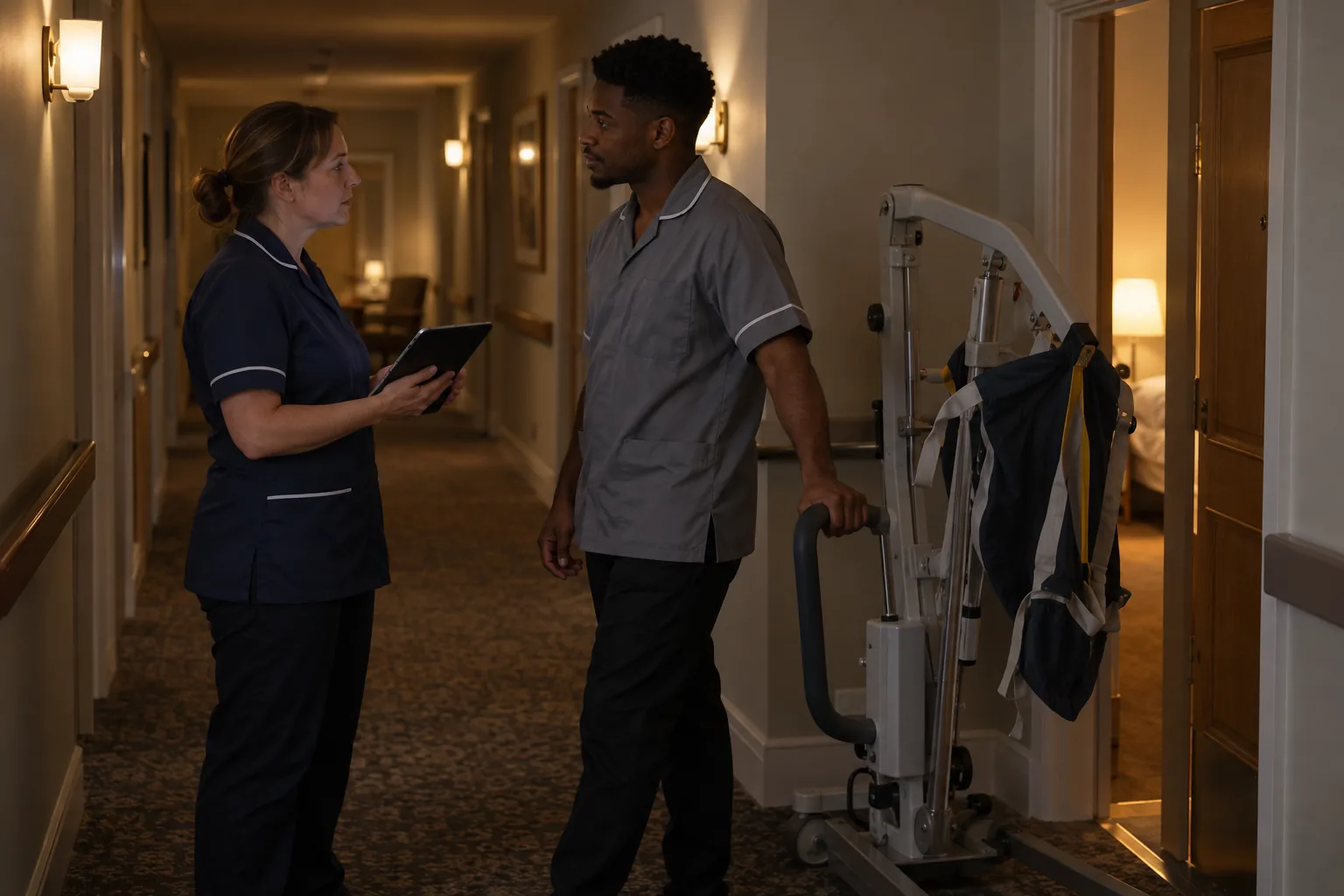
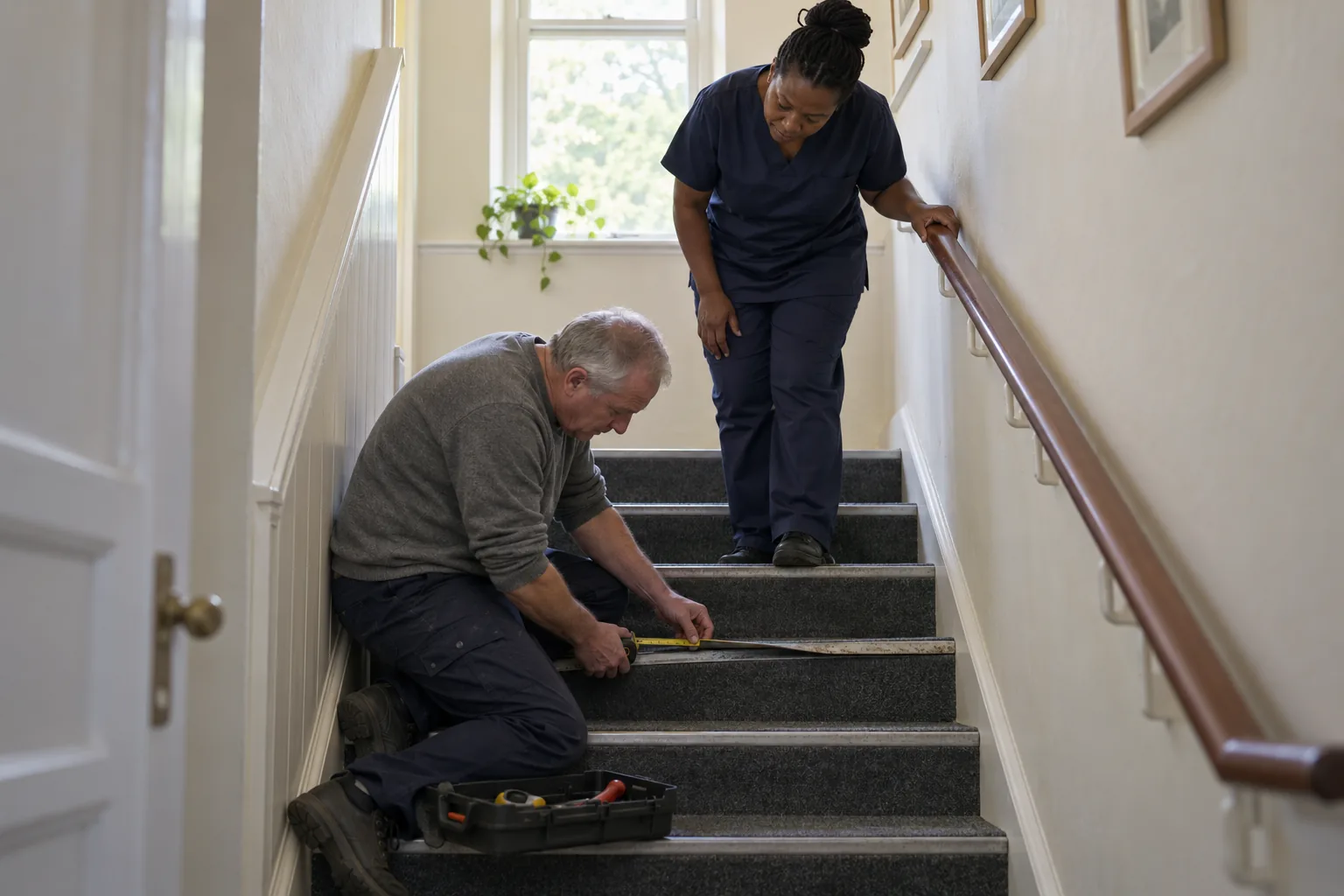
For a care home in England that authority is the Health and Safety Executive (HSE) where the home provides nursing care and the local authority where it does not. Most of the difficulty is not the list but the words “work-related”: a resident’s fall is reportable only if the way care was organised, the equipment or the building contributed to it. This guide sets out what is reportable, for residents and for staff, the deadlines, how to code the report, the record to keep, and how RIDDOR sits beside the Care Quality Commission (CQC).
The rule: RIDDOR 2013 and the “work-related” test
The Reporting of Injuries, Diseases and Dangerous Occurrences Regulations 2013 (RIDDOR) put the duty on the “responsible person”, which in a care home is normally the provider as employer and as the person in control of the premises. The regulations define a “work-related accident” as “an accident arising out of or in connection with work”, and HSE’s information sheet for the sector, Reporting injuries, diseases and dangerous occurrences in health and social care (HSIS1), explains what that means: “Generally, this means incidents where the work activity, equipment or environment (including how work is carried out, organised or supervised) contributed in some way to the circumstances of the accident.”
The reports go to the enforcing authority, and in care that is split by the type of home. The memorandum of understanding between CQC and HSE (March 2024) records that “HSE is responsible for enforcing health and safety at all healthcare premises as well as care homes with nursing, whilst LAs are responsible for residential care homes.” HSIS1 says “all incidents can be reported online, however a telephone service remains for reporting fatal and specified injuries only.”
RIDDOR is a reporting duty, not the whole of health and safety law. HSIS1 makes the point in its introduction and repeats it for deaths, stress and self-harm: some incidents are not reportable, “but this does not mean that health and safety law (including the Health and Safety at Work etc. Act 1974 (‘the HSW Act’)) do not apply”, and the enforcing authority may still investigate, which “is more likely to arise where serious management failures have contributed to, or had the potential to cause, death or serious injury”. The general incident record, CQC notifications, safeguarding referrals and the duty of candour run alongside it; our guide to incident reporting in care homes sets out how the five fit together. This guide is the RIDDOR decision itself.
What is reportable in a care home
RIDDOR has six reportable categories, and a care home can meet all of them:
- Deaths of any person, at work or not, caused by a work-related accident (regulation 6). A suicide is not an accident and is not reportable.
- Specified injuries to workers (regulation 4(1)): a fracture diagnosed by a doctor “other than to a finger, thumb or toe”; an amputation; an injury likely to cause permanent blinding or reduced sight; a crush injury to the head or torso damaging the brain or internal organs; a burn or scald covering more than 10% of the body or damaging the eyes, respiratory system or other vital organs; scalping requiring hospital treatment; “loss of consciousness caused by head injury or asphyxia”; and certain injuries from working in an enclosed space.
- Over-seven-day injuries to workers (regulation 4(2)): incapacity for routine work “for more than seven consecutive days (excluding the day of the accident)”.
- Injuries to people not at work (regulation 5): residents, visitors and volunteers injured in a work-related accident and “taken from the site of the accident to a hospital for treatment in respect of that injury”.
- Occupational diseases diagnosed in writing by a doctor, including occupational dermatitis, occupational asthma, tendonitis of the hand or forearm, and “any disease attributed to an occupational exposure to a biological agent”.
- Dangerous occurrences, the near misses with potential for serious harm, reportable even when nobody is hurt; HSIS1’s care example is “a patient hoist collapses or overturns but the patient in the hoist is not injured”.
A seventh item is recorded but not reported: an injury that keeps a worker off normal duties for more than three consecutive days. HSIS1: “You must record accidents, but not report them where they result in a worker being incapacitated for more than three consecutive days. If you are an employer, who has to keep an accident book, the record you make in this will be enough.”
Residents and visitors: the care plan decides
For a resident the two questions are whether the accident was work-related and whether the person was taken from the home directly to hospital for treatment, “by whatever means (for example by taxi, private car or ambulance)”. HSIS1 adds that “examinations and diagnostic tests do not constitute ‘treatment’”: a resident sent to A&E for an X-ray that shows nothing, and sent home, has not been treated. HSIS1’s separate paragraph on patient and service user falls is worded differently, saying a fall is reportable when it is work-related and “results in a specified injury”; that is the test regulation 5 sets for an accident on hospital premises, while for a resident or visitor injured anywhere else the regulation’s test is being taken to hospital for treatment. This guide follows the regulation.
The work connection is decided by what the home had assessed and what it did. HSIS1 gives care examples on each side:
- Reportable: “A service user falls in the lounge area, there is previous history of fall incidents, but reasonably practicable measures to reduce the risks have not been put in place.”
- Reportable: “A service user falls out of bed, is injured and taken to hospital. The assessment identified the need for bedrails but they, or other preventative measures, had not been provided.”
- Reportable: “A service user trips over a loose or damaged carpet in the hallway”; “A service user sustains a fractured arm when their arm becomes trapped in a bed rail”; “A patient is scalded by hot bath water and taken to hospital for treatment. The patient was vulnerable and adequate precautions were not taken.”
- Not reportable: “A service user falls and breaks a leg. They were identified as not requiring special supervision or falls prevention equipment. There are no slips or trips obstructions or defects in the premises or environment, nor any other contributory factors.”
- Not reportable: “A service user is found on the floor, no-one has seen it happen, and/or there is no obvious work-related contributing factors. There was a detailed assessment in the care plan, which identified that fall protection was not required.”
HSIS1’s worked examples show how fine the line is. A resident left alone on the toilet for dignity, whose care plan said they needed assistance or supervision, falls and is taken to hospital: reportable if “the member of staff left the service user out of earshot and without a call bell they could use, or had not responded promptly when they did call”; not reportable if the carer “returned to help them as soon as they called to say they have finished”, or if the resident “had got up without calling for help”. HSE’s advice for doubtful cases: “You may need to consult the patient’s/service user’s care plan to decide what care was assessed as being appropriate for them. If you still are unclear, ask for advice from those responsible for the care plan.”
Three things are outside RIDDOR for residents. “Acts of deliberate self-harm are not considered ‘accidents’ and are not RIDDOR reportable.” An injury “by an act of physical violence from another patient” is not reportable. Injuries arising directly from medical treatment carried out by or under the supervision of a doctor or dentist are exempt, and “it is sufficient that the procedure being carried out was laid down by an RMP”. Each still belongs in the home’s incident record, and several will be CQC notifications or adult safeguarding referrals. The reverse also holds: a fall that is reportable because a risk assessment was not acted on is, by the same facts, a possible neglect concern, and the RIDDOR report does not stand in for the safeguarding decision.
Staff: injuries, violence, sharps and disease
For care workers the test is simpler and the most common report is the over-seven-day injury: a back injury while moving a resident, a slip on a wet floor, a burn in the kitchen. HSIS1: “The seven-day period does not include the day of the accident but does include weekends and rest days.” Count the days the worker could not do their normal work, including days they would not have been rostered, and remember that a worker moved to light duties is still “unable to perform their normal work duties” in HSIS1’s words.
- Violence. “Acts of non-consensual violence to a person at work that result in death, a specified injury or being incapacitated for over seven days are reportable.” A carer punched by a resident and off for ten days is reportable; an injury inflicted “during a dispute about a personal matter” between colleagues is not.
- Sharps. A needlestick is reportable as a dangerous occurrence only where the sharp is “known to be contaminated with a BBV, e.g. hepatitis B or C or HIV”, and as a disease if a blood-borne virus is acquired. “If the sharp is not contaminated with a BBV, or the source of the sharps injury cannot be traced, it is not reportable, unless the injury itself causes an over-seven-day injury.”
- Infection. Reportable where a doctor confirms in writing that the work was the source; HSIS1’s example is “a care assistant is splashed in the face with bodily fluids from a service user and becomes hepatitis B positive”. Not reportable: “A care home assistant is off work with influenza for two weeks, the influenza cannot be reliably attributed to their work activity, as it is common in the community.”
- Stress. “Stress is not reportable as occupational ill health, even when accompanied by a medical certificate stating it is work-related, because it does not result from a single definable incident.”
- Agency and bank staff. “Agencies supplying workers should ensure that responsibility for reporting under RIDDOR is clearly assigned to the appropriate person based on the particular facts of the employment relationship.” Agree in writing with each agency who reports an injury to their worker in your home.
Under regulation 6(3), if an employee dies within one year of the accident and a reportable injury (a specified injury or an over-seven-day injury) was a cause of the death, the employer must tell the enforcing authority of the death without delay (HSIS1 says in writing), “whether or not the original injury had been reported”.
Deadlines, coding, the record, and where CQC fits
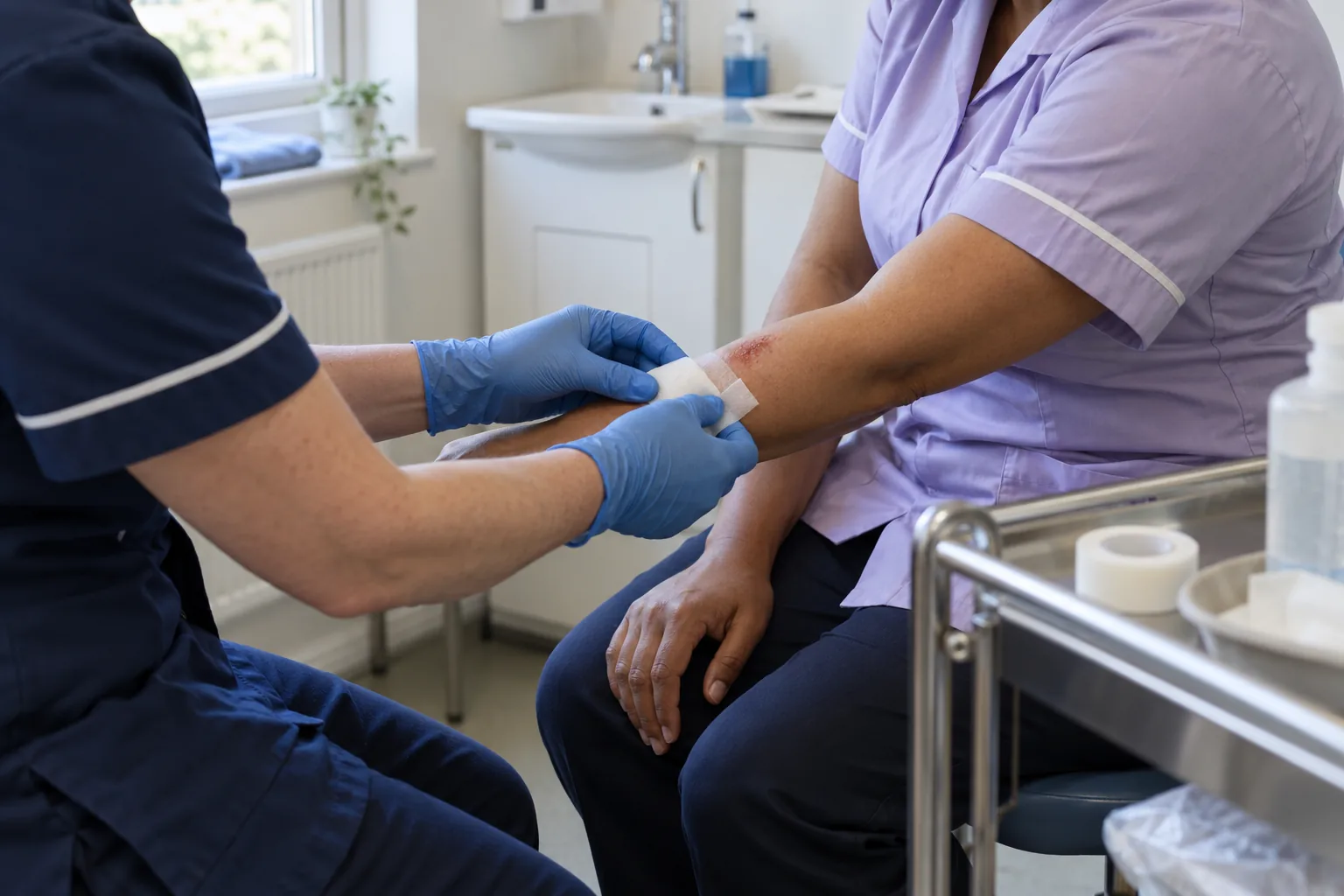
The clocks. For a death, specified injury, non-worker taken to hospital or dangerous occurrence, the responsible person must “notify the relevant enforcing authority of the reportable incident by the quickest practicable means without delay” and “send a report of that incident in an approved manner to the relevant enforcing authority within 10 days of the incident” (Schedule 1). An over-seven-day injury must be reported “as soon as practicable and in any event within 15 days of the accident” (regulation 4(2)). A disease is reported when a doctor tells you of the diagnosis in writing. HSIS1’s advice is to report “as soon as possible” whatever the deadline.
Coding. HSE’s RIDDOR in health and social care page says every health and social care report goes under the main industry “Government administrative functions, Education, Health”. A care home whose main activity involves nursing codes “Residential care activities/Residential nursing care”; one that does not codes “Residential care activities/Elderly, disabled”; where both are provided, nursing, “unless the nursing care is minimal”. Never “Accommodation”. HSE estimates that “30% of health and social care RIDDORs are incorrectly coded”.
The record. Regulation 12 requires a record of every reportable incident and every over-three-day injury, kept “for at least three years from the date on which it was made” at the workplace or the provider’s usual place of business. HSIS1 lists what it must contain: “the date and method of reporting; the date, time and place of the event; personal details of those involved; the injury; a brief description of the nature of the event or disease.” Record the decisions not to report as well: the care plan line that made a fall not work-related is the evidence if HSE or the local authority later asks.
Liability. “Failure to report a reportable injury, dangerous occurrence, or disease, in accordance with the requirements of RIDDOR, is a criminal offence, and may result in prosecution. Reporting an incident is not an admission of liability.”
CQC. RIDDOR and CQC notifications are separate duties, and neither discharges the other: HSIS1 says the reporting requirements of other regulators “are separate to and distinct from the legal duty to report incidents under RIDDOR”. The memorandum of understanding divides the follow-up. CQC “is the lead inspection and enforcement body under the Health and Social Care Act 2008 for safety and quality of treatment and care matters involving patients and service users” of a registered provider; HSE and local authorities lead “for health and safety matters involving workers, visitors and contractors, irrespective of registration”. So a resident trapped in a bed rail is usually a RIDDOR report to the enforcing authority and a serious injury notification to CQC, with CQC leading any enforcement; a carer’s fractured wrist is a RIDDOR report, with HSE or the local authority leading. On who investigates, the MoU says “the primary consideration is whether the injured person is a patient/service user and whether the service provider is registered with the CQC. If that is the case the responsible authority will normally be the CQC unless the police have primacy.” Its own examples of incidents where CQC leads include “a patient/service user being seriously injured or dying after becoming trapped in bed rails”. Our guide to CQC notifications covers the serious injury test, which is a different test from RIDDOR’s.
“Still off, hoping back Monday” – the day count in a text
The RIDDOR decisions a care home gets wrong are rarely about the list. They are about what was known, and when. Take the over-seven-day injury. A carer hurts her back helping a resident who slipped during a transfer, finishes the shift and goes home. Over the following week the only record of her absence is a run of messages to the deputy: “Still sore, GP Thursday”, “Signed off till Friday”, “Hoping back Monday, on light duties?” Whether the injury became reportable, and so whether the fifteen days from the accident are already running out, is answered by that exchange, and it sits on two personal phones.
Residents work the same way. Whether a fall was work-related turns on what the care plan said and whether staff had been told; the night nurse’s message to the team that “Mrs D now needs two for transfers” is the instruction HSE’s test asks about. When it was sent in a group the provider cannot search, the home did the right thing and cannot show it, and the RIDDOR decision – reported or not – rests on a recollection.
The answer is not to stop staff texting their manager when they are off sick; it is to give the work conversation a place the provider controls, where the manager is in the thread, everyone in it is told it is on the record, and the message is kept as it was sent. ComplyChat provides a channel of that kind; on paid plans the lasting record files into the provider’s own Microsoft 365. It does not file RIDDOR reports or decide whether an injury is reportable; the responsible person does, through HSE’s online system or, for fatal and specified injuries, its telephone service.
A question for the next managers’ meeting: for the last staff injury that kept someone off work, could the home show the day the absence passed seven days and who knew – from its own records, not from the injured worker’s phone?
Questions people ask
What is RIDDOR in health and social care?
RIDDOR is the Reporting of Injuries, Diseases and Dangerous Occurrences Regulations 2013, which require employers and those in control of premises, including care homes, to report work-related deaths, specified injuries and over-seven-day injuries to workers, injuries that send a resident or visitor directly to hospital for treatment, certain occupational diseases and dangerous occurrences. HSE’s HSIS1 information sheet explains how they apply to health and social care.
Who reports incidents to RIDDOR in a care home?
The “responsible person” reports: for an injury to an employee that is their employer, and for a resident or visitor injured in a work-related accident it is the person in control of the premises, normally the provider that runs the home. The provider can have the registered manager or a health and safety lead make the report on its behalf, as long as its policy names who; agencies supplying staff should agree in advance who reports injuries to their workers.
What is the 7-day rule for reporting RIDDOR incidents?
An injury that leaves a worker unable to do their normal work for more than seven consecutive days must be reported within 15 days of the accident. The seven days do not include the day of the accident but do include weekends and rest days; an absence of more than three days must be recorded, but not reported.
What is not reportable under RIDDOR?
In a care home, RIDDOR does not cover suicide or deliberate self-harm, injuries to a resident caused by another resident’s violence, injuries arising directly from medical treatment laid down by a doctor or dentist, work-related stress, a fall with no work-related contributing factor, or a resident examined at hospital without treatment. Each may still need recording, a CQC notification or a safeguarding referral.
How long do you keep RIDDOR records?
A RIDDOR record must be kept for at least three years from the date on which it was made, under regulation 12 of RIDDOR 2013, and must include the date and method of reporting, the date, time and place of the event, personal details of those involved, the injury and a brief description of the event or disease.
Official guidance and your next step
The primary sources are RIDDOR 2013 itself, HSE’s HSIS1 information sheet (revision 4, 2022), HSE’s RIDDOR in health and social care coding page, HSE’s general RIDDOR pages and the CQC and HSE memorandum of understanding. HSE notes that following its guidance “is not compulsory, unless specifically stated”, but that if you do follow it “you will normally be doing enough to comply with the law”.
This guide is a summary for care providers in England, not legal advice about an individual incident or a prosecution.
Then do one thing: take the last ten falls in your incident record that ended in a hospital visit and, beside each, write “RIDDOR: yes” or “RIDDOR: no” with the care plan reason. Any line you cannot fill from the records is a decision to make today.
We build ComplyChat for the work conversations organisations need to keep. RIDDOR decisions in care turn on what staff were told and when, and that telling now happens in messages more than on paper. Explore Free personal messaging, or compare the paid plans if your service needs a lasting Microsoft 365 archive.
Sources
Every document this guide quotes or links to, in the order it first cites them.
- Reporting of Injuries, Diseases and Dangerous Occurrences Regulations 2013 legislation.gov.uk
- Reporting injuries, diseases and dangerous occurrences in health and social care (HSIS1) hse.gov.uk
- Memorandum of understanding between CQC and HSE hse.gov.uk
- RIDDOR in health and social care hse.gov.uk
- RIDDOR pages hse.gov.uk