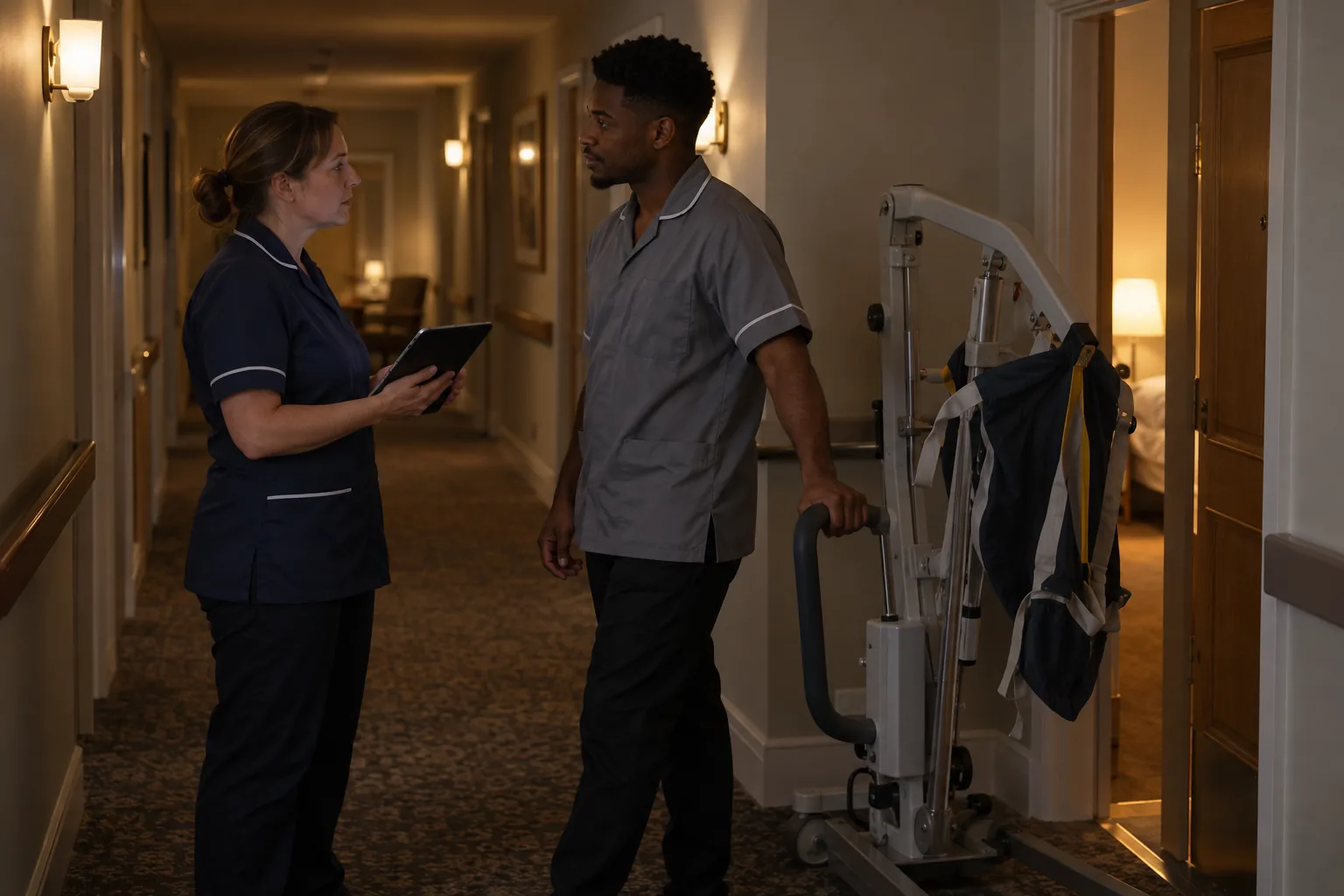
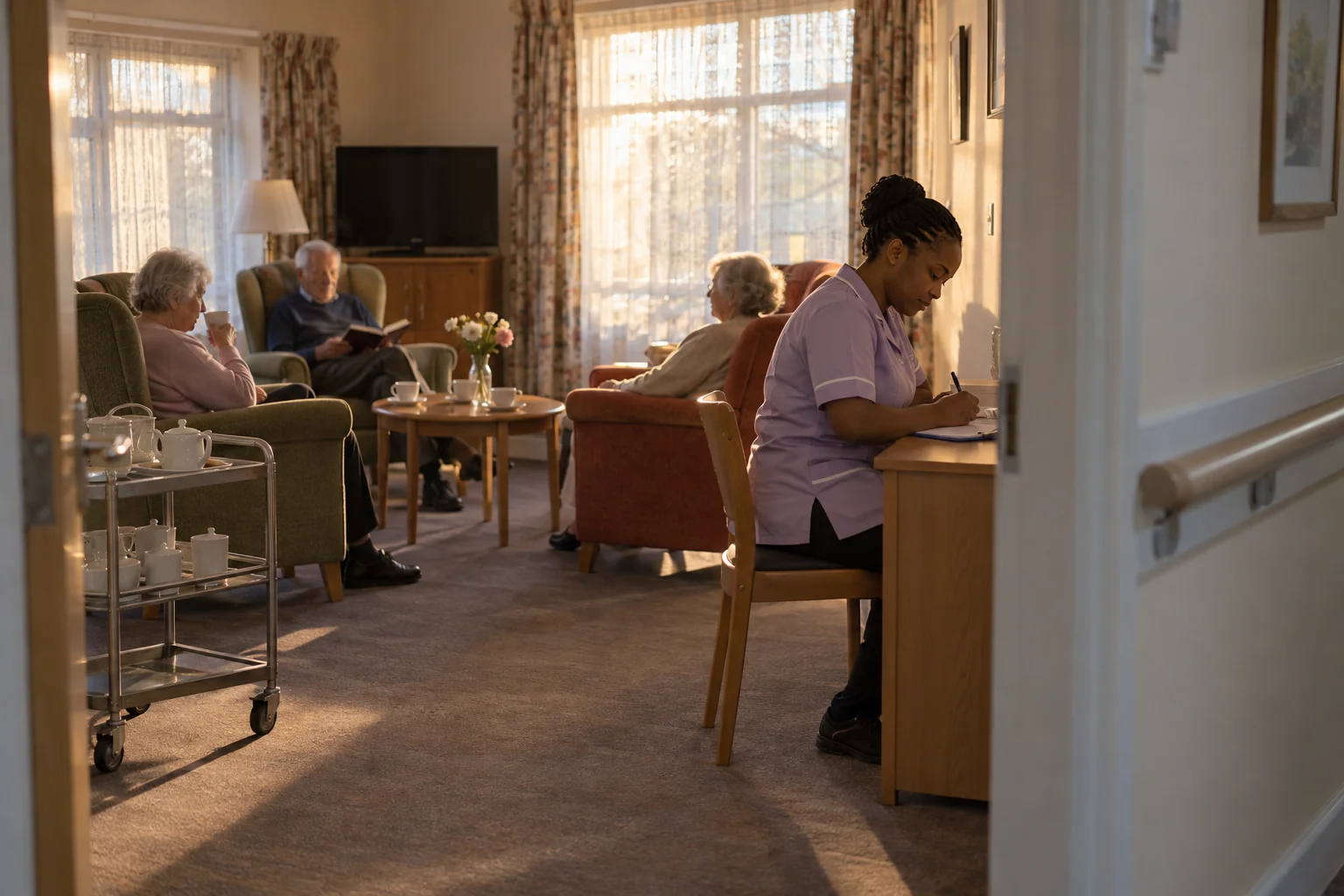
The rule: an accurate, complete and contemporaneous record for each person
The requirement is Regulation 17(2)(c) of the Health and Social Care Act 2008 (Regulated Activities) Regulations 2014. A provider’s systems must enable it to “maintain securely an accurate, complete and contemporaneous record in respect of each service user, including a record of the care and treatment provided to the service user and of decisions taken in relation to the care and treatment provided”. Regulation 17(2)(d) adds the records about staff and about “the management of the regulated activity”. Regulation 9 (person-centred care) requires an assessment of needs and preferences and care “designed” to meet them, and CQC’s guidance on it says plainly: “A record must be kept of all assessments, care and treatment plans, and decisions made by people who use the service and/or those acting on their behalf.” Regulation 12 requires the risks of care to be assessed and mitigated, and a risk that is not written down is one the next shift does not know about.
CQC’s guidance on Regulation 17(2)(c) is the standard the daily record is judged against. Records “must be kept and be fit for purpose”, and fit for purpose means they must “be complete, legible, indelible, accurate and up to date, with no undue delays in adding and filing information, as far as is reasonable”; “include an accurate record of all decisions taken in relation to care and treatment and make reference to discussions with people who use the service, their carers and those lawfully acting on their behalf”, including consent records and advance decisions; “be accessible to authorised people as necessary in order to deliver people’s care and treatment”; be “created, amended, stored and destroyed in line with current legislation and nationally recognised guidance”; and “be kept secure at all times and only accessed, amended, or securely destroyed by authorised people”. Paper and electronic records are both acceptable “providing they meet the requirements of the Data Protection Act 2018”, and “decisions made on behalf of a person who lacks capacity must be recorded and provide evidence that these have been taken in line with the requirements of the Mental Capacity Act 2005”.
Three words in the regulation carry the weight. Contemporaneous means written at the time or as soon after as is reasonable, not reconstructed at the end of a shift from memory. Complete means the record shows the care that was delivered and the care that was not, with the reason. And decisions means the record is not only what happened to the resident but what the home decided to do about it, by whom, and why.
What records a care home must keep
The regulations do not list the records; they describe what the records must show, and the list follows from that. For each person using the service:
- The pre-admission and ongoing assessment of needs and preferences (Regulation 9), with the dates it was reviewed and who was involved.
- The care plan: what care is to be delivered, how the person wants it delivered, and the risk assessments that sit behind it (falls, pressure areas, nutrition and hydration, moving and handling, choking, behaviour that challenges), each with its review date.
- Daily care notes: the record of the care and treatment provided, every day, by the people who provided it.
- Monitoring charts where the care plan calls for them: fluid and food intake, repositioning, bowel, weight, blood glucose, observations after a fall.
- Medication administration records (MAR) and the record of refusals and of any medicine given without the person’s knowledge under a best-interests decision.
- Consent, capacity and best-interests records: capacity assessments for specific decisions, best-interests decisions and who was consulted, Deprivation of Liberty Safeguards applications and authorisations, lasting powers of attorney and advance decisions on file.
- Incidents, accidents and safeguarding concerns involving the person, and what was done, including any notification to CQC and referral to the local authority.
- Contact with families, GPs, district nurses, social workers and others: what was discussed and agreed, because Regulation 17 requires the record to “make reference to discussions” with the person’s carers and representatives.
- Complaints and their handling (Regulation 16), and end-of-life wishes and plans.
For the service, under Regulation 17(2)(d): staff records meeting Schedule 3 and Regulation 19 (recruitment checks, DBS, references, right to work), training and supervision records, rotas showing who was on duty, policies and procedures, audits and their action plans, maintenance and safety records, the statement of purpose, the notifications sent to CQC under the Care Quality Commission (Registration) Regulations 2009, the duty of candour record under Regulation 20, and the complaints log. CQC’s guidance describes management records as “anything relevant to the planning and delivery of care and treatment”, and adds that the systems must have “scrutiny and overall responsibility at board level or equivalent”.
Two records are often missed. The handover record – the sheet, book or screen that carries the day into the night – is part of the record of care whether or not the home thinks of it as one. And the rationale: the note that says why a decision was taken (why the GP was not called, why the resident was not repositioned at two, why the family was not told until morning) is the part the regulation asks for and the part a hurried note leaves out.
What a good daily care note says
A daily note is evidence of the care delivered and of the person’s day. CQC’s guidance asks for complete, accurate, contemporaneous entries that record decisions and discussions; the sector’s good-practice guidance, from SCIE’s social care recording work onwards, asks for the same things in plainer words. The elements of an entry that will stand up:
- Date, time and author. Identify both the author and, if different, the person who delivered the care. Record when the care occurred and when the entry was made; label late entries and never backdate them.
- What was done, against the care plan: personal care given, meals and fluids taken, medicines given or refused, repositioning, activities, visitors. Care that was planned and not delivered is recorded with the reason.
- What was observed, factually: skin, mood, appetite, mobility, pain, continence, sleep. “Skin intact, no redness on sacrum at 14:10 check” rather than “skin fine”.
- What the person said and wanted, in their own words where possible. A person-centred record shows the resident as a person with preferences, not a set of tasks; “Mrs A asked to sit by the window and chose the blue cardigan” is a record of choice and dignity as well as of care.
- Any change from the person’s usual state, and what was done about it: who was told, when, and what they said. A change that is written down but not escalated can leave the next shift unaware that action is needed.
- Decisions and discussions: the call to the GP, the conversation with the daughter, the decision to increase checks, with the reason.
- Fact separated from opinion. “Appeared low in mood; declined breakfast and activities” is an observation; “was being difficult” is a judgement, and one a family or a coroner will read.
Writing daily care notes well is a habit rather than a talent, and the best practices are short: write at the time; be concise and specific; record changes in condition and who was told; write for the reader who was not there, whether a colleague on the next shift, a CQC inspector or the resident’s daughter; and check the entry against the care plan before signing it. A template helps a care team stay consistent – a fixed order of personal care, food and fluid intake, medication, mobility, mood and wellbeing, changes, discussions – and a template is also how “no concerns” gets copied down a column, so the template prompts and the person completes. Good care notes about a resident living with dementia record what soothed and what distressed, not only what was refused; the same is true of a resident in residential care, nursing care or home care, and of care agencies whose care workers write in the person’s own home.
The failures are the mirror image: “settled”, “all care given”, “no concerns” repeated for a fortnight; entries written in a batch at the end of a shift with the same time on each; a fall recorded on the chart but not in the notes; a change in appetite noted daily and never escalated; a note that records a relative’s complaint but not what was said back. Electronic care systems reduce some of these (timestamps, prompts against the care plan, alerts when a chart is missed) and introduce one of their own: a drop-down menu makes it easy to record that care was “completed” without recording anything about the person. The standard is the same on a screen as on paper: would someone who was not there know what happened, and would they know why?
Handover records and the communication book
Continuity of care depends on handover, and Regulation 12(2)(i) requires that “where responsibility for the care and treatment of service users is shared with, or transferred to, other persons”, the provider works with them “to ensure that timely care planning takes place”. Inside a home the transfer happens at each shift change, and the handover record is what makes the day and the night one continuous record rather than two.
A handover record that works has a fixed shape: each resident in turn; anything that changed on the shift; anything due on the next (a GP visit, a dressing, a review, a family call); risks that are live today (a new fall, a resident who is unwell, a resident who is distressed); and the tasks outstanding, with who owns them. It is written, not only spoken, and it is kept: a verbal handover leaves no evidence that the night staff were told about the afternoon’s fall, and “I told them at handover” is the sentence most often heard and least often provable at an enquiry.
The communication book – the notebook by the kettle, the whiteboard in the office, and increasingly the staff group chat – is where the informal handover happens, and it is the record most likely to contradict the formal one. It records what the team actually knew: that a resident had been off her food all week, that a family had complained twice, that the hoist sling was frayed. If it exists, it is a record within Regulation 17 and it will be read alongside the notes; the safe course is to treat it as part of the record, keep it, and make sure anything in it that matters also reaches the person’s file. The guide to staff communication in care homes deals with what happens when that book becomes a WhatsApp group.
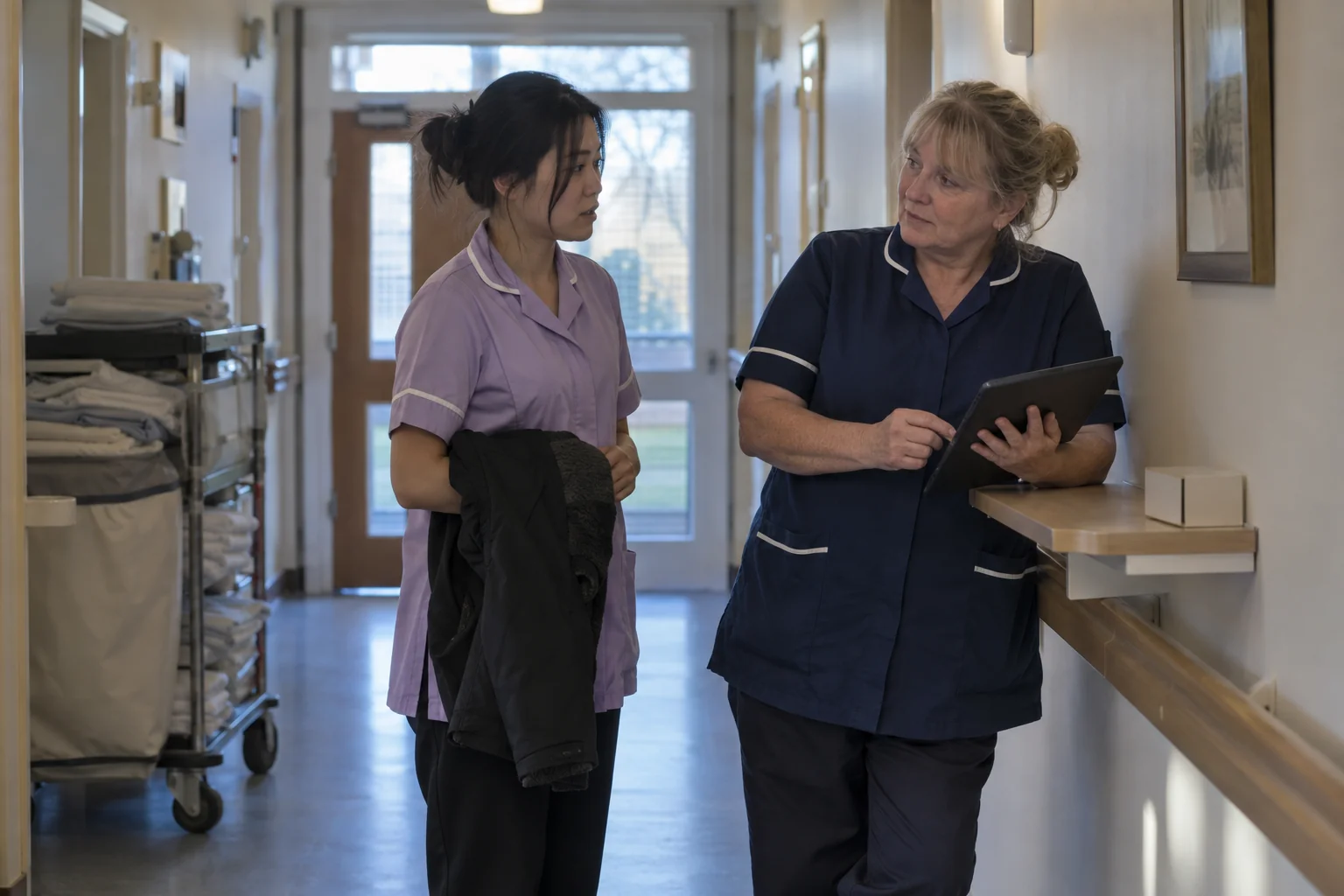
Who reads the record, and how long it is kept
Daily notes are written for the next carer and read by everyone else. The readers to write for:
- CQC. Under the single assessment framework, “processes” is one of six evidence categories, and CQC’s own examples of process evidence include “case note reviews of people’s care or clinical records”. Inspectors read the daily notes of a sample of residents against their care plans and charts, looking for care delivered as planned, changes escalated and decisions recorded; the notes are evidence under the safe, effective, caring and responsive key questions at once.
- The local authority and the safeguarding adults board, in a section 42 enquiry under the Care Act 2014: the notes for the weeks before the concern are the enquiry’s starting point, and gaps, batch entries and unescalated changes are what it finds.
- The coroner, after a death in the home that is reported: the notes and charts for the last days are disclosed and the authors may be called.
- NHS continuing healthcare assessors: the daily record is the primary evidence of the nature, intensity, complexity and unpredictability of a resident’s needs in a CHC assessment, and a family funding a placement has a direct interest in notes that record needs rather than “all care given”.
- Families and attorneys. A resident has a right of access to their own records under UK GDPR; an attorney under a health and welfare lasting power of attorney, or someone the resident has authorised, may request them; and the ICO’s guidance on looking after care records applies. A relative asking to see the daily notes is not unusual and is not hostile, and the notes should read as if written in the expectation.
- Courts and tribunals, in negligence claims and employment cases, where the contemporaneous record is preferred to anyone’s recollection.
Retention has no single statutory period for care homes in England. The NHS Records Management Code of Practice, which many providers adopt as the “nationally recognised guidance” CQC’s Regulation 17 guidance refers to, treats adult social care records as records to be kept for years after care ends rather than months; the Limitation Act’s periods for personal injury claims and the possibility of a safeguarding review or inquest argue the same way. Whatever period the home’s retention schedule sets, it must be written down, applied to electronic records as well as paper, and consistent with the data protection principles of storage limitation and security.
The record that forms in messages between shifts
Look again at where the decisions the regulation asks for are actually taken. The night carer who is worried about a resident at two in the morning messages the deputy manager, who is at home, and the reply about arranging a clinical review is part of the record of decisions about care. The senior who cannot get the GP calls the manager on her personal mobile. The daughter who lives abroad is on WhatsApp with the unit lead because that is the only way the time zones work, and the agreement about her mother’s hospital admission is reached there. The day staff’s group chat carries the real handover: “Room 12 didn’t eat again, someone needs to tell the family.”
None of those conversations is in the daily notes unless somebody transcribes them afterwards, unless the service has a reliable process for recording them. Regulation 17(2)(c) requires the record to include “decisions taken in relation to the care and treatment provided” and to “make reference to discussions with people who use the service, their carers and those lawfully acting on their behalf”; the discussions and the decisions are on personal phones, in apps the home cannot open, and the home’s record shows only the outcome, if that. When the safeguarding enquiry asks who knew what at two in the morning, or the coroner asks when the family was told, the home is asking staff for screenshots from devices it does not own.
Use the service’s escalation procedure for urgent care or safeguarding concerns; do not wait for a message to be read. Clinical decisions need the appropriate professional input. Record the outcome in the care or safeguarding system, with access to the conversation limited to those who need it.
The remedy is not to forbid staff from talking between shifts; that is the continuity the regulation wants. It is to give those conversations a channel the home runs, that works from a personal phone in a corridor at two in the morning, where everyone in it has been told it is on the record, and where the discussion and the decision are kept as they happen rather than reconstructed. The question for the registered manager and the provider’s board is simple: for the last resident whose care involved a decision out of hours, can the home produce the conversation in which it was taken?
Official guidance and your next step
The primary sources are the Health and Social Care Act 2008 (Regulated Activities) Regulations 2014 (Regulations 9, 12 and 17) and CQC’s guidance on Regulation 9, Regulation 12 and Regulation 17; CQC’s evidence categories under the single assessment framework; the Mental Capacity Act 2005 Code of Practice; the ICO’s guidance on looking after care records; and SCIE’s work on social care recording. Chapter 14 of the Care and Support Statutory Guidance covers the section 42 enquiry that will read the notes.
This guide is a summary of published guidance for England, not a substitute for it and not legal advice. Nursing homes have additional record-keeping duties under the Nursing and Midwifery Council’s Code; services in Wales, Scotland and Northern Ireland are regulated under different frameworks.
Then do one thing: take one resident at random, read the last seven days of notes, and mark every entry that records a change without recording who was told. Then ask the staff on duty where the telling happened.
We build ComplyChat for the work conversations organisations need to keep. The organisational archive described here is available on paid plans, with a connected Microsoft 365 tenant and retention configured by the organisation. It does not do care planning, daily notes, charts, rostering or medicines, and it is not a family portal; the care record lives in your care system. What ComplyChat is, is the channel for the conversations around that record – the night call to the deputy, the handover between shifts, the message to a family member who has no account on any of your systems – on a compatible phone including a personal one, on the record from the first message with everyone in it told so, filing into the home’s own Microsoft 365 once the tenant is connected and kept under the home’s own retention rules. A member of staff’s own messages stay in their own apps. There is no WhatsApp, Signal or Meta anything in the path.
How it works · Why us · Pricing · FAQ