
The Deprivation of Liberty Safeguards, and the position in September 2026
The Deprivation of Liberty Safeguards (DoLS) are the legal framework for authorising the deprivation of liberty of a person aged 18 or over who lacks capacity to consent to their care and treatment in a care home or hospital, where the arrangements are in their best interests. They were added to the Mental Capacity Act 2005 as Schedule A1, apply in England and Wales, and exist to give effect to the right to liberty in Article 5 of the European Convention on Human Rights. Outside care homes and hospitals, in supported living or a person's own home, a deprivation of liberty is authorised by the Court of Protection instead.
The Act gives the two parties names. The managing authority is the care home provider or the hospital trust where the person is, or will be, accommodated. The supervisory body is the local authority, which receives the request, commissions the assessments and decides whether to grant the authorisation. The person being deprived of their liberty is the relevant person.
The definition changed on 2 June 2026. The Supreme Court, on a reference by the Attorney General for Northern Ireland, held that its 2014 Cheshire West judgment was incorrect. The "acid test" of continuous supervision and control and not being free to leave is gone, though the government says those factors "remain relevant as part of the multifactorial assessment". The Department of Health and Social Care's update on the judgment, last revised on 22 September 2026, says whether someone is deprived of their liberty now needs a multifactorial assessment that looks at "the type, duration, effects and manner of implementation of restrictions", that "no single factor is determinative", and that a person's expression of wishes and feelings "carries significant weight". The change applies with immediate effect and across the UK. The DoLS Code of Practice, first published in 2008, was republished on 2 June 2026, and DHSC says further interim guidance will follow.
The Liberty Protection Safeguards are still not in force. They were legislated in the Mental Capacity (Amendment) Act 2019 to replace DoLS, and in April 2023 the government delayed them beyond the life of that Parliament. On 18 October 2025 the government said a consultation on them would be launched in the first half of 2026. At 25 September 2026 there is no implementation date, and DoLS remains the scheme that applies in care homes and hospitals.
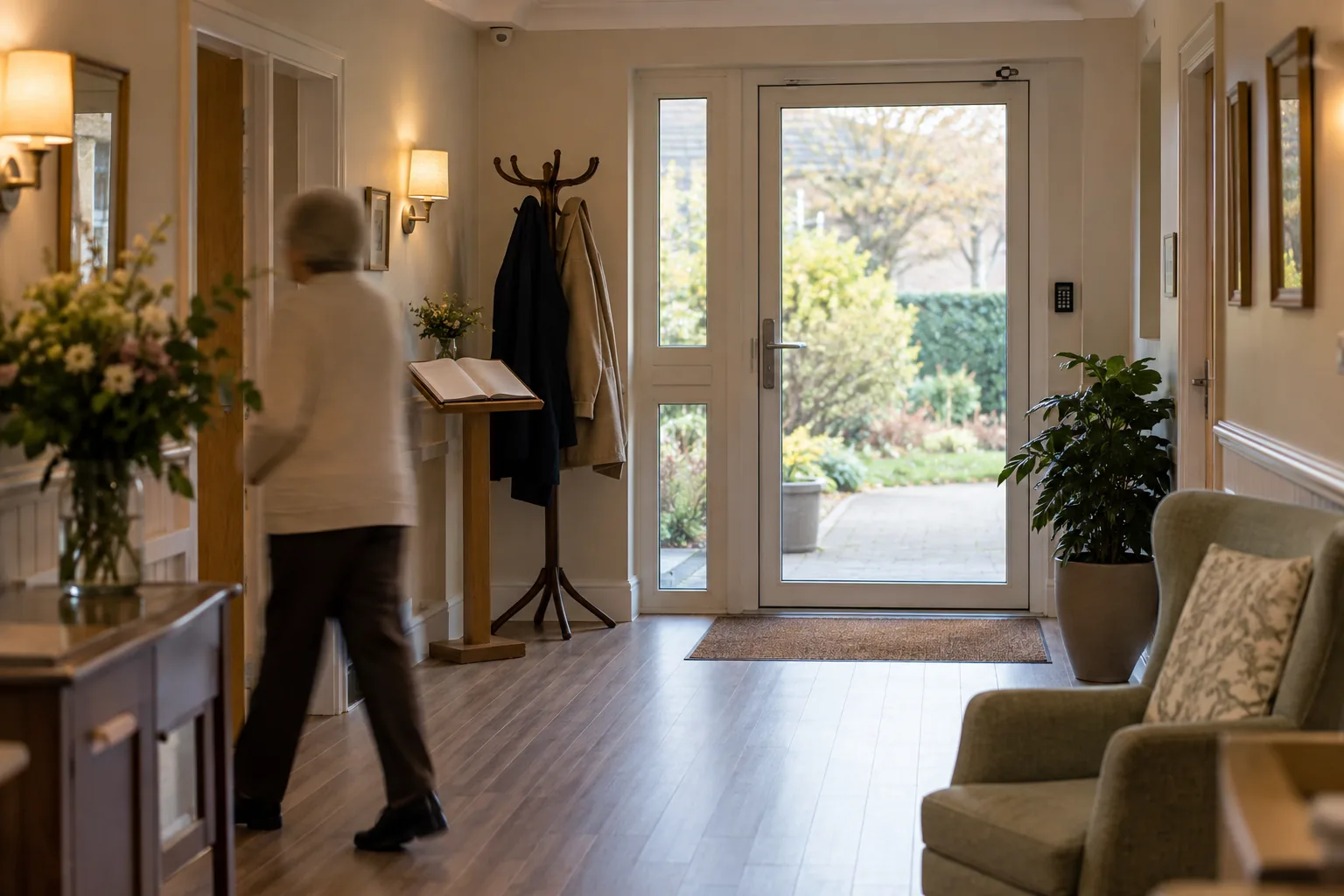
The safeguards do not only apply to the obviously restrictive cases. A resident with dementia behind a keypad door who repeatedly tries to leave, is brought back, is given medication to manage distress and has one-to-one supervision at night is the classic example, and the 2026 judgment does not take her out of scope; her objection now points more clearly towards a deprivation of liberty. What the judgment changes is the resident who is content, settled and expressing no wish to be elsewhere, who may no longer be deprived of liberty at all.
The DoLS process: urgent and standard authorisations
The managing authority carries the first duty. Under paragraph 24 of Schedule A1 it "must request a standard authorisation" where it appears that the person is, or is likely within the next 28 days to be, a detained resident who meets all the qualifying requirements, whether the person is about to be admitted or already lives there. It must also request a new one when the person moves to a different care home or hospital, and when an existing authorisation is coming to an end.
The supervisory body must then secure six assessments (paragraph 33): an age assessment, a mental health assessment, a mental capacity assessment, a best interests assessment, an eligibility assessment and a no refusals assessment. The eligibility assessment checks, among other things, whether the person is or should be detained under the Mental Health Act 1983 instead, because the two regimes do not run side by side for the same care or treatment. The no refusals assessment checks that the arrangements do not conflict with a valid advance decision, or with a decision of an attorney under a lasting power of attorney or a deputy appointed by the Court of Protection. The best interests assessor, usually a social worker, nurse, occupational therapist or psychologist with specific training, is at the centre of it and consults the people involved in the person's care, including care home staff. The mental health assessor is a doctor. Regulation 13 of the 2008 Standard Authorisations Regulations requires the assessments to be completed within 21 days of the request, or within the life of an urgent authorisation if one is in force. How a service records its own capacity assessments, before and alongside this process, is in our guide to mental capacity assessment records.
- Urgent authorisation. Where the need to deprive the person of liberty is so urgent that it must begin before a standard authorisation can be decided, the managing authority itself "must give an urgent authorisation" (paragraph 76). It must be in writing, may last no more than 7 days (paragraph 78), and must state the person's name, the care home or hospital, the period and the purpose. The managing authority "must keep a written record of why they have given the urgent authorisation" (paragraph 82) and give a copy to the person and any independent mental capacity advocate (IMCA).
- Extension. The supervisory body may extend an urgent authorisation once, by up to 7 more days, where a standard authorisation has been requested and there are exceptional reasons why it has not yet been decided (paragraphs 84 and 85). The managing authority must record why it asked and tell the person it has asked.
- Standard authorisation. If every assessment is positive the supervisory body must grant it. It must be in writing, and the period cannot exceed the maximum stated by the best interests assessor, which can never be more than 1 year (paragraph 42). The supervisory body gives copies to the managing authority, the person, their representative and the people consulted, and must appoint a relevant person's representative (RPR), often a family member or friend, or a paid representative where there is no one suitable.
- Refusal. If any assessment is negative, the authorisation cannot be given. The care home must then change the arrangements so that the person is no longer deprived of liberty, or the deprivation is unlawful.
Once a standard authorisation is given, paragraph 59 requires the managing authority to take practicable steps to make sure the person understands its effect, their right to apply to the Court of Protection under section 21A, their right to ask for a review, and their right to an IMCA, with the information given both orally and in writing. That is a care home duty, and it needs a record of when and how it was done.
What the managing authority must record
Most of the DoLS paperwork is produced by the supervisory body. The care home or hospital's own DoLS records are narrower but continuous, and they are the part an inspector finds either complete or not. For each person, keep:
- The trigger. When staff first thought the person might be deprived of liberty, what they saw, the less restrictive options tried first, and who decided a request was needed. Section 1(6) of the Act requires regard to whether the purpose "can be as effectively achieved in a way that is less restrictive of the person's rights and freedom of action", and the best interests assessor will ask what was tried.
- Each request and the reasons for it. Paragraph 32 of Schedule A1 makes this a legal duty: the managing authority "must keep a written record of" "each request that they make for a standard authorisation" and "the reasons for making each request". Keep the request itself, on the local authority's form, with the date it was sent and the acknowledgement, and the reasons written at the time, for a renewal or a move to a new home as much as for the first request.
- Any urgent authorisation, with the written reasons paragraph 82 requires, the date and time it began and ends, the copy given to the person, and any request for an extension with its reasons.
- Chasing. The date an urgent authorisation expired without a decision, and every contact with the supervisory body since. A backlog is the local authority's problem to resolve; showing the home asked, and asked again, is the home's.
- The authorisation. The standard authorisation and the assessments the home receives, the period, the expiry date in the diary with a reminder set well before it, and the name and contact details of the RPR and any IMCA.
- The information given. When the person was told about the authorisation and their rights under paragraph 59, how, and by whom; and the same for the RPR.
- The conditions, copied into the care plan, with a record that each is being met.
- Reviews, requests for review, changes in the person's circumstances, and the eventual renewal, lapse or termination, with the reason.
- The CQC notification of the outcome, with its reference.
These sit inside the care record Regulation 17 requires, not beside it. The best interests assessor will read the daily notes to understand how the person experiences the restrictions, and the daily records are where that evidence either exists or does not. A daily note that says "settled day" tells the assessor nothing; one that says "asked for her husband twice after lunch and went to the front door, walked with staff in the garden and was content after" is the evidence the 2026 judgment asks assessors to weigh.
Conditions, reviews and the end of an authorisation
A standard authorisation "may be given subject to conditions" (paragraph 53), usually recommended by the best interests assessor: a weekly visit to the person's church, a medication review by the GP within a month, contact with a named friend, a reduction in one-to-one supervision if the person settles. Paragraph 53(3) is short: "The managing authority of the relevant hospital or care home must ensure that any conditions are complied with." A condition that sits in the authorisation letter in the office and not in the care plan is the most common DoLS failure an inspector finds, and the record is the only way to show a condition was met.
Under Part 8 of Schedule A1 the supervisory body may review a standard authorisation at any time and must do so if the person, their RPR or the managing authority asks. The managing authority "must make such a request" if any of the qualifying requirements appear to be reviewable (paragraph 103(2)): the person has regained capacity, the arrangements are no longer in their best interests, the reason they meet a requirement has changed, or a condition should be varied because their circumstances have changed. The record should show the home noticed the change, asked for the review, and when.
At the end of the authorisation the home must request a new one if it is still needed, early enough that it can be decided before the existing one expires (paragraph 29). An authorisation that expires without renewal leaves a person whose circumstances have not changed deprived of liberty without authority, which is why the expiry date matters more than any other entry. A family member or anyone else who thinks a person is being deprived of liberty without authorisation can ask the home to request one, and if it does not do so within a reasonable period, can ask the local authority to decide whether there is an unauthorised deprivation of liberty (paragraph 68). A home that has recorded its reasons is in a far better position when that happens.
The 2026 judgment adds a new kind of entry. DHSC's update expects that many people with current authorisations may no longer be deprived of liberty, because the restrictions no longer amount to one on a multifactorial assessment or because the person can give valid consent through their wishes and feelings. Those cases "should be reviewed as soon as is practicable", but leaving an authorisation in place meanwhile "does not mean the person is being unlawfully deprived of their liberty". Local authorities are asked to record their approach, and clear decision-making "particularly where authorisations are left to lapse". A care home should keep its side of that: who reviewed the person's situation after June 2026, what they observed about the person's wishes and feelings, and what was agreed with the local authority. Where there is doubt, DHSC says the DoLS process should still be used.
Notifying CQC and how inspectors read DoLS records
Regulation 18(4A) of the Care Quality Commission (Registration) Regulations 2009 requires a registered provider to notify CQC of any request it makes to a supervisory body for a standard authorisation, and any application to the Court of Protection to deprive a person of liberty. Regulation 18(4B) sets the timing: the notification is given "once the outcome of the request or application is known", or at the point of withdrawal, and it must state the date and nature of the request, whether it was preceded by an urgent authorisation, the outcome or the reason for withdrawal, and the date. It is not made when the request goes in. The CQC notifications guide covers the form and the portal.
Inspectors assess DoLS under the single assessment framework mainly through the safe and effective key questions, including the quality statement on consent to care and treatment, and through well-led governance. In practice they compare three things: the list of people the home believes are deprived of liberty, the authorisations and requests on file, and what they see on the floor. The gaps they look for are predictable.
- A resident behind a locked door with no request, no authorisation, and no recorded reason for thinking one is not needed.
- An urgent authorisation that expired months ago, with no standard authorisation and no record of chasing the local authority.
- Conditions nobody on shift knows about, and no record that they have been met.
- Staff who cannot say which residents have an authorisation, or what it means for the person they are supporting.
- Outcomes decided but never notified to CQC.
A simple DoLS tracker, one line per person with the dates of request, urgent authorisation, outcome, expiry, conditions, RPR and CQC reference, is the single document that answers most of those questions. It is the registered manager's working list, and it should reconcile at any moment with the authorisations on file.
"She was at the door again" – the evidence that lands in a chat
Since June 2026 the question at the heart of a DoLS decision has moved closer to the floor. Whether a resident objects to the arrangements, tries to leave, pushes care away, or seems content, now carries significant weight in deciding whether she is deprived of liberty at all, alongside the type, duration, effects and manner of the restrictions. That evidence is observed by carers on every shift, and a good deal of it is never written in the care record. It is said in the staff group chat at the end of a late shift: "Mrs B at the front door three times tonight asking for her husband, took ages to settle". It is said in a message to the deputy manager: "do we need to tell the council about the new sensor mat?" It is said on a Sunday to the manager: "her son says the church visits have stopped, is that a condition?"
Each of those messages is the kind of record the safeguards turn on: an observation of wishes and feelings, a change that may make a requirement reviewable, a condition that may not be being met. Held on staff members' personal phones, none of it is available to the best interests assessor, the RPR, the local authority reviewing the case after the judgment, or the inspector asking why a review was never requested.
ComplyChat gives those work conversations a channel the provider holds. Everyone added is told it is on the record and can object or leave, messages are recorded on the server as they are sent, and a mobile number verified by SMS is an identity on it, so bank and agency carers without a work account can be included. On paid plans the lasting record files into the provider's own Microsoft 365 once the tenant is connected, under its own retention rules. It is not a care record system and it does not make DoLS decisions; the observation still has to be written into the care plan and the request still has to go to the local authority. What it changes is that the first time a carer mentioned the door, the service can find it.
A question for the next managers' or board meeting: for each resident with a DoLS authorisation or a request outstanding, could the service show what staff observed about their wishes and feelings in the last month, and where would that evidence come from?
Official guidance and your next step
The primary sources are Schedule A1 to the Mental Capacity Act 2005, the Deprivation of Liberty Code of Practice (republished 2 June 2026, and not yet updated for the judgment), and DHSC's update on the changed definition. SCIE's DoLS at a glance is a practical overview and flags which parts are being revised after the judgment, and CQC's notifications page has the DoLS outcome form. Quotations here are from those sources as published on 25 September 2026. The law in this area is moving: check the date on anything you rely on, and expect DHSC's further interim guidance.
This guide is a practical starting point for care homes and hospitals in England, not legal advice about an individual person's circumstances. Where it is unclear whether someone is deprived of their liberty, DHSC's advice is to refer to the local authority or seek legal advice rather than decide alone.
Then do one thing: put every resident with an authorisation or an outstanding request on a single tracker with its expiry date and conditions, and check it against the files and the care plans before the next managers' meeting.
We build ComplyChat for the work conversations organisations need to keep. Since the 2026 judgment, what carers notice about a resident's wishes and feelings carries real legal weight, and much of it is first said in a message. Explore Free personal messaging, or compare the paid plans if your service needs a lasting Microsoft 365 archive.
Sources
Every document this guide quotes or links to, in the order it first cites them.
- Schedule A1 legislation.gov.uk
- Update on the judgment gov.uk
- Deprivation of Liberty Code of Practice gov.uk
- DoLS at a glance scie.org.uk
- Notifications page cqc.org.uk