The role is not the designated safeguarding lead's, and it does not move the duty off the board. It is how the board knows, between meetings, whether its safeguarding arrangements work. This guide sets out what the role covers, how the link governor works with the DSL, the questions worth asking, and what goes back to the board.
Where the role comes from
The safeguarding duty belongs to the whole board. Paragraph 84 of Keeping children safe in education 2026 (KCSIE), the statutory guidance in force from 1 September 2026, says governing bodies and proprietors “have a strategic leadership responsibility for their school or college's safeguarding arrangements and must ensure that they comply with their duties under legislation”, ensuring that “policies, procedures and training in their schools or colleges are effective and comply with the law at all times”. For maintained schools the legal duty is section 175 of the Education Act 2002; for academies, the trust as proprietor holds the equivalent duty under the Education (Independent School Standards) Regulations 2014.
Paragraph 86 then asks for one person: governing bodies and proprietors “should have a senior board level (or equivalent) lead to take leadership responsibility for their school or college's safeguarding arrangements”. KCSIE does not use the words link governor or safeguarding governor; the sector does. The board appoints its lead, and minuting the appointment shows who holds the role. The DfE's maintained schools governance guide explains that boards can give individual governors a focus on certain areas, “often referred to as link or lead governor”, and that “all governing bodies should have governors to take specific strategic lead responsibility on behalf of the governing body” for safeguarding arrangements, including the Prevent duty, for special educational needs and disabilities, and, in secondary schools, for careers. The academy trust governance guide says the same of trust boards, which “should have trustees to take specific strategic oversight responsibility on behalf of the board” for safeguarding, including the Prevent duty.
Two boundaries follow. The link governor is not the designated safeguarding lead (DSL): KCSIE paragraph 127 says the DSL is “an appropriate senior member of staff, from the school or college leadership team”, and that it is not appropriate for the proprietor to be the DSL. And the link governor does not hold the duty on the board's behalf: the board delegates the work of finding out, not the responsibility for what is found. In a multi-academy trust the trust board is the proprietor and needs its own lead; the National Governance Association, in its safeguarding link governor/trustee role description, also recommends that each academy committee appoints a safeguarding lead to help maintain trust-wide oversight. What a local committee's lead can do depends on the trust's scheme of delegation.
What the safeguarding link governor is responsible for
The link governor's job is to know, on the board's behalf, whether the things KCSIE Part two asks the board to ensure are in place and working. The main ones, with their KCSIE 2026 paragraphs:
- Policies. An effective child protection policy that is “reviewed annually (as a minimum)” and available publicly; a staff behaviour policy covering low-level concerns, allegations, whistleblowing and staff communications; and arrangements for children absent from education (paragraph 123).
- The DSL. A senior DSL with “the appropriate status, authority, skills and experience”, and the “additional time, funding, training, resources, and support” the role needs (paragraphs 127 and 128), with robust cover when the DSL is unavailable (paragraph 129).
- Training. Safeguarding and child protection training for all staff at induction, “regularly updated”, with updates at least annually (paragraphs 153 and 154); and training for governors and trustees at induction (paragraph 87).
- Safer recruitment. Safer recruitment policies “in place, embedded and effective”, and child protection files maintained as Annex B sets out (paragraph 126); the single central record is where the board's sampling usually starts.
- Online safety and filtering. Appropriate filtering and monitoring systems, with “a review of their effectiveness … at least once every academic year” and a record of the checks (paragraph 173), and the board reviewing the DfE's filtering and monitoring standards with IT staff and providers (paragraph 177).
- Teaching pupils to keep safe. Children taught “how to keep themselves and others safe, including online”, through the curriculum and tailored to the needs of individual children, including those with special educational needs and disabilities (paragraph 158).
- Multi-agency working. The school contributing to the local safeguarding partners' arrangements (paragraph 132).
- Allegations about the headteacher. Handling allegations against staff is set out in KCSIE Part four, and where the headteacher is the subject of an allegation, the case manager is “the chair of governors or chair of the management committee” (paragraph 440), so the link governor should know the procedure even when the chair, not they, would lead it.
- The Prevent duty, which both governance guides include in the safeguarding lead's remit.
The list is long because the duty is broad. A link governor does not test all of it every term; they agree a plan with the DSL and the board that covers it across the year, and they say so in their report.
Working with the DSL: visits, questions and the boundary
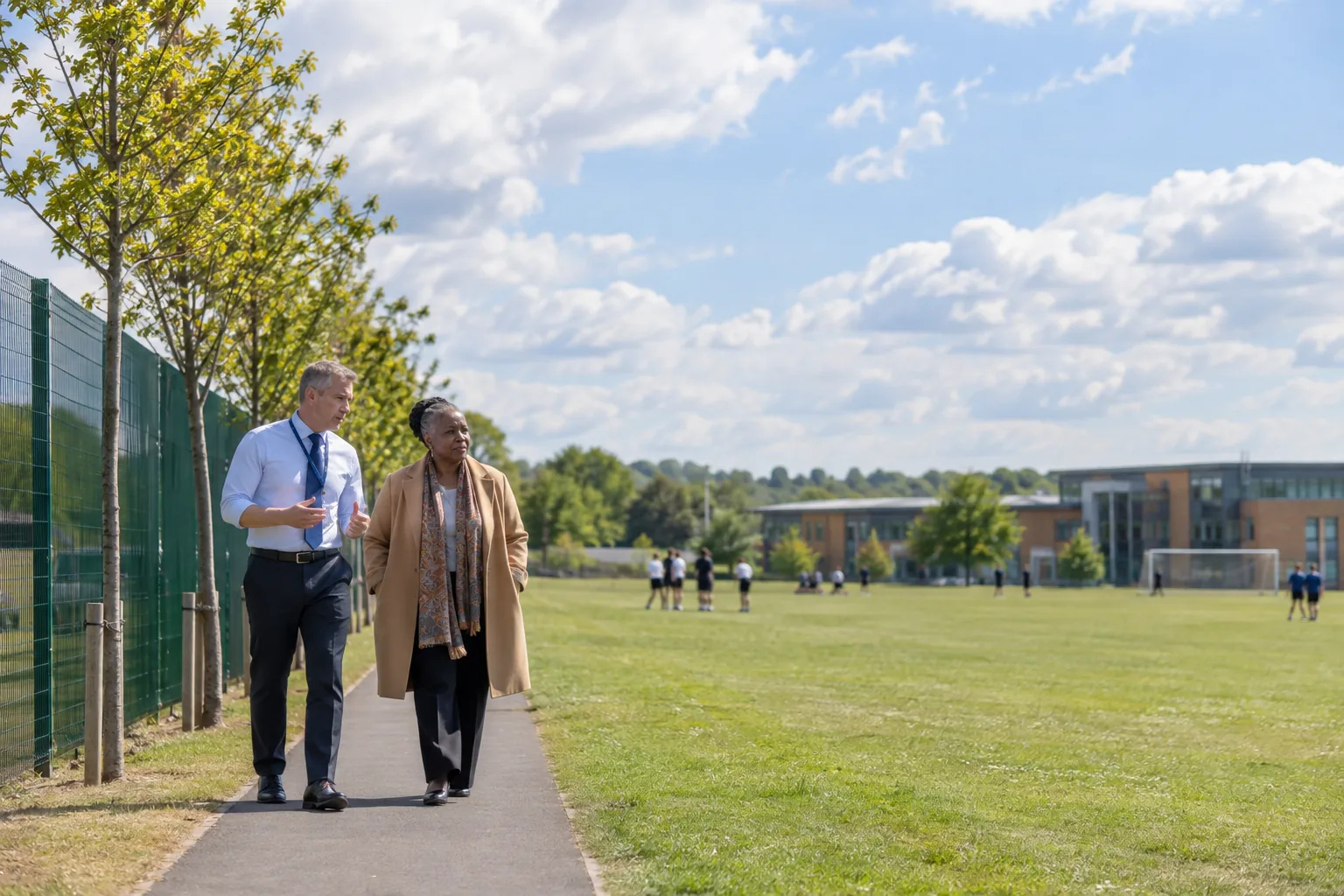
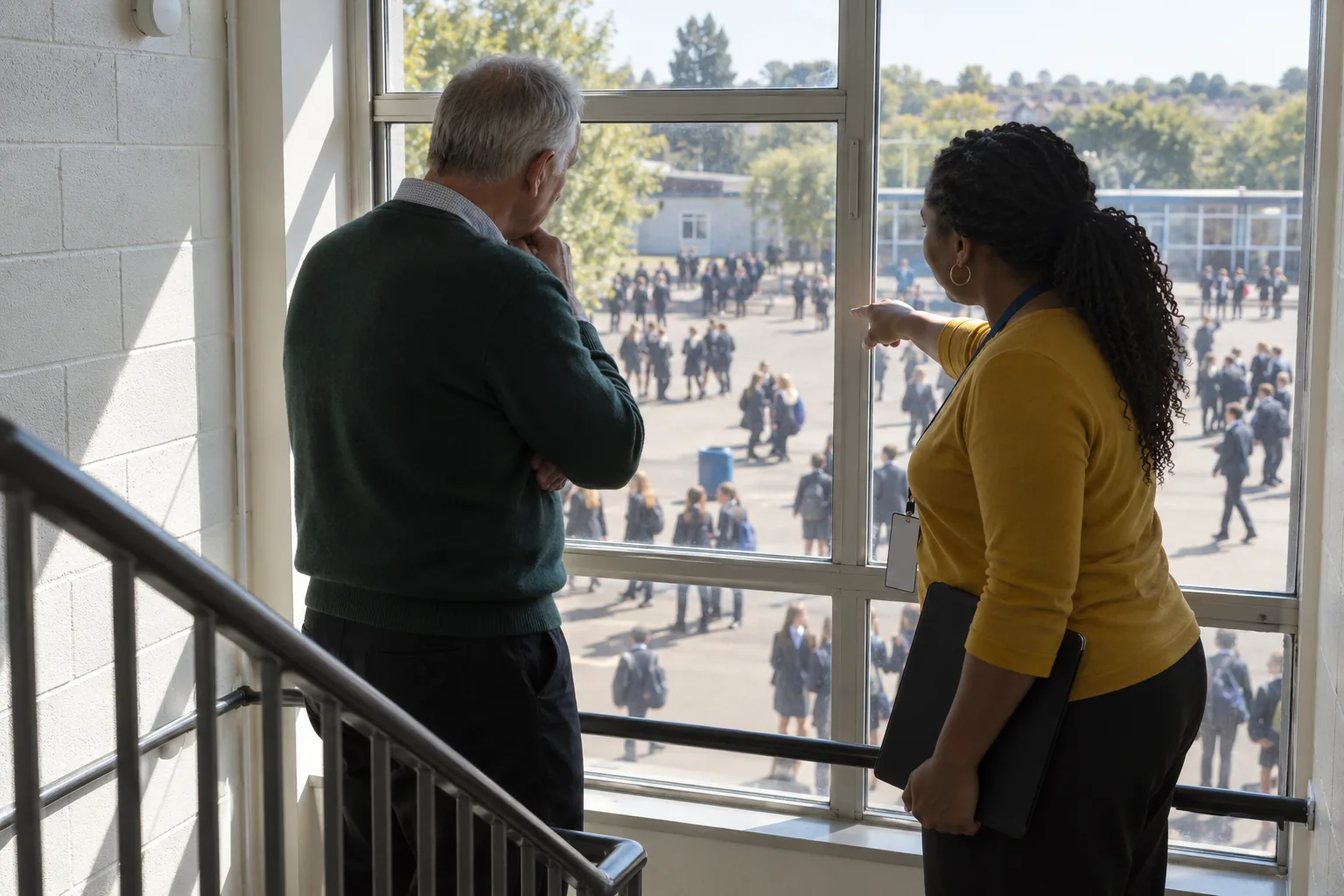
Most of the role happens in a regular meeting with the DSL, usually once a term, and in planned visits. The maintained schools governance guide says focused governor monitoring visits should be in line with the school's improvement priorities, “for an identified purpose linked to the governing body's responsibilities, such as safeguarding”, and “pre-arranged with the headteacher”, and that individual governors “do not have an automatic right to enter the school whenever they wish”. A visit might look at how visitors are signed in and supervised, how a concern is recorded from the moment a member of staff raises it, or how the filtering checks are done and logged.
The questions that produce assurance are the ones that ask for evidence rather than reassurance:
- How do staff raise a concern when the DSL is teaching, off site or on leave, and how do we know the cover works?
- When was the child protection policy last reviewed, what changed, and how were staff told?
- What proportion of staff, including supply and new starters, have had this year's safeguarding update, and who has not?
- How many referrals did we make to children's social care this term, how many were accepted, and what did we learn from the ones that were not?
- When was filtering last tested on each type of device, and where is the record?
- If an allegation were made about the headteacher tomorrow, who would the member of staff tell, and does the chair know the procedure?
The boundary is strategic. The link governor tests whether the system works; they do not manage cases, and they do not need to know which children are involved. The maintained schools guide says the safeguarding and child protection data that leaders give the board should be “anonymised where appropriate”, and individual child protection files are confidential to those with a need to know. A link governor who is told names, or asked to advise on what to do about a particular child, should steer the conversation back to the DSL and the procedure. Ofsted's school inspection operating guide tells inspectors to discuss with the chair of governors, or in an academy a trustee, how they manage “safeguarding concerns or allegations about the headteacher”, and to explore how governors assure themselves that policies are understood and implemented: the link governor's evidence is what the board's answer rests on.
Reporting to the board, and the year's cycle
The link governor's findings are only governance once the board has them. A short written report to each full board meeting, with safeguarding as a standing item, lets the minutes show that the board asked questions and decided things, which is the evidence that paragraph 84's “strategic leadership responsibility” was exercised rather than delegated. The report says what was looked at, what was found, what assurance the board can take and what it cannot, and what actions are proposed, without naming children or families.
Around those reports runs a yearly cycle that the link governor helps the board keep: the new edition of KCSIE each September, with every governor confirming they have read Part two; the annual child protection policy review; the annual filtering and monitoring review; the DSL's annual report to the board; a sample of the single central record; and, where the local authority or safeguarding partnership asks for one, the section 175 safeguarding audit, which has its own guide. The link governor usually needs more training than the induction course every governor has; the governor training guide covers how that is planned and recorded.
Fictional example. Safeguarding link governor's report, autumn term 2026 · Met the DSL on 23 September and 4 November; visit on 4 November focused on how concerns are recorded when the DSL is off site · Found: concerns logged on the school's system within the day in all six recent examples sampled with the DSL, no names shared with the governor; deputy DSL cover rota in place but not on the staff noticeboard in the annexe · KCSIE 2026 Part two confirmed read by 11 of 12 governors · Filtering review: completed 30 September, record held by the IT lead · Single central record: 10 entries sampled, one supply teacher missing the date the agency confirmation arrived, corrected 6 November · Assurance: concerns are recorded promptly; cover arrangements need to be better known · Proposed actions: cover rota displayed in every building by half term; remaining governor to confirm KCSIE Part two before the next meeting.
In a multi-academy trust the same report runs at two levels: each local committee's safeguarding lead reports to the committee, and the trust board's lead draws those together with the trust's own data, so that the board, as proprietor, sees weaknesses across its schools and whether the actions were completed.

The concern that reaches the governor's phone
A safeguarding link governor quickly becomes someone people message. The DSL texts on a Friday night, “just so you know, we had a disclosure today, all in hand”. The headteacher asks on WhatsApp whether the link governor thinks the LADO needs to be called about a member of staff. A parent who knows the governor from the school gate sends a long message about another family. A member of staff, worried about the headteacher, messages the link governor rather than the chair because they know them better.
Each of those messages is a safeguarding record, and none of them sits anywhere the school controls. The first gives the governor information about a child they should not hold. The second asks a governor to take part in an operational decision that belongs to the case manager and the LADO. The third may be a concern that has to be passed on today. The fourth is potentially an allegation about the headteacher, which KCSIE routes to the chair of governors, and the time it was first raised is evidence. If any of them is later examined – by a review, a LADO enquiry or an inspector asking how quickly something was acted on – the answer sits on a governor's personal phone.
Use a restricted reporting route, with access limited to the people who need the information. A recorded message is not proof that someone has read or acted on a concern: follow the safeguarding procedure, contact the responsible person directly when action is urgent, and use the local authority or emergency route when required. Add the relevant information and decisions promptly to the formal safeguarding record.
The board can agree how the link governor is contacted, by whom and about what, and give that contact a channel the school runs rather than personal apps. ComplyChat provides a channel the school controls, reachable from a compatible phone including a personal one, in which everyone added is told it is on the record and can object or leave, and a mobile number verified by SMS is an identity, so a governor with no school account can be in it. On paid plans the lasting record files into the school's or trust's own Microsoft 365 once the tenant is connected, under its own retention rules. It is not a safeguarding case-management system, and concerns about children still go to the DSL through the school's procedure.
A question for the next full board meeting: what safeguarding information has reached the link governor or the chair by message this term, and where is it now?
Questions people ask
What are the responsibilities of a safeguarding link governor?
The safeguarding link governor takes leadership responsibility at board level for the school's safeguarding arrangements, as KCSIE 2026 paragraph 86 asks: they meet the DSL, visit to test how policies work in practice, check training, safer recruitment, filtering and the child protection policy review, and report to the board. They do not manage individual cases, and the duty stays with the whole governing body or trust board.
What role do governors play in safeguarding?
Governors and trustees have “a strategic leadership responsibility” for their school's safeguarding arrangements under KCSIE 2026 paragraph 84: they must make sure the school complies with the law, and that its policies, procedures and training are effective. In a maintained school this rests on section 175 of the Education Act 2002; in an academy, on the Independent School Standards.
Do governors need safeguarding training?
Yes. KCSIE 2026 paragraph 87 says all governors and trustees should receive appropriate safeguarding and child protection training, including online safety, at induction, and that it should be updated regularly. Both DfE governance guides also expect every governor and trustee to have read and follow Part two of KCSIE.
What safeguarding questions can a school governor ask?
A governor can ask any question that tests whether the arrangements KCSIE Part two requires are working: how staff raise a concern when the DSL is unavailable, when the child protection policy was last reviewed, which staff have not had this year's safeguarding update, when filtering was last tested, and what the procedure is if an allegation is made about the headteacher. Questions should ask for evidence, and should not seek the names of children or families.
Official guidance and your next step
The primary sources are paragraphs 84 to 87 and Part two of Keeping children safe in education 2026, with paragraph 440 on allegations against the headteacher; sections 2.3 and 7.8 of the maintained schools governance guide; and sections 4.3 and 7.10 of the academy trust governance guide. Your local safeguarding partnership's procedures, and your local authority's or diocese's governor services, add the local detail. KCSIE paragraph numbers change most years; check the current edition before citing one.
This guide is a practical summary for governing boards in England, not legal advice. If a safeguarding concern about a child reaches you as a governor, pass it to the DSL straight away, and if a child is in immediate danger, call 999.
Then do one thing: ask your link governor and DSL to agree, in writing, how the governor will be contacted between meetings and what should never be sent to them, and take it to the next board meeting for approval.
We build ComplyChat for the work conversations organisations need to keep. The safeguarding link governor is a sharp example: the role works through conversations with the DSL and the headteacher, and some of the most important ones now arrive on a governor's own phone. Explore Free personal messaging, or compare the paid plans if your school or trust needs a lasting Microsoft 365 archive.
Sources
Every document this guide quotes or links to, in the order it first cites them.