The framework: five key questions, 34 quality statements
This guide describes CQC’s published assessment approach checked on 19 September 2026. CQC has also consulted on draft sector-specific frameworks. Check its current provider guidance before an assessment; a consultation proposal is not itself a replacement for the rules in operation.
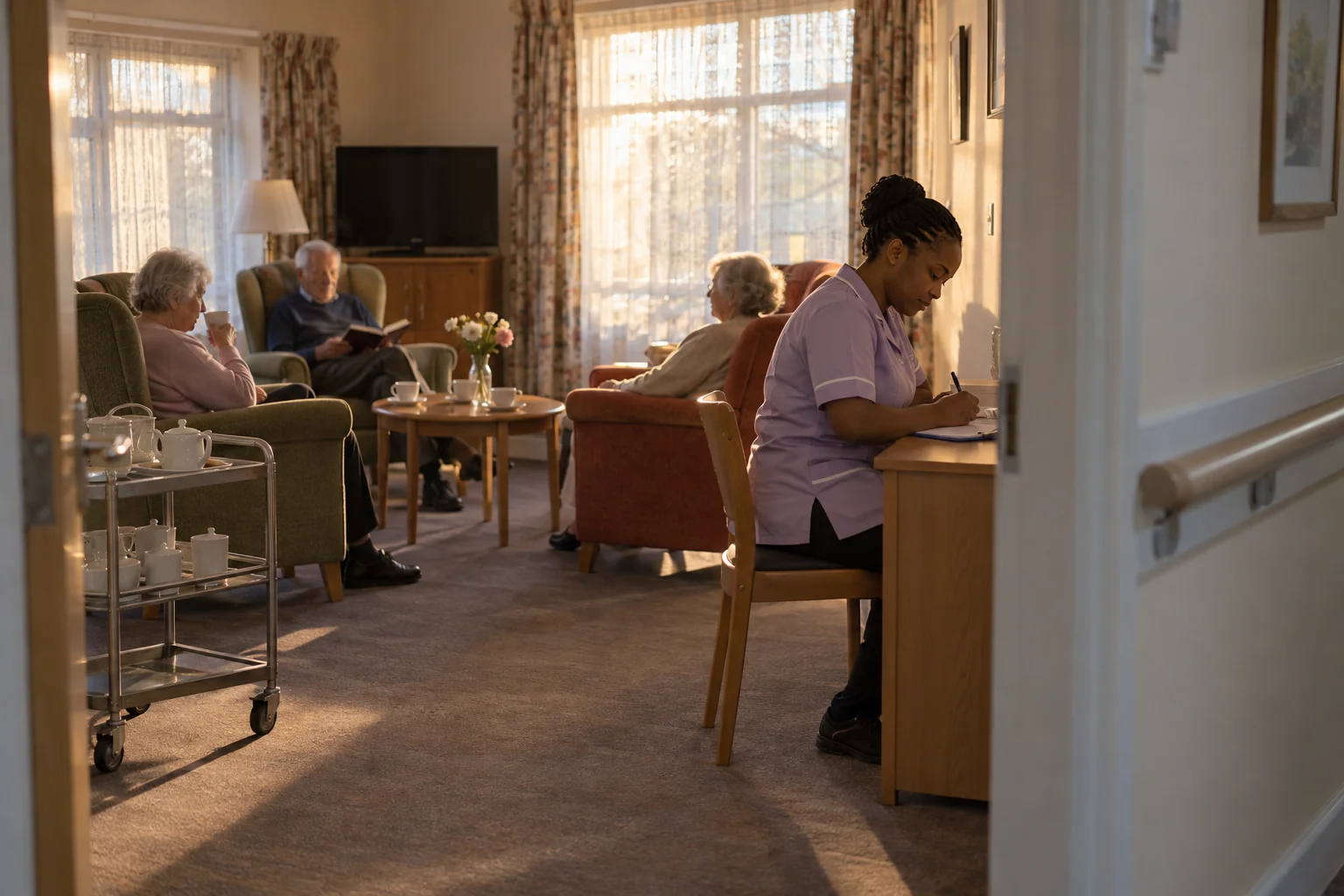
The Care Quality Commission regulates health and social care services in England, and its new single assessment framework – rolled out to all providers during 2024 – replaced the inspection framework of key lines of enquiry (KLOEs) that social care providers had learned to prepare for. CQC’s assessment framework “is made up of 5 key questions and, under each key question, a set of quality statements”. The key questions are the ones the previous framework used – is the service safe, effective, caring, responsive to people’s needs, and well-led – and the four-point ratings scale (outstanding, good, requires improvement, inadequate) is retained. What changed is the layer beneath. Quality statements “are the commitments that providers, commissioners and system leaders should live up to. Expressed as ‘we statements’, they show what is needed to deliver high-quality, person-centred care”, and each one “relate[s] to the regulations listed that we would consider in our judgements”. The key lines of enquiry, prompts and ratings characteristics are gone.
There are 34 quality statements. Under safe: learning culture; safe systems, pathways and transitions; safeguarding; involving people to manage risks; safe environments; safe and effective staffing; infection prevention and control; medicines optimisation. Under effective: assessing needs; delivering evidence-based care and treatment; how staff, teams and services work together; supporting people to live healthier lives; monitoring and improving outcomes; consent to care and treatment. Under caring: kindness, compassion and dignity; treating people as individuals; independence, choice and control; responding to people’s immediate needs; workforce wellbeing and enablement. Under responsive: person-centred care; care provision, integration and continuity; providing information; listening to and involving people; equity in access; equity in experiences and outcomes; planning for the future. Under well-led: shared direction and culture; capable, compassionate and inclusive leaders; freedom to speak up; workforce equality, diversity and inclusion; governance, management and sustainability; partnerships and communities; learning, improvement and innovation; environmental sustainability.
Each statement is a paragraph in the first person plural, and each page on CQC’s site sets out what the statement means, the subtopics it covers, the regulations behind it and the best-practice guidance CQC expects providers to follow. The safeguarding statement, for example, reads: “We work with people to understand what being safe means to them as well as with our partners on the best way to achieve this. We concentrate on improving people’s lives while protecting their right to live in safety, free from bullying, harassment, abuse, discrimination, avoidable harm and neglect. We make sure we share concerns quickly and appropriately.” Its regulations are 10, 11, 12 and 13, with 9, 17 and 20 “also consider[ed]”. The learning culture statement commits the provider to “a proactive and positive culture of safety based on openness and honesty, in which concerns about safety are listened to, safety events are investigated and reported thoroughly, and lessons are learned”.
The six evidence categories
CQC has “grouped the different types of evidence we will look at into 6 categories”, and for each quality statement it sets out “the relevant evidence categories that we’ll focus on”. The number of categories considered “varies according to the type or model of service, the level of assessment … [and] whether the assessment is for an existing service or at registration”. The six categories, in CQC’s words:
- People’s experience of health and care services. “All types of evidence from people who have experience relating to a specific health or care service”, including “families, carers and advocates”. CQC defines people’s experience as “a person’s needs, expectations, lived experience and satisfaction with their care, support and treatment”. Sources: calls, emails and Give feedback on care forms, interviews, survey results, and feedback gathered by community groups, providers and local authorities.
- Feedback from staff and leaders. “Evidence from people who work in a service”: staff surveys and feedback to the employer, interviews and focus groups, interviews with leaders, feedback sent to CQC, and “whistleblowing”.
- Feedback from partners. “Evidence from people representing organisations that interact with the service”: commissioners, other local providers, professional regulators, accreditation bodies, royal colleges and multi-agency bodies, gathered “through interviews and engagement events”.
- Observation. “Observing care and the care environment will remain an important way to assess quality”, carried out on the premises by inspectors and specialist professional advisers; Healthwatch observations of the environment count here too. “All observation is carried out on site.”
- Processes. “The series of steps, arrangements or activities that a provider or organisation carries out to deliver safe care that meets people’s needs.” Evidence “that measure[s] how well processes work”: audit results, “findings and learning from safety incidents”, access times, and “case note reviews of people’s care or clinical records”.
- Outcomes. “The impact of care processes on individuals”: “how care has affected people’s physical, functional or psychological status”, from patient-level data sets, national audits and outcome measures, read “in context of the service”.
For care homes and supported living services, and separately for home care and shared lives services, CQC publishes the categories it will draw on for each quality statement; the sector pages say only that it will “aim to collect evidence in similar categories” across those service types and will “reflect” the differences between them. Use the categories specified for the relevant service and quality statement. Local outcome evidence can still be useful, including changes in falls, nutrition, independence and the outcomes people wanted from their care.
Scoring: from evidence to a rating
CQC “changed the way we apply scores in our assessments on 2 December 2024”, and the current rule is in its guidance on how it reaches a rating. For each quality statement assessed, inspectors “consider the evidence we have in each relevant evidence category” and “give a score for each quality statement … on a scale of 1 to 4”: 1, “evidence shows significant shortfalls”; 2, “evidence shows some shortfalls”; 3, “evidence shows a good standard”; 4, “evidence shows an exceptional standard”. The score is a judgement: “Inspectors will use professional judgement to assign the score, based on the evidence categories they have looked at for each quality statement.”
The key question score is then a percentage: the quality statement scores added together and divided by the maximum, which is “the number of quality statements under the key question multiplied by the highest score for each statement, which is 4”. The thresholds: “25 to 38% = inadequate; 39 to 62% = requires improvement; 63 to 87% = good; 88% and above = outstanding.” Two rules stop a strong average hiding a weak statement: “If the key question score is within the good range, but one or more of the quality statement scores is 1, the rating is limited to requires improvement”, and “if the key question score is within the outstanding range, but one or more of the quality statement scores is 1 or 2, the rating is limited to good.”
The overall rating follows CQC’s aggregation principles: the five key questions “are all equally important and are weighted equally”; at least two outstanding and three good are normally needed for outstanding overall; the overall rating “will normally be good if there are no key question ratings of inadequate and no more than one key question rating of requires improvement”; two or more at requires improvement normally gives requires improvement, and two or more at inadequate gives inadequate. Because “we aim to assess different areas of the framework on an ongoing basis”, scores for different statements can be updated at different times, and the percentage tells the provider whether a good rating is “in the upper threshold, nearing outstanding” or “in the lower threshold, nearer to requires improvement”. Existing ratings were carried across by applying scores to quality statements; a newly registered service is usually assessed on all statements within twelve months.
How the evidence is gathered
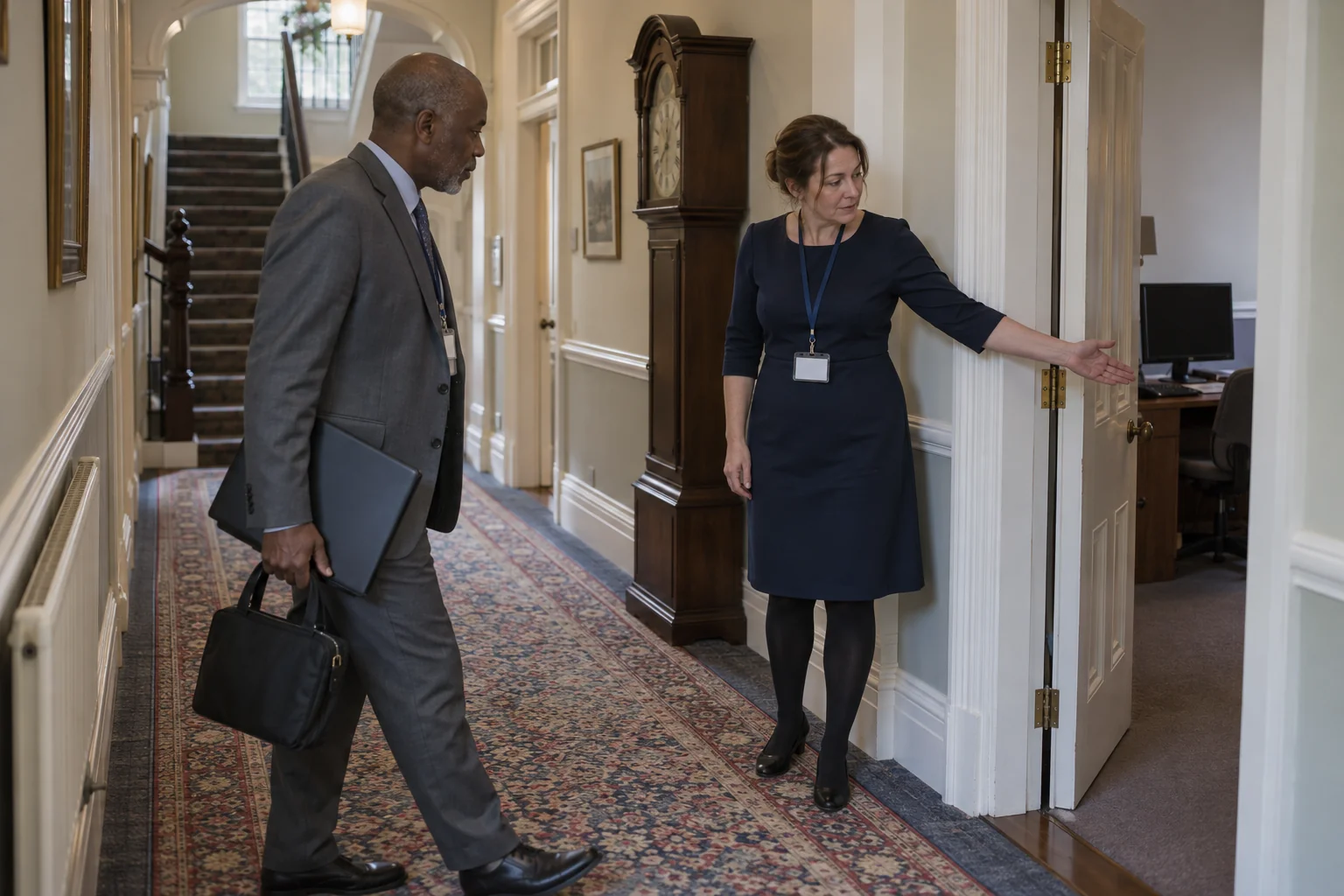
Evidence “may be gathered through both on-site and off-site methods”. On site, inspectors spend their time “observing care and how staff interact with people”, “observing the care environment, including equipment and premises”, “talking with people using the service” and “talking with staff and service leaders”; site visits are used “where people have communication needs that make telephone or video conversations challenging”, “where there are concerns around transparency and confidentiality”, and “to check the validity of evidence we have already gathered”. Visits can be unannounced, and CQC says it will go on site more often where “there is a greater risk of a poor or closed culture going undetected”. Off site, CQC uses national data (for adult social care, the capacity tracker and Skills for Care data among others), the annual provider information return, online reviews of clinical records, direct requests for evidence “most likely by email”, and interviews with staff and leaders, which “may” be online.
The assessment process is therefore continuous rather than a visit: CQC inspectors are gathering evidence about the quality of care delivered between visits as well as during them, and providers should use the guidance for their own service type; local authority assessments and other assessment programmes have separate guidance. A “mock CQC inspection” of the old kind, rehearsing a day, prepares for the observation category and little else.
Two things follow for a provider. CQC will “use information that a provider has available” and, apart from the PIR, “will not specify a particular format”, so a home is judged on the records it keeps for itself rather than on a pack prepared for inspection. And “for now, providers do not need to submit evidence to us proactively. We will ask you for anything we need” – which means the evidence has to be producible on request, at short notice, from systems the provider controls.
What that means category by category for a care home or home care service:
- People’s experience: residents’ and families’ feedback, complaints and compliments and what was done about them, advocacy involvement, the resident and relative meetings and their minutes, the survey and its action plan.
- Feedback from staff and leaders: the staff survey, supervision and appraisal records, team meeting minutes, the freedom-to-speak-up route and its use, exit interviews; and what staff will say when asked what they would do about a concern.
- Feedback from partners: what the local authority safeguarding and commissioning teams, the GP practice, district nurses and the hospital discharge team say about the service, so the relationships have to exist before the assessment.
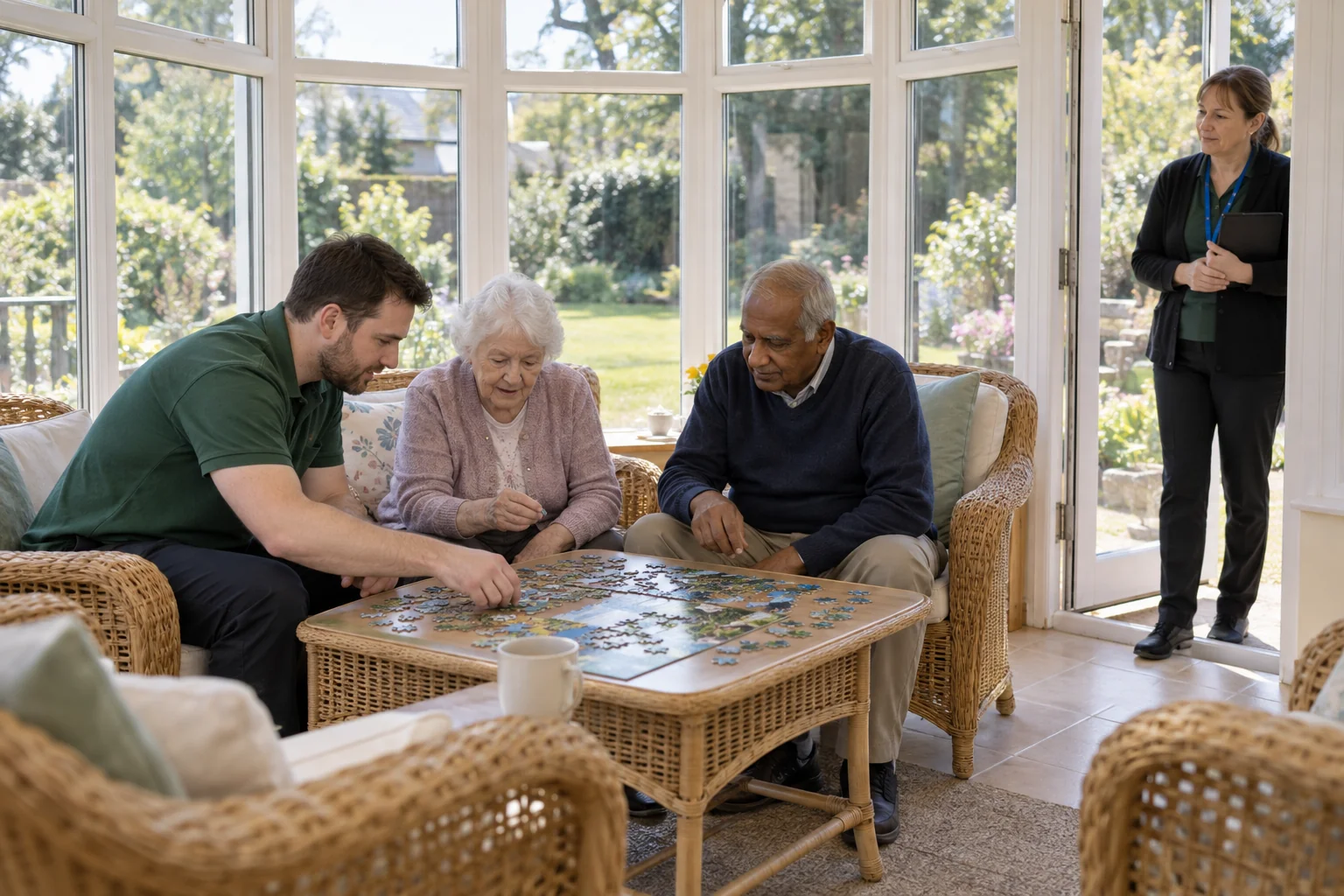
- Observation: the environment, the interactions, the mealtime, the medicines round; nothing here can be prepared, only practised.
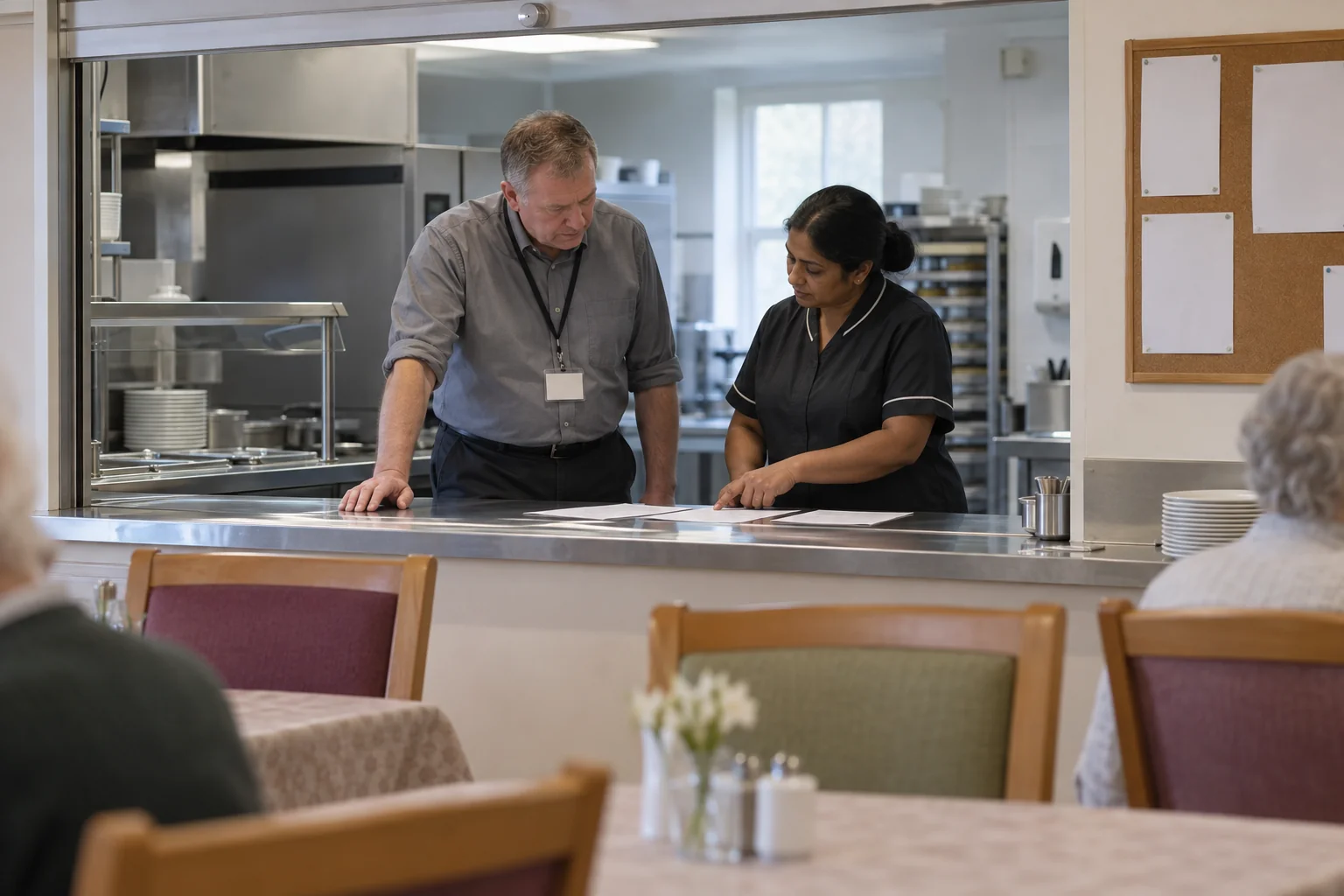
- Processes: audits and their actions, incident and accident records with the learning, safeguarding logs, care plan reviews, medicines audits, staffing rotas against dependency, training matrices, and the case note reviews CQC names – the daily records against the care plan.
- Outcomes: falls, pressure injuries, hospital admissions, weight loss, infections, tracked over time and used at governance meetings.
The statement that ties the six together
The well-led statement on governance, management and sustainability is the one that asks whether the other 33 are being looked at. CQC describes well-led in terms of “effective governance and management systems” where “information about risks, performance and outcomes is used effectively to improve care”, and the regulation behind it is Regulation 17, which requires systems that “assess, monitor and improve the quality and safety of the services” and “maintain securely an accurate, complete and contemporaneous record in respect of each service user … and of decisions taken”. CQC’s guidance on Regulation 17(1) adds that the system “must include scrutiny and overall responsibility at board level or equivalent”.
So under every quality statement the evidence has the same shape: the thing happened, the record shows it, the record was reviewed, and something changed as a result. That is what CQC means by continuous improvement and by high-quality care that treats people as individuals: not a standard reached once, but a loop the governance system can show turning. A safeguarding concern was raised and referred (safe); the resident’s wishes were recorded and met (caring, responsive); staff were asked and heard (well-led); the log was reviewed for patterns and the training changed (learning culture). The scores are judgements about evidence, and missing records may prevent a provider demonstrating the standard, alongside the other evidence inspectors consider.
The evidence that lives in messages
Run the six categories over a real week in a care home and notice where the evidence sits. Feedback from staff and leaders: the team’s honest view of a new rota is in the staff WhatsApp group, not in the survey. Feedback from partners: the district nurse’s worry about a resident’s skin was a text to the senior. Processes: the arrangements for an out-of-hours clinical review were discussed with the on-call manager by message. People’s experience: the daughter who lives abroad raised her concern about her mother’s weight on WhatsApp with the unit lead, and it was answered there. Learning culture: the near miss was discussed between the two carers involved, by message, and never reached the incident log.
Without an agreed capture and retrieval process, that evidence may be difficult to produce when CQC asks. The messages are on personal phones in apps the provider cannot open; the provider cannot lawfully search them without the questions the ICO’s guidance on personal devices raises; and what reaches the records is a later summary, if anything. A learning culture that “listens to” concerns has to be able to show where the concern was raised and what was said back; a governance system that uses “information about risks” has to hold the information. The evidence categories assume the provider can see its own conversations, and the ones that matter most – out of hours, between shifts, with families – are the ones it cannot.
Use the service’s escalation procedure for urgent care or safeguarding concerns; do not wait for a message to be read. Clinical decisions need the appropriate professional input. Record the outcome in the care or safeguarding system, with access to the conversation limited to those who need it.
The answer is not to police staff phones. It is to give those conversations a channel the provider owns, reachable from a personal phone on a night shift, where everyone in it has been told it is on the record, and where the concern, the reply and the decision are the evidence rather than a reconstruction of it. The question for the registered manager and the board is which of the six evidence categories the home could produce, today, for a decision taken by message last night.
Official guidance and your next step
Everything above is drawn from CQC’s published guidance for providers: the assessment framework and the pages for each key question and quality statement; the evidence categories and the sector pages for care homes and supported living and home care and shared lives; and the guidance on how evidence is gathered and how a rating is reached. CQC says it “will sometimes refine and update” the guidance and that providers “must keep up-to-date”; the scoring rules above are the ones in force since 2 December 2024.
This guide is a summary of published guidance for England, not a substitute for it and not legal advice. Some service types are not rated; NHS trusts are assessed with adaptations CQC describes separately.
Then do one thing: take one quality statement – safeguarding is the obvious one – and, for each of the six evidence categories, write down what the service could hand to an inspector tomorrow morning. The blank rows are the assessment.
We build ComplyChat for the work conversations organisations need to keep. The organisational archive described here is available on paid plans, with a connected Microsoft 365 tenant and retention configured by the organisation. It is not an audit tool, a care system or a PIR helper, and it does not produce evidence on its own; what it does is make the conversations that are evidence – the night call to the on-call manager, the handover, the family’s concern, the near miss discussed between two carers – happen on a channel the provider owns, on a compatible phone including a personal one, on the record from the first message with everyone in it told so, filing into the provider’s own Microsoft 365 once the tenant is connected and kept under the provider’s own retention rules. Families and visiting professionals join as guests without an account on your systems. A member of staff’s own messages stay in their own apps. There is no WhatsApp, Signal or Meta anything in the path.
How it works · Why us · Pricing · FAQ