The rule, and what “personal care” makes it cover
Regulation 17(2)(c) of the Health and Social Care Act 2008 (Regulated Activities) Regulations 2014 applies to every registered provider: it must “maintain securely an accurate, complete and contemporaneous record in respect of each service user, including a record of the care and treatment provided to the service user and of decisions taken in relation to the care and treatment provided”. CQC’s guidance on it asks for records that are “complete, legible, indelible, accurate and up to date, with no undue delays in adding and filing information”, that “include an accurate record of all decisions taken in relation to care and treatment and make reference to discussions with people who use the service, their carers and those lawfully acting on their behalf”, that are “accessible to authorised people as necessary in order to deliver people’s care and treatment” and “kept secure at all times”. Regulation 9 requires the assessment and the care plan to be recorded; Regulation 12 requires the risks of care to be assessed and mitigated.
What the record covers is set by the regulated activity. Home care and supported living providers are registered for personal care, which CQC’s scope of registration guidance describes as “providing personal care for people who are unable to provide it for themselves because of old age, illness or disability”, which “must be provided in the place where those people who need it are living at the time when the care is provided”. That “includes personal care provided through domiciliary or homecare services, and housing with care or supported living services”. Two consequences follow. A provider that “only provide[s] housing support or social support (such as help with shopping)” or “only provide[s] support to administer, prompt or supervise medicines” is not carrying on the regulated activity at all, and a supported living service must keep “a real separation between the provision of personal care and the accommodation agreements”: the care arrangement must remain genuinely separate from the tenancy. Record housing information where it is relevant to agreed support or safety, with a lawful basis and appropriate information sharing.
The third consequence is the one that shapes everything below. The person’s home is not the provider’s premises. CQC does not inspect it as it inspects a care home, the provider cannot control who else is in it, and the record kept there must remain available for care while being protected from unauthorised access. The duty is the same; the method has to be different.
What a home care or supported living provider must record
For each person receiving personal care:
- The assessment and the care or support plan (Regulation 9): needs, preferences, outcomes the person wants, the tasks each visit or shift delivers, how the person wants them done, and the review dates.
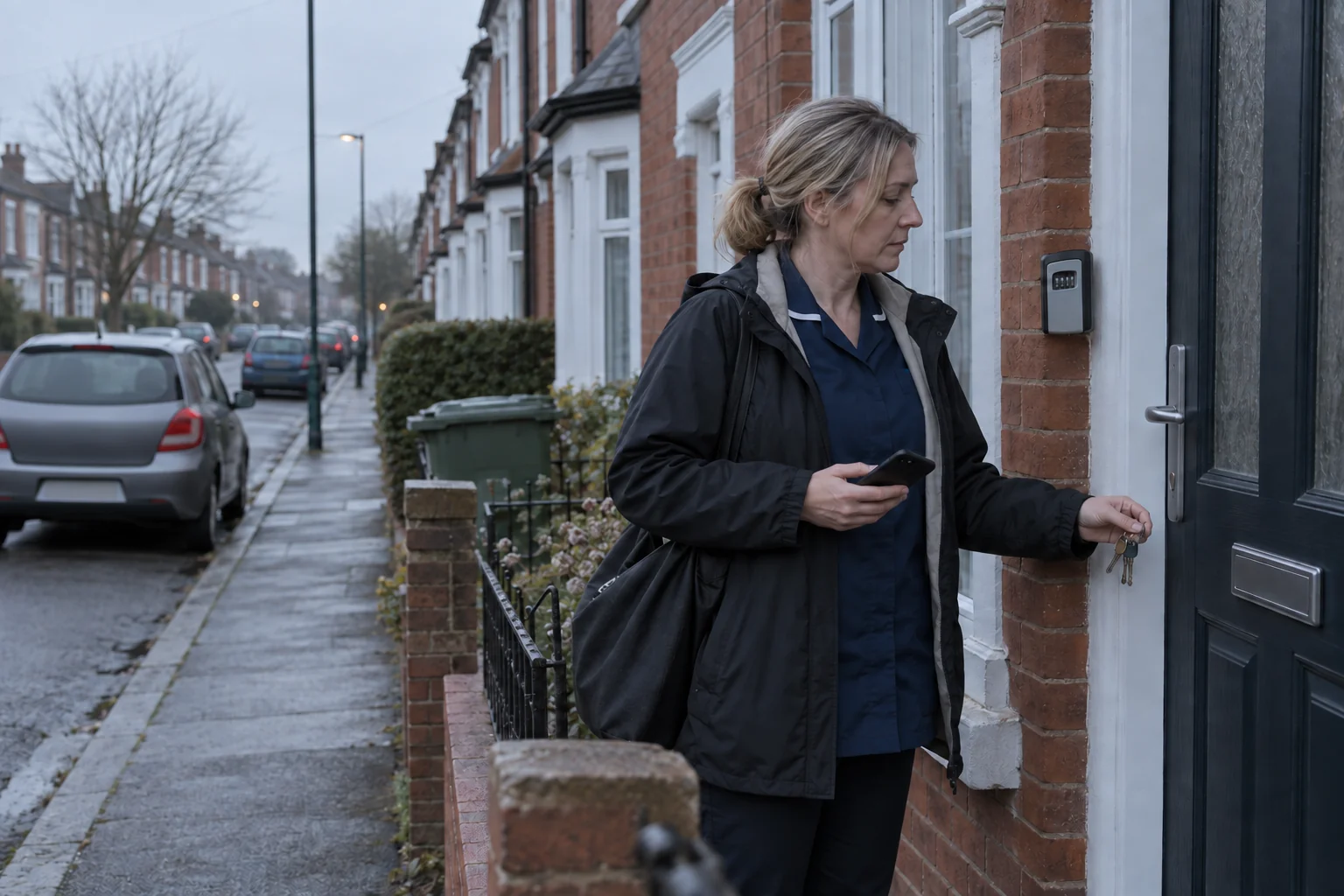
- Risk assessments (Regulation 12), including the ones a care home never needs: the home environment, access and key safes, lone working, moving and handling with the person’s own equipment, pets, other people in the house, travel between visits.
- Visit notes or support notes: the record of the care delivered on each visit or shift, by whom, at what times.
- Medicines records where the provider administers or prompts medicines, on a MAR chart kept in the home and reconciled by the office.
- Mental capacity and consent records: capacity assessments for specific decisions, best-interests decisions and who was consulted, and – in supported living especially – the evidence that support is the least restrictive option, with any restrictions on the person’s liberty identified and authorised.
- Consent to enter and to hold keys, and a record of money or property handled on the person’s behalf, receipted and countersigned.
- Incidents, accidents, safeguarding concerns and complaints and what was done, including notifications to CQC and referrals to the local authority.
- Contact with families, GPs, district nurses, social workers and the housing provider: what was discussed and agreed, because the regulation asks the record to “make reference to discussions with … their carers and those lawfully acting on their behalf”.
- Missed and late visits, with the reason and the action taken, as a record in their own right.
For the service, under Regulation 17(2)(d): staff records meeting Schedule 3 and Regulation 19; training, supervision and spot-check records; rotas and the visit schedule as planned against the visits as delivered; lone-working and welfare-check records; policies; audits and actions; the statement of purpose; CQC notifications; the duty of candour record; and the complaints log. Where a commissioner requires electronic call monitoring, the call-monitoring data is a management record too, and one the commissioner and CQC will both read.
The record in two places
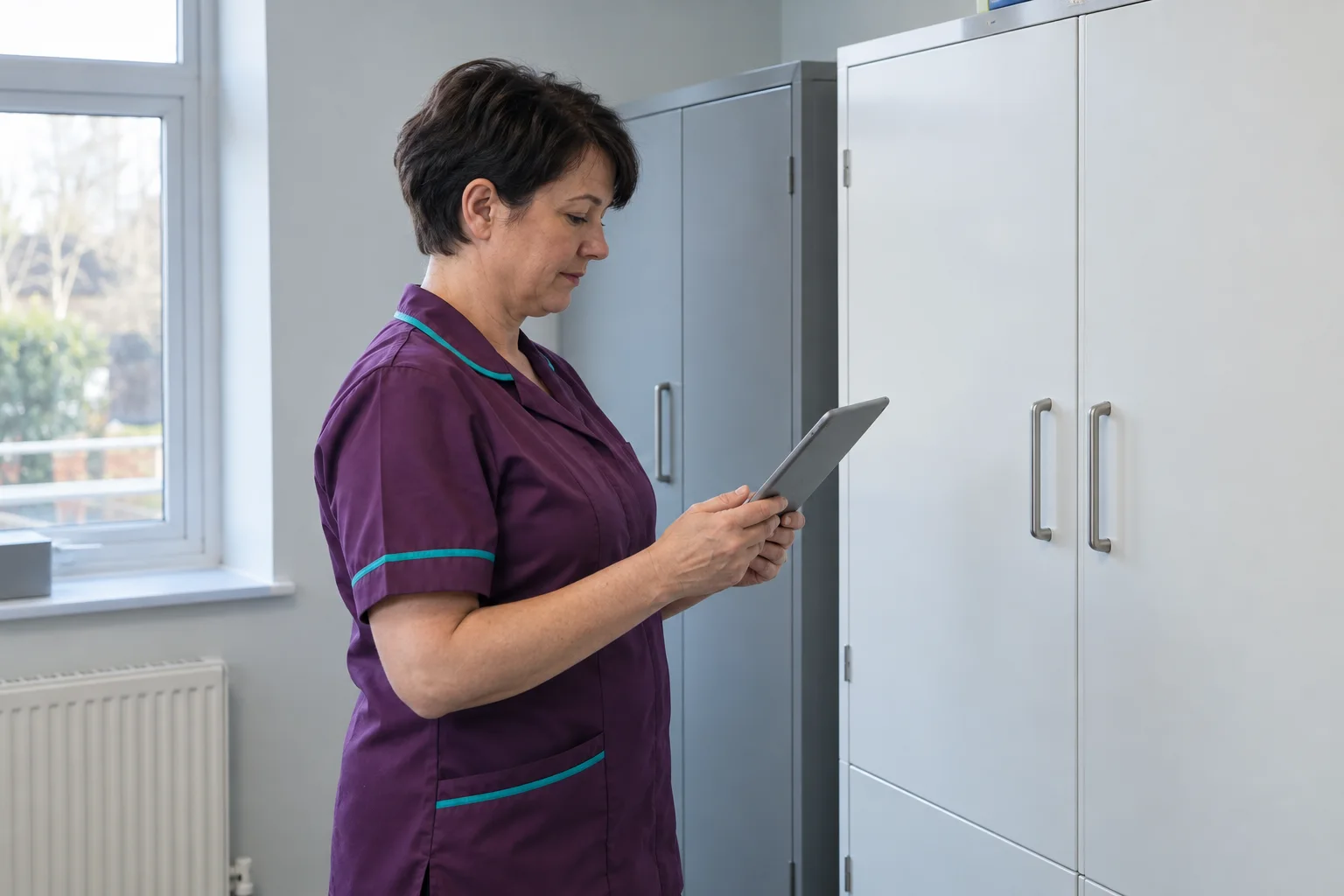
A domiciliary care record lives in two places at once and the provider has to decide, in writing, which is the record of truth. The folder in the house – increasingly a tablet or the worker’s phone app, sometimes still paper – holds the care plan, the risk assessments, the MAR chart, the visit notes and the contact sheet, because the next worker through the door needs them and because the person needs access to information about their care. Family access depends on the person’s consent, lawful authority or another applicable basis; a family relationship alone does not confer access. The office record holds the same plus everything the house should not: the assessment history, safeguarding and complaint files, staff and rota records, and the audit trail.
Good record keeping across the two is what gives continuity of care: the next care worker, the district nurse and the out-of-hours GP all rely on the folder, and the Care Quality Commission, the commissioner and the safeguarding team rely on the office. Data protection and confidentiality run both ways – the house folder needs secure storage and access controls, and the office record may contain confidential third-party information requiring separate handling – so staff training on what is written where is part of the policy, not an afterthought. The rules that keep the two in step: every entry made in the house reaches the office within a stated time (electronic systems do this at the point of writing; paper folders are collected or copied on a cycle the policy states); changes to the plan are made at the office and reissued to the house, so the house never holds a plan the office has superseded; the office reconciles the MAR chart against the visit notes; and nothing about a third party – a neighbour, another tenant, a family dispute – is written in the house folder where anyone in the household can read it. Under UK GDPR the provider is controller of both halves, the person can ask to see either, and the ICO’s guidance on looking after care records applies to a folder on a kitchen shelf as much as to a server.
Supported living adds a line the policy must draw. The person is a tenant; the housing provider has its own records about the tenancy, repairs and rent; the care provider records support. A support note about helping the person contact their landlord may be appropriate where it relates to agreed support. Record only what is relevant, respect the person’s choices, and keep the care service separate from tenancy enforcement.
Visit notes and support notes: what they have to show
A visit note is the evidence that the visit happened, that the care planned was delivered, and that the worker noticed the person. The elements that stand up:
- Arrival and departure times, by the worker and, where used, by the call-monitoring system; a note that is timed only by the worker is weaker evidence when a family or a commissioner disputes the length of a visit.
- The tasks delivered against the plan, and any planned task not delivered with the reason and what was done instead.
- Medicines prompted, administered or refused, on the MAR, with the note cross-referring.
- Observations, factually: skin, mobility, mood, appetite, the state of the home, whether the person had eaten or taken fluids since the last visit.
- The person’s own voice: what they asked for, what they chose, what they said about how they were.
- Changes and escalation: what was different from the last visit, who at the office or in the family was told, and what they said. A home care worker may be the only professional to see a person that day; prompt reporting of a change can be an important part of the safeguarding response.
- Anything that affected the visit: could not gain access, another person present, equipment faulty, the person declined care.
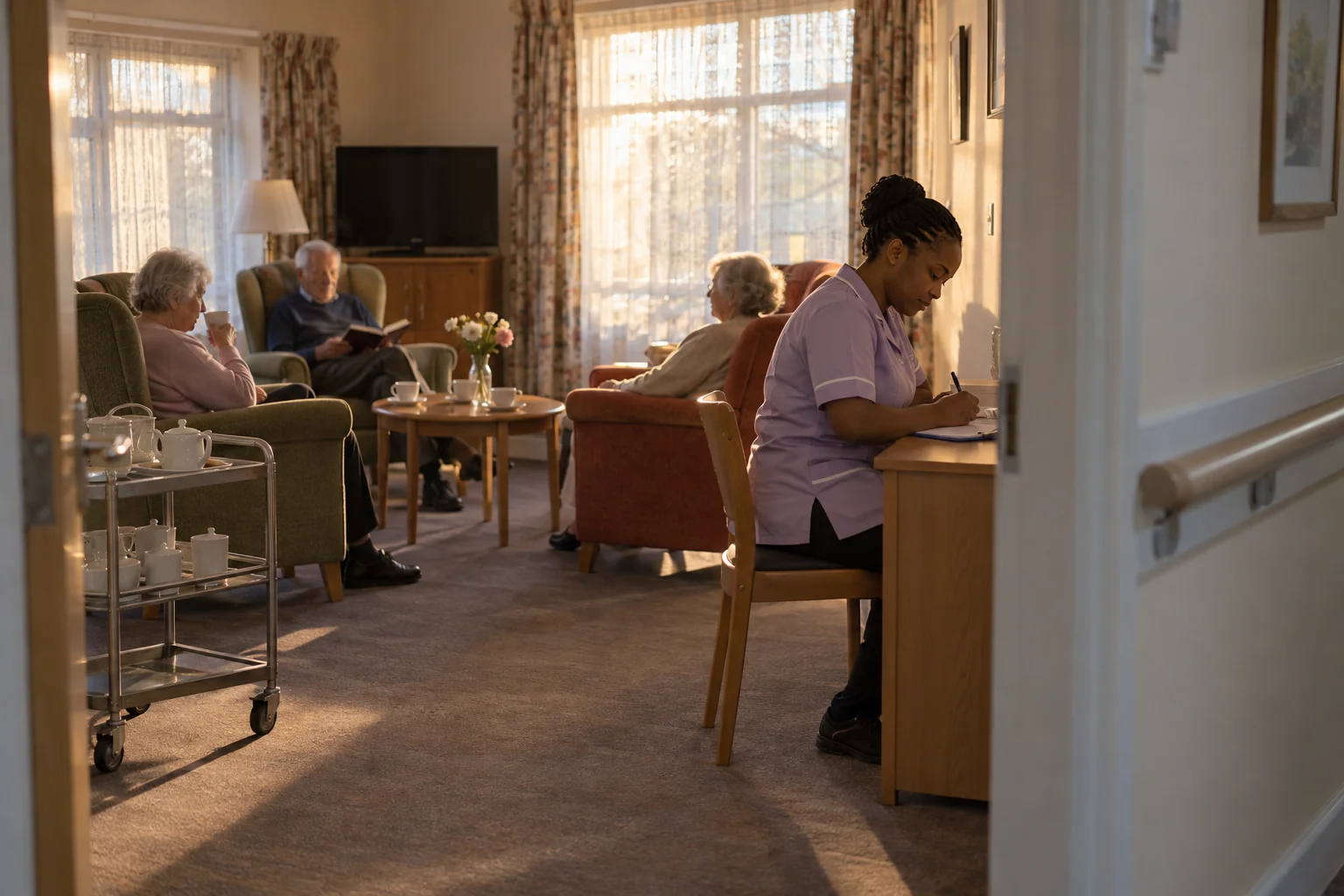
In supported living the note is usually longer and about a shift rather than a visit, and it is written for outcomes: what the person did with their support, what they are working towards, what independence looked like today, as well as the personal care given. For people with learning disabilities whose person-centred support is meant to build skills, a month of notes that only record tasks done to them is a record of the wrong service; support planning, the support needs identified and the personalised outcomes agreed should be visible in the notes the support staff write. Digital systems built for the supported living model help here by prompting against the plan and by taking the administrative burden off frontline staff, though a template that only offers tick boxes produces the same empty record faster. The Mental Capacity Act runs through these notes: a decision the person made with support is recorded as their decision; a decision made for them is recorded with the capacity assessment and the best-interests reasoning behind it.
Missed and late visits get their own record because they are the failure most often found in home care assessments and the one commissioners monitor: the visit that was planned, the time it was due, why it was missed, when the person was contacted, what was done, and whether the person came to harm. The provider that can produce that list, with its pattern by round and by day, has the evidence for the safe and effective staffing quality statement; the one that cannot is scored on the gap.
Who reads the record, and how long it is kept
CQC assesses home care and shared lives services against the same quality statements as any other provider, drawing on evidence categories it publishes for that group. Because the homes are not regulated premises, the assessment leans on the office and on the phone: interviews with people and families, calls to staff, the provider information return, and the office records – care plans, visit notes, call-monitoring data, missed-visit logs, rotas, supervision and spot-check records – read against each other. CQC’s process evidence includes “case note reviews of people’s care or clinical records”, so a sample of visit notes will be read against the plan and the MAR chart.
The other readers are the commissioner, who reads call-monitoring data and missed-visit reports under the contract and may audit files; the local authority safeguarding team in a section 42 enquiry, for whom the visit notes are the timeline; the coroner, after a death at home of a person receiving care; the person themselves and those with authority to act for them, under UK GDPR and a lasting power of attorney; and, in supported living, the housing provider, who may legitimately need some of what the care provider knows and must not be given the rest.
Retention follows the provider’s written schedule. There is no single statutory period for adult social care records in England; the NHS Records Management Code of Practice, which many providers adopt as the “nationally recognised guidance” CQC’s Regulation 17 guidance refers to, treats them as records kept for years after care ends, and the possibility of a claim, a safeguarding adults review or an inquest argues the same way. The schedule has to cover the folder in the house (which is retrieved when care ends), the office record, the electronic system’s exports, and the call-monitoring data, and it has to be applied.
The lone worker’s conversation with the office
Everything above describes a record that is written after the fact by a worker who was alone. Now look at how the decisions in it are actually taken. The worker who cannot get an answer at the door at seven in the morning messages the coordinator: “no answer at Mrs B, curtains closed, what do I do?” The response and any action under the missed-access or emergency procedure are part of the care record. The worker who finds a person on the floor calls the office on her own phone because it is in her hand. The evening round’s group chat carries the real handover: “Mr C’s daughter has a question about the new prescription; please contact the responsible clinician.” The on-call manager, at home, authorises a change to a visit by text. In supported living, the night support worker and the manager on call decide by message whether a tenant’s distress is a safeguarding matter or a bad night.
In a care home some of this happens face to face and some of it reaches the notes. In home care and supported living these conversations may happen by telephone or message while a worker is alone. The service needs a reliable way to capture relevant decisions promptly. Regulation 17 asks for “decisions taken in relation to the care and treatment provided” and for “discussions with … carers and those lawfully acting on their behalf”; the decisions and the discussions are on personal phones, in apps the provider cannot open, and when the safeguarding enquiry asks what the coordinator said at 07:04 the provider is asking a care worker for a screenshot.
Use the service’s escalation procedure for urgent care or safeguarding concerns; do not wait for a message to be read. Clinical decisions need the appropriate professional input. Record the outcome in the care or safeguarding system, with access to the conversation limited to those who need it.
The remedy is not to forbid the messages; a lone worker with no way to reach the office is the greater risk, and CQC would say so. It is to give those conversations a channel the provider runs, that works from any phone on any doorstep, where the coordinator or the on-call manager is in the conversation from the first message, where everyone in the channel has been told it is on the record, and where the worker’s question, the office’s answer and the family’s message are kept as they happen rather than reconstructed. The question for the registered manager is whether the provider could produce, today, the conversation in which the last out-of-hours decision about a person’s care was taken.
Official guidance and your next step
The primary sources are the Health and Social Care Act 2008 (Regulated Activities) Regulations 2014 (Regulation 2 and Schedule 1 for the definition of personal care; Regulations 9, 12 and 17) and CQC’s guidance on Regulation 17; CQC’s scope of registration guidance on personal care and its housing with care guidance on supported living and extra care; the evidence categories for homecare and shared lives services; the Mental Capacity Act 2005 Code of Practice; and the ICO’s guidance on looking after care records. The Homecare Association publishes sector guidance on records and call monitoring for its members.
This guide is a summary of published guidance for England, not a substitute for it and not legal advice. Shared lives schemes and extra care housing have their own registration positions; providers in Wales, Scotland and Northern Ireland are regulated under different frameworks.
Then do one thing: take yesterday’s missed or late visits and, for each, find where the decision about what to do was taken. If it was a message on a personal phone, that is where the record begins and where the provider cannot reach it.
We build ComplyChat for the work conversations organisations need to keep. The organisational archive described here is available on paid plans, with a connected Microsoft 365 tenant and retention configured by the organisation. It is not a care planning, rostering, call-monitoring or medicines system, and it does not replace the visit note; the care record lives in your care system. What it is, is the channel for the conversations between a lone worker and the office, between the on-call manager and the round, and with families who have no account on any of your systems – on a compatible phone including a personal one, on any doorstep, on the record from the first message with everyone in it told so, filing into the provider’s own Microsoft 365 once the tenant is connected and kept under the provider’s own retention rules. A worker’s own messages stay in their own apps. There is no WhatsApp, Signal or Meta anything in the path.
How it works · Why us · Pricing · FAQ