No care regulation names a business continuity plan: the plan is how a home shows it has assessed and reduced the risks the regulations already make it responsible for. This guide sets out what CQC wants the plan to contain, what the Data Security and Protection Toolkit asks about IT and care records, how to test the plan, which disruptions must be notified to CQC, and what to record when it is used.
Where the expectation comes from
The Care Quality Commission lists a business continuity plan among the documents a care home needs to send with a new provider registration application. Its page Business continuity plan, part of its guidance on supporting documents for new provider registration applications (last updated 2 February 2026), names the services that must send it as “Care homes” and says: “A business continuity plan shows how your care home will keep running during and after a disruption. This could be a pandemic, power cut, staffing shortage or natural disaster.”
No care regulation names a business continuity plan. CQC's page lists the related regulations as Regulation 12 (safe care and treatment), Regulation 15 (premises and equipment), Regulation 17 (good governance), Regulation 18 (staffing) and Regulation 20 (duty of candour), all in the Health and Social Care Act 2008 (Regulated Activities) Regulations 2014. Two of them carry the underlying duty to assess and reduce risk. Regulation 12(2) includes “assessing the risks to the health and safety of service users of receiving the care or treatment” and “doing all that is reasonably practicable to mitigate any such risks”, and Regulation 17(2)(b) requires systems that enable the provider to “assess, monitor and mitigate the risks relating to the health, safety and welfare of service users and others who may be at risk which arise from the carrying on of the regulated activity”. The Regulation 18 on CQC's list is the staffing regulation; the duty to tell CQC about a disruption is a different regulation 18, in the 2009 Registration Regulations, covered in section 05.
The plan also has to protect the home's records. Article 32(1) of UK GDPR lists, among the security measures a controller and a processor are to put in place as appropriate, “the ability to restore the availability and access to personal data in a timely manner in the event of a physical or technical incident” and “a process for regularly testing, assessing and evaluating the effectiveness of technical and organisational measures for ensuring the security of the processing.” For a care provider that completes the Data Security and Protection Toolkit, standard 7 asks about the plan directly (section 03).
Two limits on that picture. CQC's page names care homes only: a home care agency is bound by the same regulations, but CQC does not list the document for it at registration (see domiciliary care policies). And the Civil Contingencies Act 2004 places no emergency planning duties on care providers: Schedule 1 to the Act, which lists the Category 1 and 2 responders, names local authorities and NHS bodies but no care home or care provider. This guide is about England, with the Welsh notification rule in section 05; Scotland's requirements are not covered.
What a care home business continuity plan should contain
CQC's registration page says what it wants to see. Taken in its order, it gives a contents list to write to:
- The risks. “We want to see that you have clearly identified potential risks to your service.” CQC's examples are severe weather; flu outbreaks or pandemics; utility failures (for example, gas, water or electricity); IT system failures and cyber attacks; staffing shortages; financial instability; supplier failure; and building damage or evacuation needs. The list begins “These could include”, so it is a starting point, not a required set: add what your own building, location and residents make likely.
- The services that must keep running. CQC wants to see “that you have identified and prioritised which services must keep running, such as giving medication, providing food and safeguarding.” Write down, for each, how long it can wait (a medication round cannot; redecoration can) and what the minimum safe version looks like.
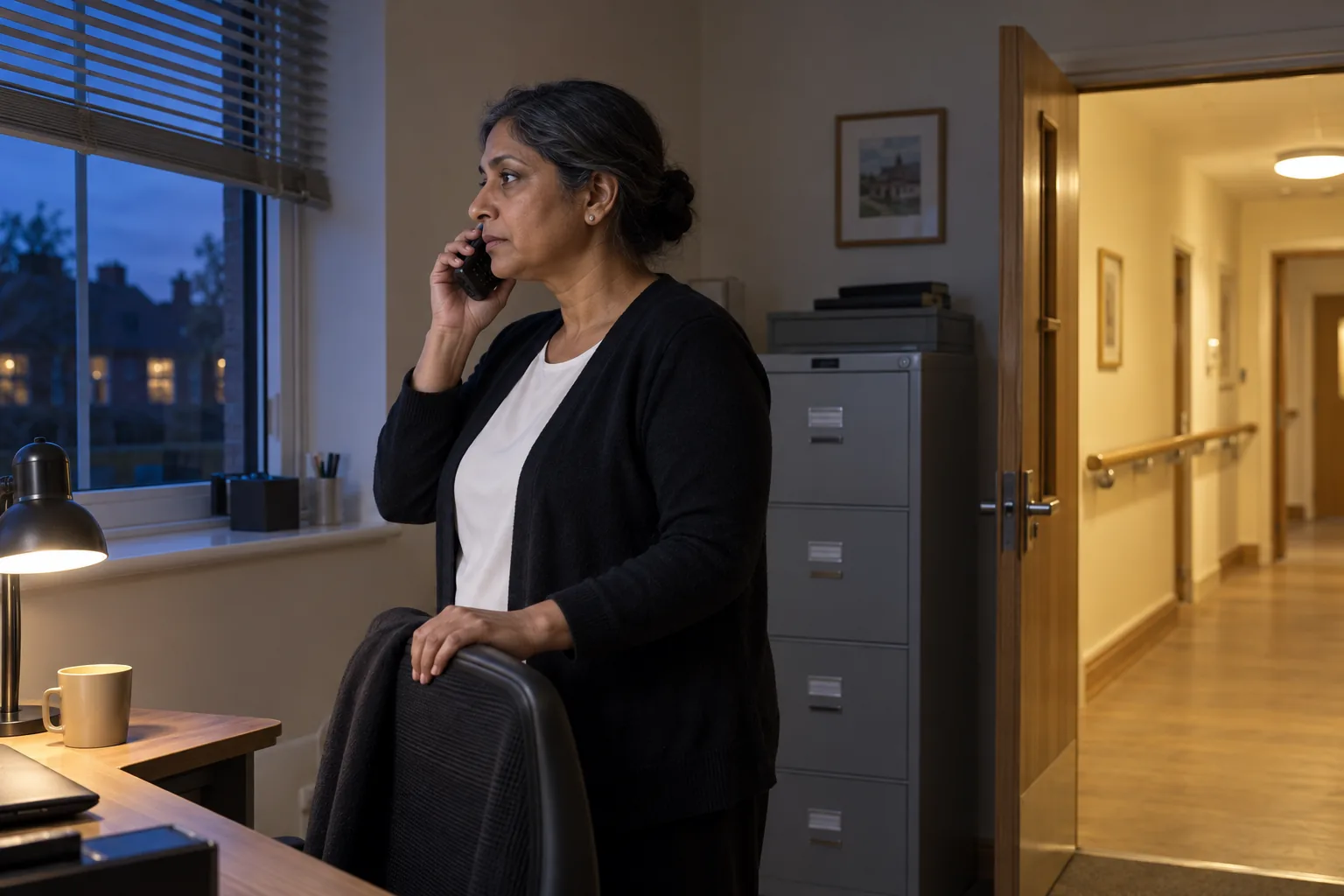
- Roles and contacts. “Your plan should contain details of which roles are responsible for which actions. This includes who will activate and manage your plan.” It should also hold “contact details for emergency services, relevant suppliers and local authorities so your staff know who to contact in the event of a disruption.” Name who holds the plan at night and at weekends, when the registered manager is off site.
- Communication. CQC asks how you will communicate during a disruption with “people who use your service and their families”, with “staff”, and with “your local commissioner”. Agree who tells residents, who rings families and who calls the commissioner.
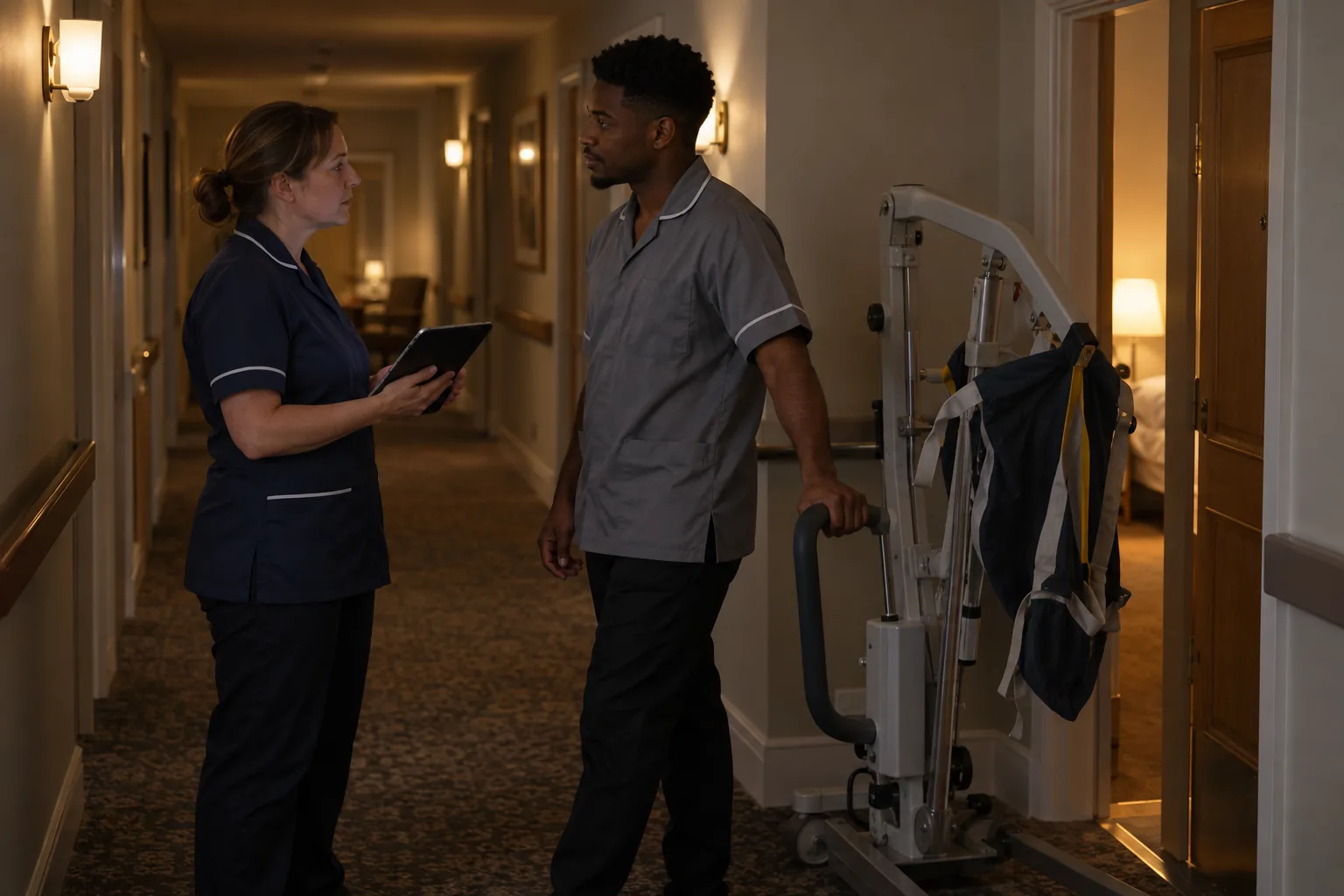
- Staffing. “We want to see your plans for redeploying staff, using agency workers, or working remotely. We also expect to see details of how you will train any emergency staff.” An agency carer arriving in the middle of an incident needs a short induction card: residents at highest risk, the fire procedure, who is in charge.
- Evacuation and relocation. CQC wants contingency plans “including safe evacuation routes and agreements with other care providers or local authorities for relocation where necessary.” An agreement made in advance, with a named neighbouring home or the council, is worth far more than a phone list.
- IT and data. CQC wants to see that “you have backup systems, data recovery plans and cybersecurity measures in place” and “plans to restore normal service if there is disruption”. Section 03 sets out what the toolkit adds.
- Testing and review. “Your plan should state: how often you will review it; how you will test your plans to make sure they are effective; how you will learn from any incidents that occur”. Section 04 covers testing.
Rather than a separate plan for every scenario, many homes write the plan around the effects that recur – loss of staff, loss of power, heating or water, loss of the building, loss of IT, loss of a key supplier – with a one-page action card for each that the senior on shift can follow without the manager. A power cut and a flood both end in the same questions: which residents depend on powered equipment, how the home keeps people warm and fed, and when it moves them.
Financial instability and supplier failure are on CQC's list because a provider can fail too. If a CQC-registered provider “becomes unable to carry on that activity because of business failure”, section 48 of the Care Act 2014 requires the local authority, for so long as it considers necessary, to meet the needs the provider was meeting in its area, whether or not the adult is ordinarily resident there or meets the eligibility criteria, and section 48(5) lets it charge for doing so. The council meets residents' needs; it does not take over the business. For providers in CQC's market oversight regime, section 55 lets CQC, where it considers there is a significant risk to the financial sustainability of the provider's business, “require the provider to develop a plan for how to mitigate or eliminate the risk”. Most care homes are outside that regime.
IT, care records and cyber: what the DSPT asks
The Data Security and Protection Toolkit 2026-27 (version 9) was released on 1 September 2026, according to the toolkit's release notes, and NHS England's news item of 2 October 2026 says “The deadline for the Data Security and Protection Toolkit is 30th June 2027.” Category 3 includes social care providers, and version 9 added a category 3a for providers in CQC's market oversight regime, with the same mandatory items below. For a care provider that completes the toolkit, standard 7 turns the IT part of the plan into specific questions, taken here from the assertions and evidence items for categories 2, 3 and 4 (version 1.1):
- 7.1.2, mandatory: “Does your organisation ensure its business continuity plan covers data and cyber security, and that it is regularly reviewed and tested?” The tooltip asks what you would do “to ensure continuity of service if: you had a power cut; the phone line/internet went down; you were hacked; a computer broke down; the office became unavailable (for example through fire).” It adds: “Your plan should include communications with other organisations and your data protection obligations.”
- 7.3.2, mandatory: “Are all emergency contacts kept securely, separate from your computer, and are up-to-date?” The tooltip says to store the list “somewhere separate from your computer or IT system, such as having a hardcopy”, and that it should include “your IT support company, IT systems suppliers, ICB/local authority commissioner(s), NCSC reporting line, and your Data Security and Protection Lead.”
- 7.3.4, mandatory: “Are backups routinely tested to make sure that data and information can be restored?” The tooltip says backups should be “tested at least annually”, and that the plan to restore from backup “should include which systems need to be recovered, and in what order”. The toolkit also asks about offline backups (7.3.6), though that item is not marked mandatory for category 3.
- 7.2.1 and 7.1.7: testing the plan, covered in section 04.
The hardest hour is usually the one after the care system stops working. If medication administration records and care plans are digital, decide in advance what staff will work from without them: a printed or exported copy of the current medication records and each resident's essential needs, refreshed on a schedule and kept securely where the senior on shift can reach it. That is our suggestion, not a toolkit item, but it is what makes 7.1.2's “ensure continuity of service” true at the next medication round. Ask your care system supplier how quickly it restores access; the answer belongs in your plan.
A cyber attack can also be a personal data breach with its own reporting clock, and care home data protection covers that route. The roles that own the toolkit, including the Data Security and Protection Lead the contact list names, are in information governance policy for care providers.
Testing and reviewing the plan
CQC asks the plan itself to say how often it will be reviewed and how it will be tested; it sets no frequency. The toolkit does, for the data and cyber part. Item 7.2.1, mandatory for category 3, asks “How does your organisation test the data and cyber security aspects of its business continuity plan?” and says “This should be in the last twelve months.” Item 7.1.7, new for category 3 in version 9 and not marked mandatory, asks whether the plan has been tested or exercised for a data or cyber incident “within the last 12 months”, and its tooltip says “A test does not need to be a full simulation.” A tabletop walkthrough, where the team talks through what it would do if a key system were unavailable, counts as an exercise. The tooltip asks you to “Record the date, who participated, what was discussed, and any actions or learning that followed.”
A tabletop exercise for a care home can take an hour round the office table. Useful scenarios are the ones the plan most needs to answer at three in the morning:
- the power fails at 2am in January, and the night senior is alone with one carer;
- the care system and the medication records cannot be reached at the start of the morning round;
- half the day shift rings in sick with the same stomach bug, and the agency has nobody until the afternoon;
- the main food supplier cannot deliver for three days;
- the boiler fails, the forecast is freezing, and a resident needs oxygen that depends on mains power.
Invite the people who would actually be on shift, including a night senior and, if you use them, a regular agency or bank carer: the plan has to work for the person who does not usually read it. For each scenario, check who decides, who is told, where the contact list is and at what point CQC must be notified. Item 7.2.2 asks what issues and actions the exercise documented, with names of actionees against each, and its tooltip says “Each action should have an owner and timescale.” We suggest reviewing the plan after every real use and every test, and at least once a year. Local authority and NHS contracts can set their own continuity terms, so check yours as well.

When the plan is used: notifying CQC, and the decision log
Using the plan can also trigger a notification. Regulation 18 of the Care Quality Commission (Registration) Regulations 2009 requires the registered person to “notify the Commission without delay” of the incidents it lists. Regulation 18(2)(g) is “any event which prevents, or appears to the service provider to be likely to threaten to prevent, the service provider’s ability to continue to carry on the regulated activity safely, or in accordance with the registration requirements”, and it names four examples (summarised here; the regulation has the full wording):
- too few suitably qualified, skilled and experienced staff employed to carry on the regulated activity;
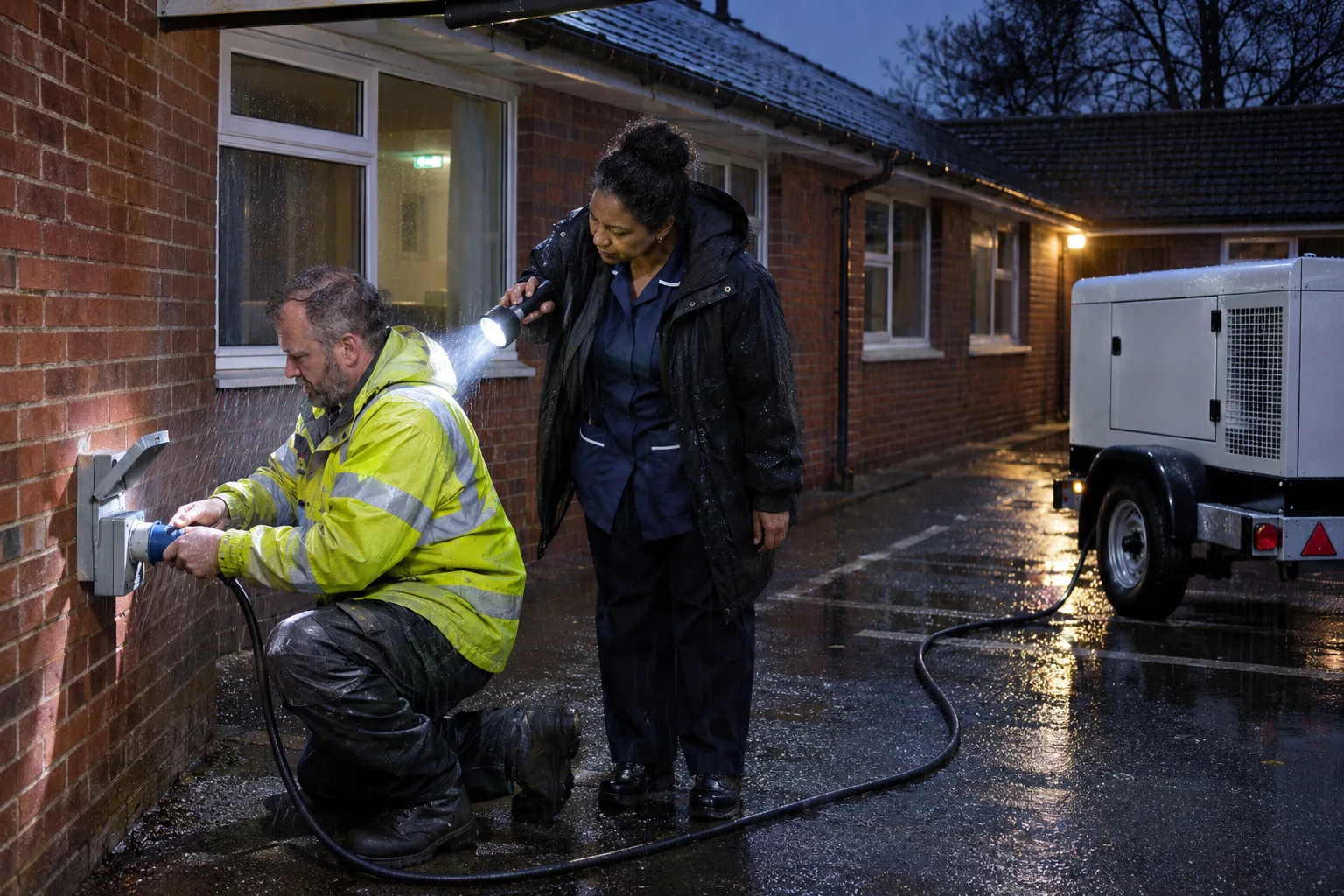
- an interruption in the supply of electricity, gas, water or sewerage to the premises “where that interruption has lasted for longer than a continuous period of 24 hours”;
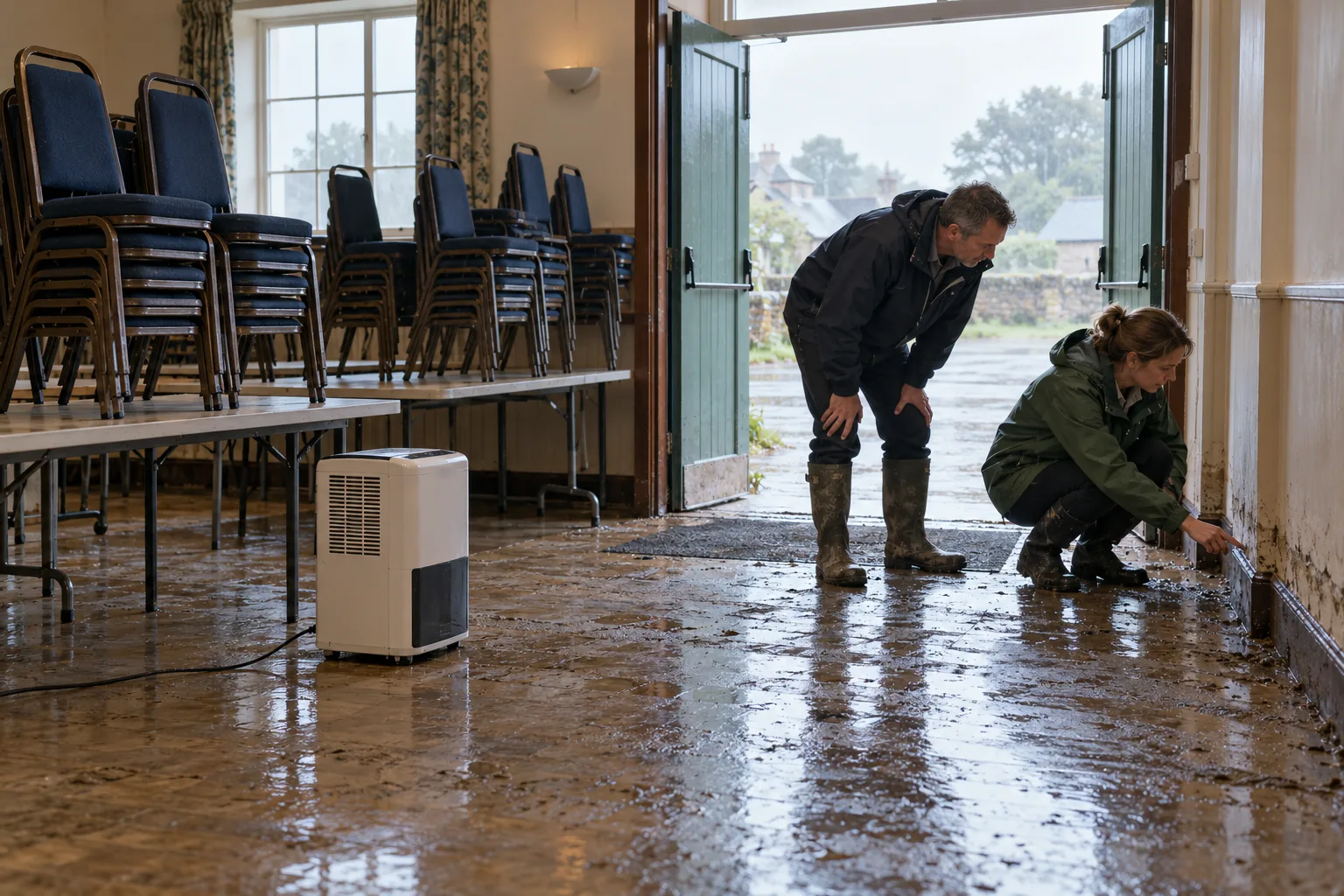
- physical damage to the premises which has, or is likely to have, a detrimental effect on the treatment or care provided to residents;
- the failure, or malfunctioning, of fire alarms or other safety devices “where that failure or malfunctioning has lasted for longer than a continuous period of 24 hours”.
The 24-hour threshold applies only to the utilities and to fire alarms or other safety devices. The regulation sets no time threshold for a staffing shortage or damage to the building: they are notifiable when they threaten safe care. And because the examples sit under the general test, a shorter interruption can still be notifiable if it threatens the service's ability to run safely. Write the triggers into the plan, so the person managing the incident knows when the notification is due; CQC notifications covers the forms, and incident reporting in care homes the other people who may need to be told. In Wales, regulation 60 of the Regulated Services (Service Providers and Responsible Individuals) (Wales) Regulations 2017 requires providers to notify Care Inspectorate Wales of the events in Schedule 3, whose paragraph 20 is “Any events which prevent, or could prevent, the provider from continuing to provide the service safely.”
During an incident, the record that matters most is the decision log: a timed note of each decision, who took it and why. No care regulation prescribes its form, but Regulation 17(2)(d) requires systems that enable the provider to “maintain securely such other records as are necessary to be kept in relation to” the management of the regulated activity, and the log is the record CQC, the commissioner, an insurer or a family may ask for afterwards. It is also where the notification decision is shown, and where any harm that may trigger the duty of candour under Regulation 20 is first written down. CQC asks the plan to say “how you will learn from any incidents that occur”, and a review needs the log to learn from.
Our suggested fields; no regulation sets them.
Number, date and time. In the order things happen, written at the time, not tidied later.
What was decided. Including a decision not to act, such as not moving residents yet, or not notifying CQC yet.
Why. What the person knew at that moment, and the options they considered.
Who decided, and who wrote it down. Names, not only job titles.
What follows. The action, who will do it, by when, and when the decision will be reviewed.
Write it as the incident happens: an entry made at the time carries weight that a reconstruction does not, as contemporaneous notes explains. Afterwards, hold a short debrief, record what worked and what did not, and update the plan and the home's risk assessment together.
Where ComplyChat fits, and where it does not
Start with what it is not. ComplyChat does not write, hold or test a business continuity plan. It is not a care record or medication system, a rota tool or an emergency alerting service, and it does not replace the paper contact list, the phone or the call to the emergency services. Like any online service it depends on power and a phone signal or internet connection, so the plan should name a fallback for it and keep the contact list on paper, as toolkit item 7.3.2 asks.
What it touches is the first hour. Many incidents in a care home begin out of hours, and the first decisions are made on phones: the night senior messages the manager that the heating has failed, the manager asks the deputy whether two residents should move to the warmer wing, bank and agency carers are texted one by one to find cover, and relatives ask what is happening. By the time anyone opens the plan, decisions have been taken, and the messages are the decision log. Held on personal phones, they are slow to gather and lost when someone leaves.
ComplyChat is designed to be the channel a home names in its plan for that hour. A mobile number verified by SMS is the identity, so bank and agency staff without a work account, and families outside the organisation, can be added by mobile number. Everyone added is told the channel is on the record and can object or leave. Messages are recorded on the server as they are sent, so the record does not depend on whose phone survives, and on paid plans, once the provider's Microsoft 365 tenant is connected, conversations are kept within its own Microsoft 365 subscription, under the retention schedules it already runs.
A question for the next managers' meeting: if the power failed at two tomorrow morning, which channel would the night senior use to reach the manager, who decides who is in it, and could the home show CQC afterwards what was decided and when?
Questions people ask
Does a care home need a business continuity plan?
In England, yes in practice: the Care Quality Commission lists a business continuity plan among the documents a new care home provider needs to send with its registration application, and links it to Regulations 12, 15, 17, 18 and 20 of the 2014 Regulated Activities Regulations. No care regulation names a business continuity plan; the underlying duty to assess and mitigate risks comes from Regulations 12 and 17, and the Data Security and Protection Toolkit asks providers that complete it whether their plan covers data and cyber security.
What should be included in a care home business continuity plan?
CQC's registration guidance asks a care home business continuity plan to identify the risks (such as severe weather, pandemics, utility failures, IT failure and cyber attack, staffing shortages, financial instability, supplier failure and building damage), the services that must keep running such as medication, food and safeguarding, who activates and manages the plan, key contacts, communication with residents, families, staff and the commissioner, staffing, evacuation and relocation, IT and data recovery, and how the plan will be reviewed and tested.
How often should a care home test its business continuity plan?
CQC sets no frequency: it asks the plan itself to state how often it will be reviewed and tested. For a provider that completes the Data Security and Protection Toolkit 2026-27, the data and cyber part should have been tested “in the last twelve months”, and a tabletop walkthrough counts as an exercise. A review after every real use is good practice.
Do I have to tell CQC about a power cut or staff shortage?
Yes if it threatens the service: regulation 18(2)(g) of the CQC (Registration) Regulations 2009 requires CQC to be told without delay of any event that prevents, or appears likely to threaten to prevent, the service running safely, including too few suitably qualified staff and an interruption to electricity, gas, water or sewerage that has lasted longer than a continuous period of 24 hours. The 24-hour threshold applies to utilities and fire alarms or other safety devices, not to staffing.
What happens to residents if a care provider fails?
Under section 48 of the Care Act 2014, if a CQC-registered provider becomes unable to carry on its regulated activity because of business failure, the local authority must meet the needs that provider was meeting in its area for as long as it considers necessary, whether or not the person is ordinarily resident there or meets the eligibility criteria. The council meets the residents' needs, and may charge for doing so; it does not take over the business.
What is a business continuity plan in health and social care?
CQC describes a care home's business continuity plan as one that “shows how your care home will keep running during and after a disruption”, such as a pandemic, power cut, staffing shortage or natural disaster. It sets out the risks, the essential services, who does what, and how the home will communicate, stay staffed, protect its records and recover.
Official guidance and your next step
The core sources are CQC's Business continuity plan registration page; Regulations 12 and 17 of the 2014 Regulations; regulation 18 of the 2009 Registration Regulations; sections 48 and 55 of the Care Act 2014; standard 7 of the toolkit's assertions and evidence items for 2026-27; and Article 32 of UK GDPR. Your local authority, commissioner and insurer may have their own templates and terms. Quotations are from the pages named as read on 23 and 24 November 2026.
This guide covers care homes in England, with the notification rule for Wales; it does not cover Scotland, and it is not legal advice.
Then do one thing: print the home's emergency contact list today, give a copy to the night senior, and ask them to find the number for the out-of-hours electrician without logging in to anything. If they cannot, that is the first line of the next version of your plan.
We build ComplyChat for the work conversations care providers need to keep, and an incident is when the most consequential ones happen. Explore Free personal messaging, or compare the paid plans if your organisation needs its conversations kept under the retention schedules within its own Microsoft 365 subscription.
Sources
Every document this guide quotes or links to, in the order it first cites them.
- Business continuity plan cqc.org.uk
- Regulation 12(2) legislation.gov.uk
- Regulation 17(2)(b) legislation.gov.uk
- Article 32(1) of UK GDPR legislation.gov.uk
- Schedule 1 to the Act legislation.gov.uk
- Section 48 of the Care Act 2014 legislation.gov.uk
- Section 55 legislation.gov.uk
- Release notes dsptoolkit.nhs.uk
- News item of 2 October 2026 dsptoolkit.nhs.uk
- Assertions and evidence items for categories 2, 3 and 4 dsptoolkit.nhs.uk
- Regulation 18 of the Care Quality Commission (Registration) Regulations 2009 legislation.gov.uk
- Regulation 60 legislation.gov.uk
- Schedule 3 legislation.gov.uk