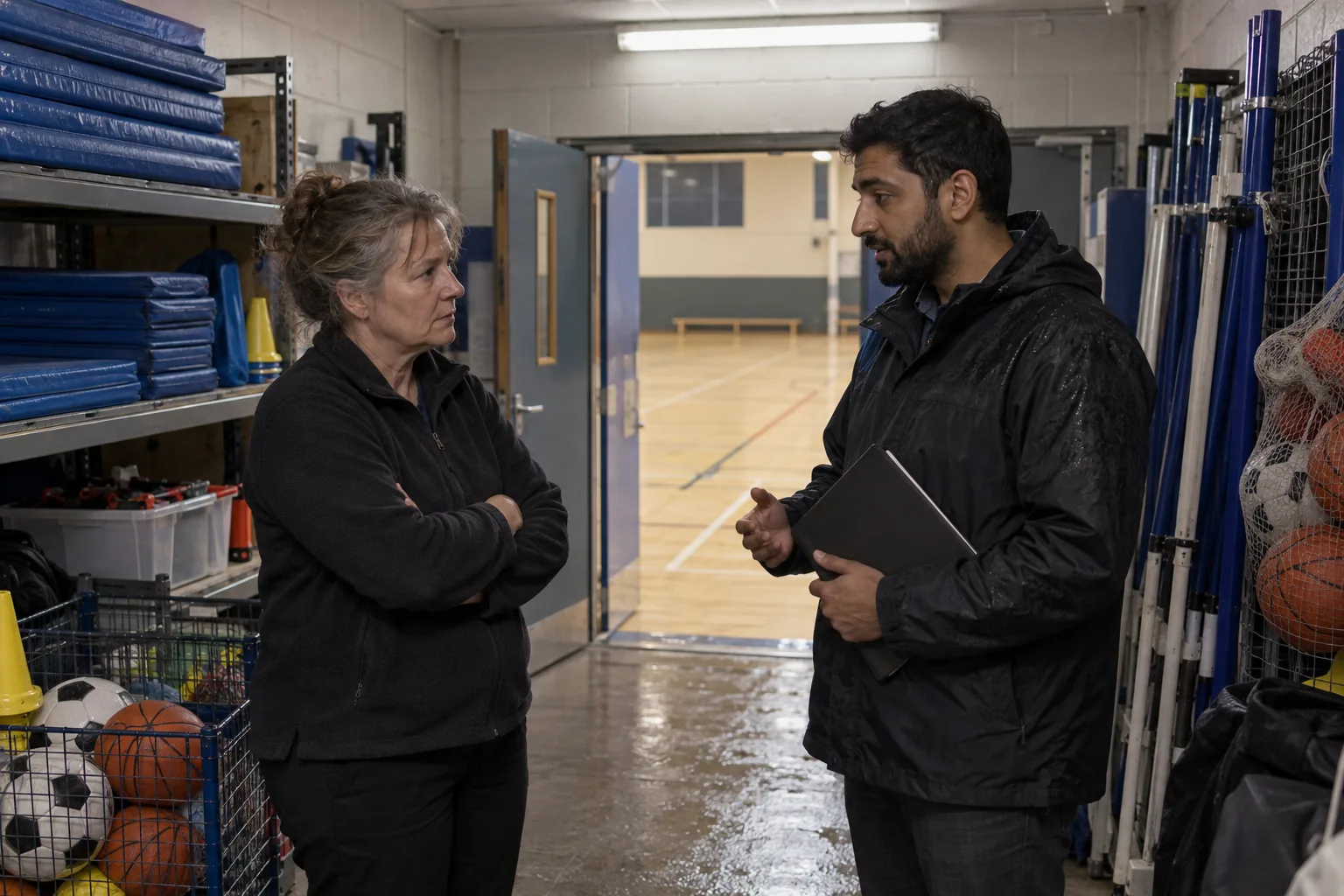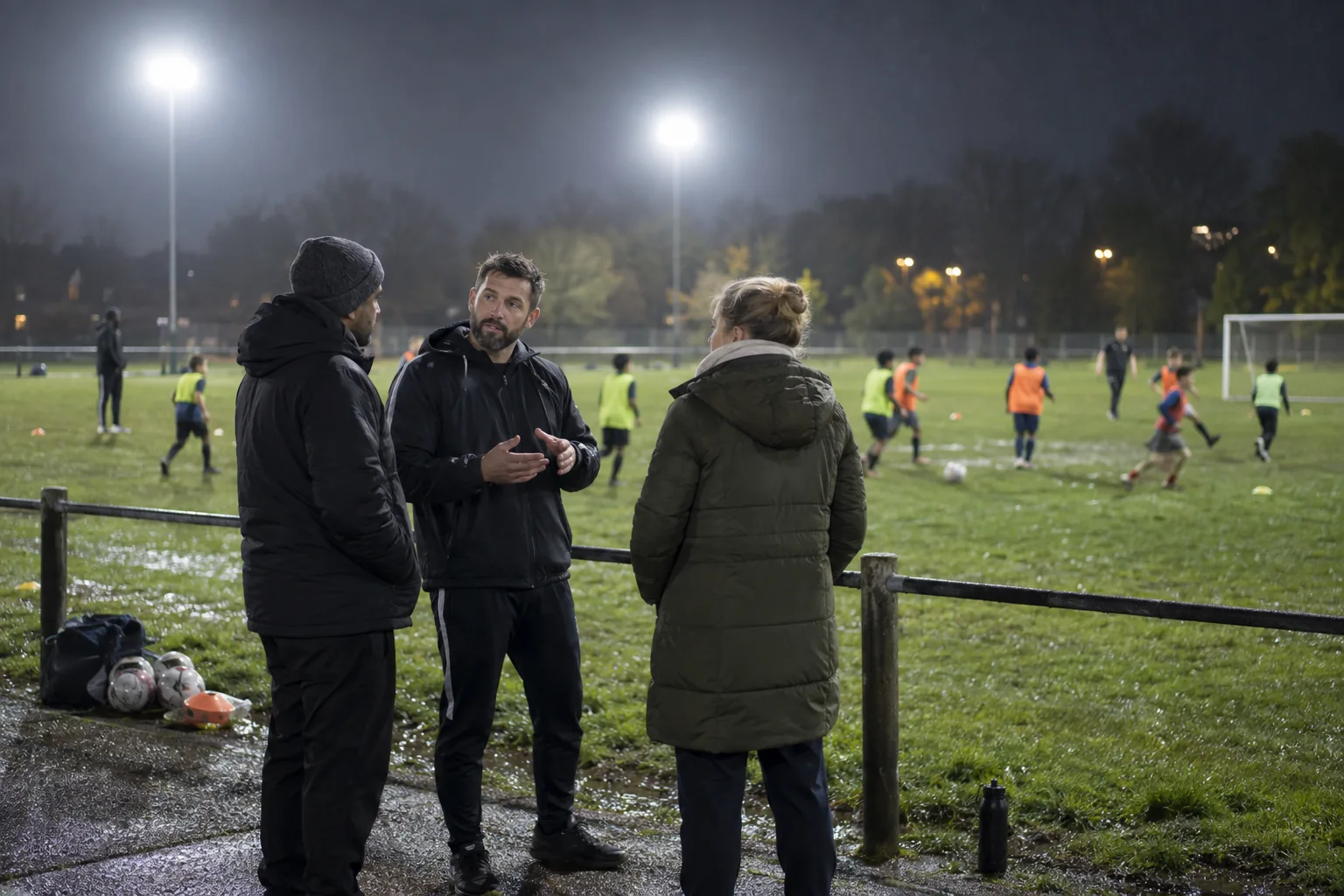

The Act received Royal Assent on 29 April 2026, but the duty starts only when the Secretary of State makes commencement regulations for it, and none has been made; it is expected to come into effect in 2027, according to Home Office answers to Parliament. Until then the duty places no obligation on a school, nursery, charity or children's care service, and staff keep following Keeping children safe in education and Working Together to Safeguard Children, neither of which mentions the new duty yet. This guide is for the designated safeguarding lead, headteacher, nursery manager, youth or sports charity's safeguarding lead or children's home manager who wants to know what the duty will require and what can sensibly be prepared now: who will be a mandated reporter, the five situations that trigger it, to whom and how fast, where the designated safeguarding lead fits, the exceptions, and the record that shows the duty was met.
The duty in section 85, and when it starts
Section 85(1) of the Crime and Policing Act 2026 says: “A person aged 18 or over must make a notification under this section if, in the course of engaging in a relevant activity in England, they are given reason to suspect that a child sex offence may have been committed (at any time).” Section 85(2) says what the notification is. A notification:
- (a) “must be made to a relevant police force or a relevant local authority (but may be made to both);”
- (b) “must identify each person believed to have been involved in the suspected offence (so far as known) and explain why the notification is made;”
- (c) “must be made as soon as practicable (subject to subsections (5) and (6));”
- (d) “may be made orally or in writing.”
The duty is law but not yet in force. The Act received Royal Assent on 29 April 2026, and section 255(1) of the Act says: “Subject as follows, this Act comes into force on such day as the Secretary of State may by regulations appoint.” Sections 85 to 95 and Schedule 12 are not among the provisions the Act brings in by itself, and none of the six sets of commencement regulations made so far brings them in; the latest is the Crime and Policing Act 2026 (Commencement No. 5) Regulations 2026, made on 3 November 2026. On 10 November 2026 legislation.gov.uk's text of section 85 still carried the note “S. 85 not in force at Royal Assent, see s. 255(1)”.
The duty is expected to come into effect in 2027, according to Home Office answers to Parliament. Written answers of 3 August 2026 (HL2355), 7 September 2026 (23390) and 6 November 2026 (39202) each describe the government's work “to ensure readiness and compliance for when the duty comes into effect in 2027”. No month has been given. The Secretary of State may also issue guidance under section 94, which is not yet in force either and says of those in relevant activities “Those persons must have regard to the guidance” and that “Before issuing guidance under this section, the Secretary of State must consult such persons as the Secretary of State considers appropriate.” No draft guidance or consultation had been published on gov.uk by 10 November 2026.
The duty follows the Independent Inquiry into Child Sexual Abuse, which reported in October 2022. The Home Office's Independent Inquiry into Child Sexual Abuse recommendations factsheet says the Inquiry heard from victims and survivors who had told a responsible adult, “with no action being subsequently taken to inform the relevant authorities”, and that “In its final report, the Inquiry recommended that government address this issue by introducing a legal requirement for certain people to report child sexual abuse.”
Two features shape everything below. The duty will be personal: it falls on each adult who is given reason to suspect, not on the organisation or only on its designated safeguarding lead. And it is a duty to pass on a suspicion, not to establish what happened: the question is whether one of the five cases in section 87 has arisen.
Who will be a mandated reporter
Once the duty commences, a mandated reporter will be anyone aged 18 or over engaged in a “relevant activity” in England. Section 85(12) defines a relevant activity as:
- (a) “regulated activity relating to children within the meaning of Part 1 of Schedule 4 to the Safeguarding Vulnerable Groups Act 2006”, or
- (b) “an activity specified in Part 2 of Schedule 12”.
Schedule 4 to the Safeguarding Vulnerable Groups Act 2006 covers, among other things, “any form of teaching, training or instruction of children” and “any form of care for or supervision of children”, and work in establishments that include schools, nursery education, “relevant childcare premises” and “a children's home in England”, in most cases where the activity “is carried out frequently by the same person or the period condition is satisfied”. For most of the settings this guide is for, that means teachers, teaching assistants, nursery practitioners, childminders, coaches, youth workers and children's home staff, paid or voluntary, who work with children often enough to be in regulated activity. The Home Office factsheet gives “teachers, healthcare professionals and sports coaches” as examples.
The group grew on 1 September 2026. The Crime and Policing Act 2026 (Commencement No. 2) Regulations 2026 brought in section 139, which “removes the provisions within Schedule 4 to the Safeguarding Vulnerable Groups Act 2006 (c. 47) which take supervised roles out of regulated activity in the child workforce”. A supervised volunteer who works with children often enough is now in regulated activity, and so will be a mandated reporter once section 85 commences. The factsheet puts the threshold at more than three days in a 30-day period, or overnight between 2am and 6am, and says “Parents who help out on a less frequent basis will not be affected.”
Part 2 of Schedule 12 adds roles outside regulated activity: some local authority, family court and youth justice work with individual children, looking after a child on an individual basis in accommodation provided by a voluntary organisation, constables (whose duty section 93 modifies), and “Activities of a person in connection with training, supervising or instructing a child for the purposes of a religion or belief, if the person has regular contact with the child in the course of those activities.” “Regular contact” means “any kind of contact (whether or not the contact is face to face) on more than 3 days in any period of 30 days”. In its answer of 7 September 2026 the Home Office said the Act “does not provide any exemption from mandatory reporting on the basis of religious practice, or the setting in which information is received.”
Three groups fall outside the duty. Staff and volunteers under 18 are not mandated reporters, because the duty applies to a person “aged 18 or over”. Activity outside England is not covered, because the duty needs a relevant activity “in England”. And care for adults is not a relevant activity, so a home care or care home worker supporting adults is not a mandated reporter in that role. Working Together's expectation that “Anyone who has concerns about a child's welfare should consider whether a referral needs to be made” still applies to all of them.
What triggers the duty: five cases and no others
Section 87(1) says a person (P) “is given reason to suspect that a child sex offence may have been committed in each of the following cases (and no others).” The five cases, in the Act's words:
- “The first case is where P witnesses conduct constituting a child sex offence.”
- “The second case is where a child communicates to P something which would cause a reasonable person who engages in the same relevant activity as P to suspect that a child sex offence may have been committed.”
- “The third case is where a person (A) communicates to P something which would cause a reasonable person who engages in the same relevant activity as P to suspect that A may have committed a child sex offence.”
- The fourth case is where (a) “P sees an image or hears an audio recording, and” (b) “a reasonable person who engages in the same relevant activity as P would suspect that the image shows, or the audio recording is of, conduct constituting a child sex offence.”
- “The fifth case is where P sees an image, and a reasonable person who engages in the same relevant activity as P would suspect that possession of the image may constitute a child sex offence.”
An “image” means “a still or moving image, produced by any means” (section 87(7)). Four of the cases are judged against “a reasonable person who engages in the same relevant activity”: what a reasonable teacher, coach or nursery practitioner would suspect from what they were told or shown. Witnessing has no such test.
The five cases are narrower than the signs staff are trained to notice. A change in a child's behaviour, an injury or a worry that something is wrong does not by itself trigger the statutory duty unless it comes with one of the five cases, such as something a child says. Nor does an adult's account of what may have happened to someone else, such as a parent's worry about their own child, unless it comes with an image or recording; the second case is about what a child communicates, and the third about what a person says of their own conduct. Those concerns still go to the designated safeguarding lead under the existing guidance, exactly as now. The cases are also wider than a child telling an adult: they include an adult saying something that suggests they have offended against a child, and an image or recording, however it reaches the person.
A “child sex offence” is an offence listed in Part 1 of Schedule 12, which covers the Sexual Offences Act 2003 offences against children, the indecent images offences and others, including “sections 16 to 19 (abuse of position of trust);”. The offence may have been committed “at any time”, so a child's account of something that happened years ago is within the duty.
To whom, how fast, and where the designated safeguarding lead fits
The notification goes to a relevant police force or a relevant local authority, or both. Section 86 defines them:
- Relevant local authority: “if a relevant child resides in England or Wales, the local authority in whose area the child is believed to reside”, and if the person notifying does not know the area, “such local authority as the person making the notification considers appropriate.”
- Relevant police force: the force for the area where a person believed to be involved in the suspected offence is believed to live. Only if the person notifying does not know that area, or believes everyone involved lives outside England and Wales, may they choose “such police force in England and Wales as the person making the notification considers appropriate.”
If the person notifying believes no relevant child lives in England and Wales, the notification goes to the police only (section 85(3)). A “relevant child” is “a child involved in the suspected offence other than any child who is the suspected offender”. Section 85(4) allows regulations about how notifications are made, which “may in particular provide that a notification to a police force or local authority is to be made in accordance with any requirements published from time to time by the police force or local authority.” None has been made, so there is no prescribed form yet.
The time limit is “as soon as practicable”. Two exceptions allow a pause, each only within “the initial 7-day period”, the 7 days beginning when the person is given reason to suspect:
- Section 85(5): “The duty under subsection (1) does not apply to a person in the initial 7-day period if (and for so long as) they reasonably believe that making such a notification would give rise to a risk to the life or safety of a relevant child.”
- Section 85(6): “The duty under subsection (1) does not apply to a person in the initial 7-day period if (and for so long as) they reasonably believe that another person will make a notification under this section in connection with the suspected offence in that period.”
Seven days is the outer limit of those two exceptions, not a deadline for every report. The factsheet's summary speaks of a risk to a child's “life”; the Act says “life or safety”.
The duty is personal, but one notification is enough. Section 85(7) says the duty does not apply to a person (P) if:
- (a) “another person informs P that they have made a notification under this section in connection with the suspected offence, and”
- (b) “P reasonably believes that the notification has been made.”
Section 85(8) adds that this includes a notification made on P's behalf. So a member of staff can take a disclosure to the designated safeguarding lead, who notifies. The member of staff is covered for the first 7 days while they reasonably believe the designated safeguarding lead will notify (section 85(6)), and from then on once they are told the notification has been made and reasonably believe it (section 85(7)). The factsheet gives the same example: “a newly qualified professional can refer the incident to their designated safeguarding lead for an onward notification to be made to the local authority or the police.”
The step that is easy to miss is the last one. Telling the designated safeguarding lead is not the notification: the lead is not one of the recipients in section 86. If the lead decides not to notify, or the member of staff never hears back, the member of staff's own duty has not gone away. Keeping children safe in education already says, at paragraph 62, “Staff should not assume a colleague or another professional will take action and share information that might be critical in keeping children safe.”
Section 85(10) says a disclosure made in a notification does not breach “any obligation of confidence owed by the person making the disclosure” or “any other restriction on the disclosure of information.”
Exceptions, sanctions and the offence of preventing a report
Section 85(9) lists four exceptions:
- Consensual activity between children aged 13 or over (section 88). It applies only if all four of its conditions are met: the suspected offence is under section 13 of the Sexual Offences Act 2003 or is an indecent photograph offence; the person reasonably believes “each person involved in the suspected offence was a child aged 13 or over”; the person is satisfied that each person involved, other than the suspected offender, consented; and “the person is satisfied that it would not be appropriate in the circumstances to make a notification under section 85, having regard (among other things) to the risk of harm” to the children involved.
- Arranging or facilitating by a child (section 89), an exception for an offence under section 14 of the Sexual Offences Act 2003 committed by a child, built on the same conditions.
- Certain disclosures by children (section 90). Where a child says something suggesting that the child may have committed a child sex offence, and the person reasonably believes everyone else involved was a child aged 13 or over, the duty does not apply. This exception has no consent condition and no judgement about whether a notification would be appropriate.
- Specified confidential services (section 91), but only if regulations are made: “The Secretary of State may by regulations provide that the duty under section 85 does not apply in relation to a person providing a specified service or a specified description of service.” None has been made. Asked about sexual health services, the Home Office said in its answer of 6 November 2026 that the measures “will not remove the ability of young people to access healthcare or advice”.
An exception removes the statutory duty to notify; it does not remove the setting's own safeguarding procedure, which still applies to the concern.
There is no offence of failing to report. The factsheet says: “We have not attached criminal sanctions to a failure to report.” Instead, section 95(2) adds “failing to comply with the duty under section 85 of the Crime and Policing Act 2026 (duty to report suspected child sex offence)” to the relevant conduct the Disclosure and Barring Service considers for the children's barred list, in Schedule 3 to the Safeguarding Vulnerable Groups Act 2006; like the duty, that change is not yet in force. The factsheet adds that a person “could also be referred to their professional regulator to consider their fitness to practice (where relevant).” The duty to refer to the DBS guide covers the employer's side of barring.
The offence is preventing a report. Under section 92, a person commits an offence if they:
- (a) “know that a person is under a duty under section 85, and”
- (b) “engage in any conduct with the intention of preventing or deterring that person from complying with that duty.”
The maximum on indictment is “imprisonment for a term not exceeding 7 years or a fine (or both)”, and the factsheet says the offence applies to “Anyone (not just mandated reporters or those undertaking relevant activity)”. There is one defence: that the conduct “consisted only of making representations about the timing of a notification under section 85 in light of the best interests of any person whom they reasonably believe to be a relevant child.” So a designated safeguarding lead or manager may discuss with a member of staff when to notify, for the child's sake; discouraging a report is a different matter. Section 92 is not yet in force either.
Until it starts: what applies now, and what to prepare
Until section 85 commences, the existing guidance is the rule, and neither document mentions the new duty. Keeping children safe in education 2026 says at paragraph 59: “If staff have a concern, they should follow their own organisation's child protection policy and speak to the designated safeguarding lead (or a deputy).” Working Together to Safeguard Children 2026 says at paragraph 164: “Anyone who has concerns about a child's welfare should consider whether a referral needs to be made to local authority children's social care and should do so immediately if there is a concern that the child is suffering significant harm or is likely to do so.”
The new duty will add a personal, time-bound obligation on top of that route. The preparation that helps is small and practical:
- Know who is covered. List the roles in your setting that are regulated activity with children or a Schedule 12 role, including volunteers brought in by the September 2026 change, and note who is under 18 and so outside the duty.
- Keep the designated safeguarding lead route, and close the loop. Staff keep taking concerns to the designated safeguarding lead. Add the step the Act relies on: when the lead or a deputy makes a notification, they tell the member of staff who raised the concern, so that person can reasonably believe it has been made (section 85(7)). If the lead decides not to notify, the member of staff is told that too, because their own duty may still apply.
- Record the times. The 7-day period runs from when reason to suspect arose, so the concern record should show when and how it arose (what was seen, said or shown), when the lead was told, who notified which police force or local authority, when and how, and when the member of staff heard back. The safeguarding concern form guide covers the form itself.
- Know the two destinations. Keep the contact routes for your local authority's children's services and your police force to hand, with a note of section 86's rule for when the child or the person suspected lives elsewhere.
- Brief people on section 92. Nobody, including senior leaders, governors and trustees, should discourage a report; a conversation about timing, in the child's best interests, is the only kind the defence protects.
- Watch for two documents. The commencement regulations, which will set the start date, and the section 94 guidance, to which those in relevant activities “must have regard”. Update the child protection policy when they arrive, and avoid writing in details, such as a notification form, that the Act leaves to regulations not yet made.
Where ComplyChat fits, and where it does not
Start with what it is not. ComplyChat is not a reporting route: a notification under section 85 goes to the police or the local authority, and nothing sent in ComplyChat is one. It is not a safeguarding case management system or a concern form, it does not decide whether the duty arises, and using it does not meet the duty.
Where it fits is in how concerns now arrive. A young person messages a coach late on a Sunday, or tells a youth leader something in a group chat. What a child communicates is the second case in section 87, so the moment a message like that is read can be when reason to suspect arises and the 7 days begin, and the designated safeguarding lead's confirmation under section 85(7) is often a message too. A parent who texts a teacher with a worry is not one of the five cases, but that concern still has to reach the designated safeguarding lead. If those exchanges sit on personal phones, the setting can show its concern form but not when the message arrived or what the member of staff was told afterwards.
ComplyChat is designed to keep working conversations in channels the organisation runs. Staff and volunteers, and parents or families added by their mobile number, take part; a mobile number verified by SMS is an identity, so a volunteer coach with no work account can be included; everyone added is told the channel is on the record and can object or leave; and messages are recorded on the server as they are sent. On paid plans, once the organisation's Microsoft 365 tenant is connected, conversations are kept within its own Microsoft 365 subscription under the retention schedules it already runs. Free personal messaging has three calendar months of recent history and no Microsoft 365 archive, so it cannot be the lasting record. The concern still goes into the safeguarding record, and the notification still goes to the police or the local authority.
A question for the next safeguarding or leadership meeting: if a disclosure reached one of your staff by message tonight, could you show when it arrived, when the designated safeguarding lead was told, and when that member of staff heard that a notification had been made?
Questions people ask
Is mandatory reporting of child sexual abuse in force yet?
No. The duty in section 85 of the Crime and Policing Act 2026 comes into force on a day the Secretary of State appoints by regulations (section 255(1)), and none of the six sets of commencement regulations made up to 3 November 2026 brings it in. It is expected to come into effect in 2027, according to Home Office answers to Parliament; until then, Keeping children safe in education 2026 and Working Together to Safeguard Children 2026 set the expectation to refer concerns.
Who is a mandated reporter?
Once the duty commences, anyone aged 18 or over engaged in a relevant activity in England: regulated activity relating to children under Part 1 of Schedule 4 to the Safeguarding Vulnerable Groups Act 2006, or a role in Part 2 of Schedule 12 to the 2026 Act, such as instructing a child in a religion or belief with regular contact. Supervised volunteers who work with children often enough have been in regulated activity since 1 September 2026, so they are included.
Is it a criminal offence not to report child sexual abuse?
No. The Act creates no offence of failing to report; once the duty is in force, failing to comply becomes relevant conduct for the Disclosure and Barring Service's children's barred list (section 95(2)), and a person may also be referred to a professional regulator. It will be an offence, with a maximum of 7 years' imprisonment on indictment, to act with the intention of preventing or deterring someone from complying with the duty (section 92).
Which safeguarding issue already has a mandatory reporting duty?
Female genital mutilation. Since 31 October 2015, section 5B of the Female Genital Mutilation Act 2003 has required teachers and healthcare professionals in England and Wales, and social care workers in Wales, to report to the police where they discover that FGM appears to have been carried out on a girl under 18. Keeping children safe in education 2026, Annex B, says “Teachers must personally report to the police cases where they discover that an act of FGM appears to have been carried out.”
Does mandatory reporting apply in Scotland, Wales or Northern Ireland?
The section 85 duty arises only from a relevant activity in England. The Act's mandatory reporting provisions extend to England and Wales, and under section 86 a notification can go to a Welsh police force or local authority, but work in Wales does not create the duty, and the Act creates none in Scotland or Northern Ireland. Wales has a different duty in section 130 of the Social Services and Well-being (Wales) Act 2014: “If a relevant partner of a local authority has reasonable cause to suspect that a child is a child at risk and appears to be within the authority's area, it must inform the local authority of that fact.” That duty falls on organisations, not individuals, and a child at risk is one experiencing or at risk of abuse, neglect or other harm who also has needs for care and support.
Does the duty cover historical (non-recent) sexual abuse?
Partly. The offence may have been committed “at any time”, so a child describing something that happened years ago, or an adult saying something that suggests they offended against a child in the past, is within the duty once it commences. An adult describing abuse they suffered as a child fits none of the five cases in section 87, unless an image or recording is involved, so the statutory duty is not triggered; the setting's usual safeguarding procedure still applies.
Official guidance and your next step
The duty is in sections 85 to 95 of and Schedule 12 to the Crime and Policing Act 2026, starting with section 85; commencement is under section 255, and the latest commencement instrument is S.I. 2026/1158. The Home Office's factsheet explains the policy in plain terms, though its summary is looser than the Act on the triggers and the 7-day exception, so rely on the sections themselves. The expected 2027 start is from the Home Office's written answers HL2355, 23390 and 39202. Until the duty starts, Keeping children safe in education 2026 and Working Together to Safeguard Children 2026 set what staff do with a concern. The commencement position was checked on legislation.gov.uk and gov.uk on 10 November 2026; check again before relying on it, because a single set of regulations can change it.
This guide covers England, with notes on Wales, Scotland and Northern Ireland, and is not legal advice. For the record a concern starts, see safeguarding concern form; for allegations about adults who work with children, see allegations against staff.
Then do one thing: take the last concern in your setting that first arrived by message or phone call, and ask whether you could show when it arrived, when the designated safeguarding lead heard, and how the person who raised it learned what happened next. If one of those has no answer, that is the step to add before the duty starts.
We build ComplyChat for the work conversations organisations need to keep, and many safeguarding concerns now begin as a message. Explore Free personal messaging, or compare the paid plans if your organisation needs to keep those conversations within its own Microsoft 365 subscription.
Sources
Every document this guide quotes or links to, in the order it first cites them.
- Section 85(1) of the Crime and Policing Act 2026 legislation.gov.uk
- Section 255(1) of the Act legislation.gov.uk
- The Crime and Policing Act 2026 (Commencement No. 5) Regulations 2026 legislation.gov.uk
- 3 August 2026 (HL2355) questions-statements.parliament.uk
- 7 September 2026 (23390) questions-statements.parliament.uk
- 6 November 2026 (39202) questions-statements.parliament.uk
- Section 94 legislation.gov.uk
- Independent Inquiry into Child Sexual Abuse recommendations factsheet gov.uk
- Schedule 4 to the Safeguarding Vulnerable Groups Act 2006 legislation.gov.uk
- The Crime and Policing Act 2026 (Commencement No. 2) Regulations 2026 legislation.gov.uk
- Part 2 of Schedule 12 legislation.gov.uk
- Section 93 legislation.gov.uk
- Section 87(1) legislation.gov.uk
- Section 86 legislation.gov.uk
- Section 88 legislation.gov.uk
- Section 89 legislation.gov.uk
- Section 90 legislation.gov.uk
- Section 91 legislation.gov.uk
- Section 95(2) legislation.gov.uk
- Section 92 legislation.gov.uk
- Keeping children safe in education 2026 gov.uk
- Working Together to Safeguard Children 2026 gov.uk
- Section 5B of the Female Genital Mutilation Act 2003 legislation.gov.uk
- Section 130 of the Social Services and Well-being (Wales) Act 2014 legislation.gov.uk