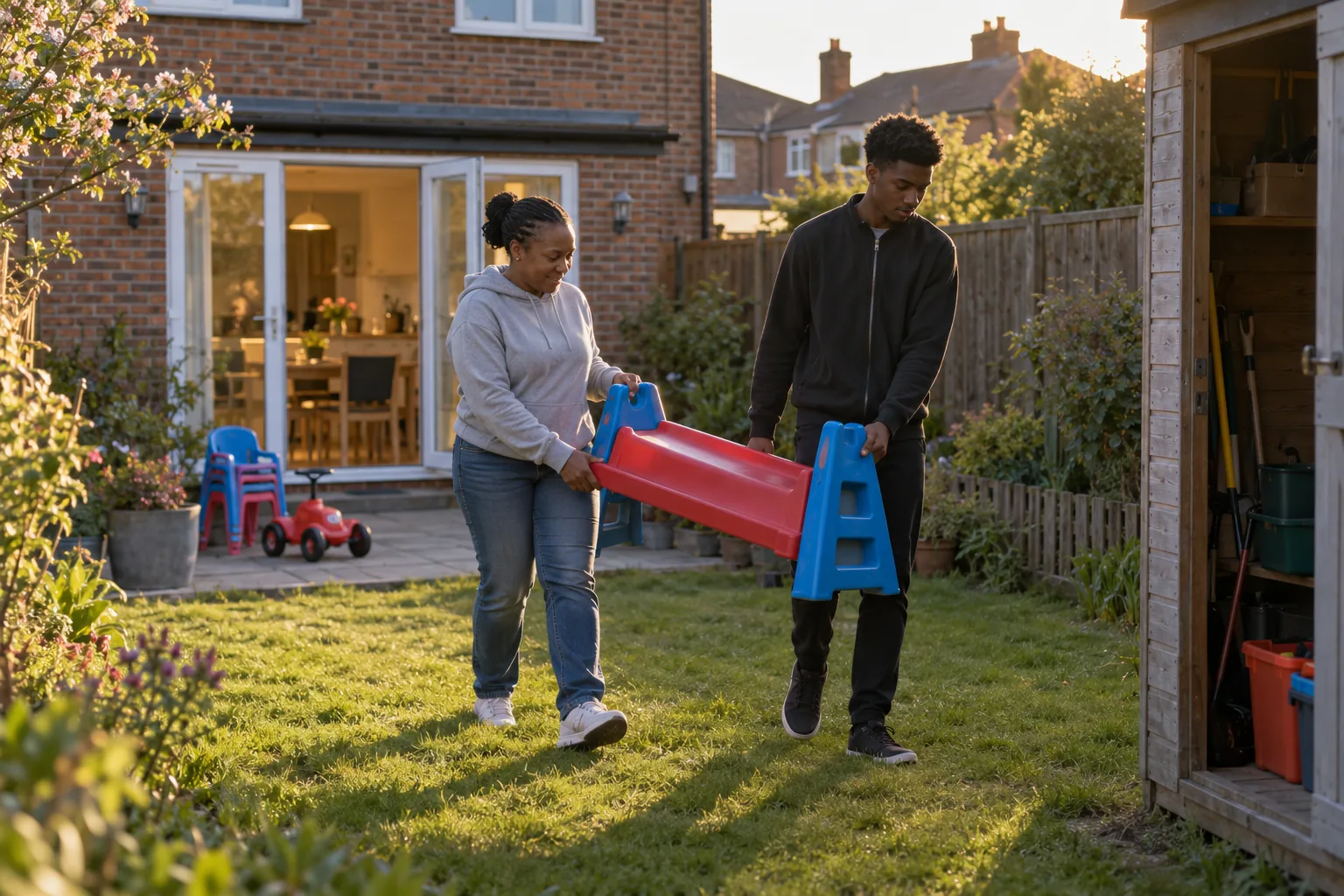
Which route applies decides who applies, who sees the result and who keeps the record. This guide explains both routes, the DBS Update Service, the household member who turns 16, and the record a setting keeps.
The rule: who Ofsted checks, and who checks everyone else
Section 3 of the Early Years Foundation Stage statutory frameworks in force from September 2026 splits the work in two. For childminders, paragraph 3.16 of the childminder framework says “Ofsted, or a childminder’s CMA, is responsible for completing suitability checks of: the childminder; every other person looking after children on the premises; for childminders with domestic premises, every other person aged 16 and over living or working on any domestic premises where the childminding is being provided”, and paragraph 3.17 says “enhanced criminal records checks and barred list checks are required by Ofsted or a childminder’s CMA, for any relevant people including volunteers”. Paragraph 3.14 of the group and school-based framework gives Ofsted the same role for childcare on domestic premises.
Everyone else is the provider’s job. Paragraph 3.15 of the group and school-based framework: registered providers, except childcare on domestic premises, “must obtain an enhanced criminal records check and barred list check for every person aged 16 and over including all volunteers” who works directly with children, lives on the premises (unless they have no access to the part where children are cared for), or works on the premises (unless not in the childcare area or not when children are present). Ofsted’s guidance on DBS checks for childcare providers who register with Ofsted puts it from its side: for “the staff in nurseries that operate on non-domestic premises”, Ofsted does not do the check, and “inspectors will review the provider’s records to check that the required checks have been completed”.
The check is the same in both routes, for childminders and for nursery employees. Ofsted’s page Get a DBS check if you live or work in a childcare setting calls it “an enhanced criminal record check with barred lists”, and the framework adds an extra criminal records check for anyone who has lived or worked outside the UK.
Who needs an Ofsted DBS check
On Ofsted’s own route, the check is needed by:
- the applicant – the childminder, or the provider of childcare on domestic premises, and, for an organisation, people associated with the registration, such as “a member of the committee running a playgroup”;
- everyone aged 16 or over who lives or works in the home where childcare is provided – Ofsted lists “partners, family members, assistants, cleaners and anyone else at the property”;
- anyone who looks after children while working with a childminder without domestic premises; and
- assistants, students and volunteers with a childminder or on domestic premises who will have regular, unsupervised contact with children. There is “no definition of ‘regular contact’”, and Ofsted takes “a common sense approach”: a student on a short placement can still have regular contact.
Ofsted explains why household members go through it rather than through the childminder: “childminders and others providing childcare on domestic premises are not entitled to obtain an enhanced DBS check for their own household members”. Ofsted is “responsible for carrying out any necessary checks and making the suitability decision”. Under “Other background checks”, it also checks “with the social services at your local council to see whether it holds any information that may affect your application”, and may carry out checks with other government agencies.
Registration itself has a threshold. GOV.UK’s guidance on becoming a childminder or nanny says you must register as a childminder if the children are under 8, you look after them “for more than 2 hours a day” and you are paid, including in kind. Nannies, tutors and some others need not register but can choose to, and Ofsted’s DBS guidance covers providers on both the compulsory and voluntary parts of the Childcare Register.
How the Ofsted route works
People on Ofsted’s route apply through the Ofsted DBS application website, which Ofsted links from its guidance page. Anyone living or working in a home where childcare is provided, or helping to provide childcare in a home, needs a check for a “home-based position”. When the certificate arrives, Ofsted asks the person to give “the 12-digit number on your DBS certificate” to the childminder or provider, who passes it to Ofsted with the registration application or, if already registered, tells Ofsted that the person is living or working on the premises.
Ofsted will accept an existing check obtained through another organisation only in narrow cases: “if it is an enhanced level check, the position applied for states ‘child workforce’, and the individual has also registered with the update service”, and, for a role operating from domestic premises, only “if it has been obtained for a home-based role”.
Registration waits for the checks. “Ofsted will not register a person until we have obtained DBS checks on the person applying for registration and any other person who requires a DBS check because of their association, for example a member of the childminder’s household”. For a childminder’s assistant, paragraph 3.14 of the childminder framework says assistants “must be cleared as ‘suitable’ by Ofsted or their CMA via the suitability letter before they can begin working in the setting”.
Repeat checks. Ofsted does “not routinely repeat DBS checks” on people already registered or agreed suitable, but a new check is required when someone known to Ofsted takes on a new registration or role where Ofsted decides suitability and the new role gives greater access to children or more responsibility, there has been a break of more than three months, there are concerns about the person, or they have never had a DBS check. Ofsted reserves the right to repeat any check if a person’s status changes.
The DBS Update Service and the household member who turns 16
Ofsted “strongly” recommends that all new applicants, “together with all individuals aged 16 or over who are associated with the application”, join the DBS Update Service, which “helps us monitor their ongoing suitability”. The Update Service costs £16 a year, with no charge for volunteers; a person must register “within 30 days of the certificate being issued”, and a subscription lasts one year. For other staff, joining is the provider’s decision. Where staff have joined, footnote 24 of the group and school-based framework says providers “should check the status of the disclosure”, must apply for a new enhanced check if the status shows a change, and must obtain the staff member’s consent before using the service.
Children in a childminder’s household are the part of the system most often missed. Ofsted asks applicants for “the dates of birth of all their children under 16” so it can start a DBS check when each one turns 16, and “inspectors will check at each inspection whether there are any children about to turn 16 years of age, or who have turned 16 since the last inspection”. Ofsted does not expect a provider to tell it about a 16th birthday of someone it already knows about, but it does expect to hear about any new person joining or leaving the household.
That notification has a clock. Paragraph 3.104 of the childminder framework lists “any change to the persons aged 16 years or older living or working on any domestic premises from which childminding is provided”, and paragraph 3.105 requires the new person’s name, former names, date of birth and address, in advance where reasonably practicable and otherwise “within 14 days”. Ofsted is blunt about the consequence: failing to tell it about a change to household members “is a breach of legal requirements and will prompt an inspection judgement of ‘inadequate’ for safeguarding”, and “failure to notify us is also an offence”. An adult child moving back home, a new partner or a lodger is a change to notify, and so is someone moving out.
Nurseries and group settings: the checks the provider owns
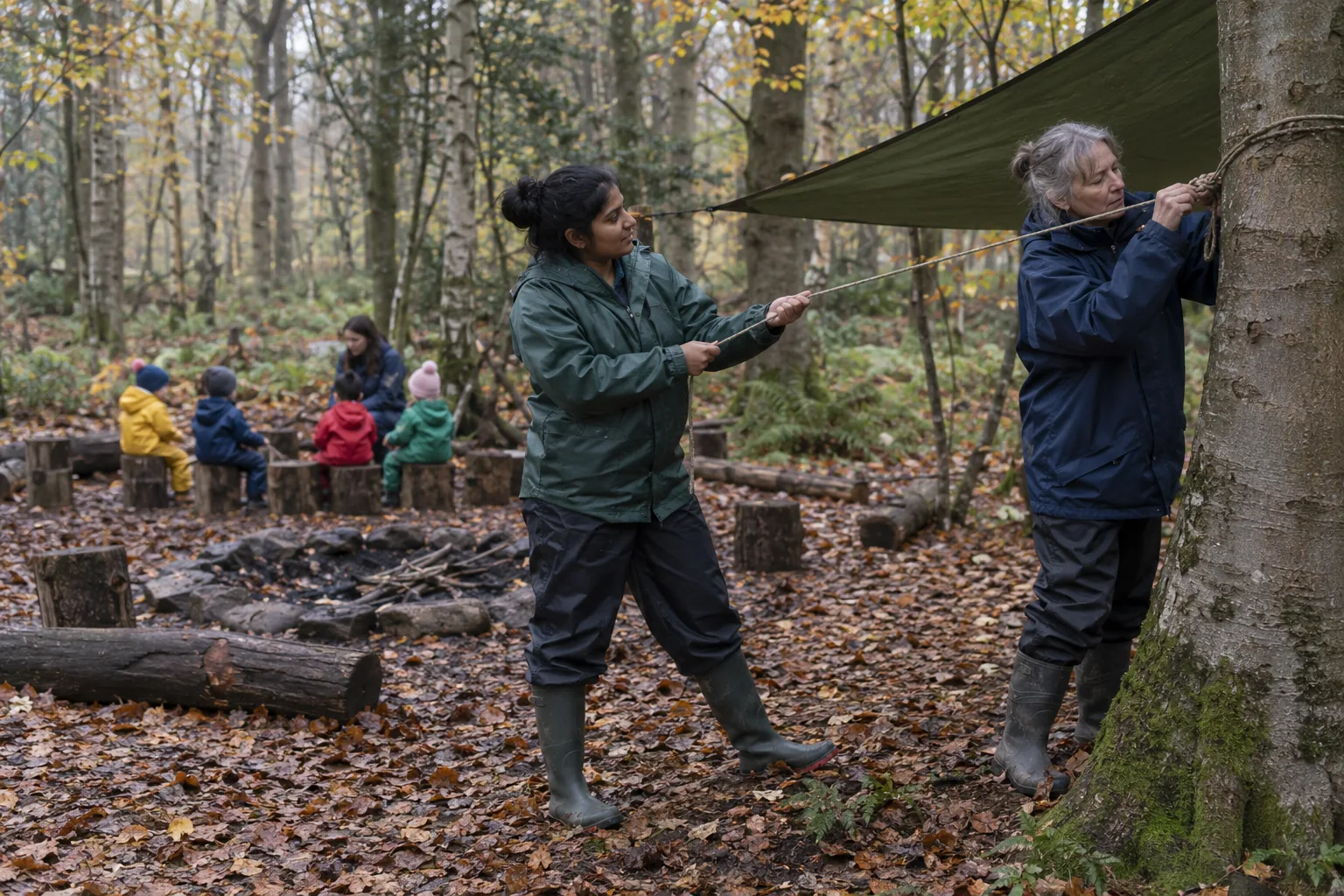
In a nursery, pre-school or other non-domestic setting, the provider obtains the checks itself, decides suitability and keeps the record. The framework sets four firm rules:
- No start before the check. Paragraph 3.17: “Providers must not allow individuals to begin working or volunteering at the setting until they have received the applicant’s enhanced criminal records and barred list check”, and must not allow anyone unchecked “to have unsupervised contact with children being cared for”. Ofsted’s DBS guidance, last updated in November 2024, still describes rare cases, where waiting might disrupt the care of children, in which staff whose suitability Ofsted does not decide may start once the check has been applied for, never unsupervised with children; the 2026 framework is the later and statutory text, so follow it.
- Disclosure by staff. Providers “must tell staff and prospective staff that they must disclose any information which may affect their suitability to work with children including, but not limited to, arrests, charges, convictions, cautions, court orders, reprimands and warnings”, before or during employment.
- The record. Paragraph 3.18: providers “must record information about staff qualifications and the identity checks, vetting processes and references that have been completed (including the criminal records check reference number, the date a check was obtained and details of who at the setting obtained it)”. Ofsted adds that providers “should not retain the DBS disclosure itself”; what to keep and for how long is in our DBS record-keeping guide.
- Volunteers. The only exception is for “supervised volunteers who only help out occasionally, such as parents or carers helping out on a trip (but not overnight or if providing personal care)”. Footnote 20 records that the Crime and Policing Act 2026 removed the previous exemption for supervised unpaid activity from regulated activity.
Agency staff need written confirmation from the agency. Ofsted says employment agencies must give the childcare organisation written confirmation that the person has been checked against the children’s barred list within the last three months if they are not on the update service, and that providers “must show written confirmation from the agency that a DBS check has been carried out within the last 12 months”, and where a nursery accepts a check obtained elsewhere, inspectors look for a new enhanced check applied for, the original certificate seen, identity cross-checked and no break of more than three months in service.
Two further duties sit beside the check. A provider must refer to the DBS anyone dismissed, or who would have been, for harming a child or putting a child at risk of harm (paragraph 3.19). And a person may be disqualified under the Childcare Act 2006, including, on domestic premises, because they live with a disqualified person (paragraph 3.24). The disqualification of an employee is a significant event to notify (paragraph 3.23), and grounds for disqualification affecting the provider or anyone living or employed in the provider’s household must reach Ofsted or the agency within 14 days of the provider becoming aware of them (paragraphs 3.25 and 3.26).
The day the provider became aware
Several of these duties run from the moment the provider knew. The disqualification information is due “within 14 days of the date the provider became aware of the information or should have reasonably become aware of it”. A change of household member is due in advance or within 14 days. In every case, the question afterwards is the same: when did you know?
The answer is rarely in the setting’s records. A practitioner messages the nursery manager’s personal phone late on a Sunday: she was arrested last night, it is nothing, she will explain on Monday. That message is the disclosure the provider told her to make under paragraph 3.17, and it is the moment the setting became aware. A childminder’s grown-up son texts the family group that he is moving back after university at the end of the month. That message is the earliest evidence of a change to the household that Ofsted must hear about within 14 days.
Both are handled well more often than not – the manager rings Monday morning, the childminder fills in the notification form. But if Ofsted asks when the provider knew, or an inspector finds a household member nobody notified, the provider’s best evidence is a message on a personal phone, in an app the setting does not control, and it may since have been deleted. A question for the owner, manager or committee: where would the setting’s record show the date it first learned something that affects a person’s suitability, and could it produce that record for Ofsted?
Questions people ask
What is an Ofsted enhanced DBS check?
An Ofsted DBS check is an enhanced criminal record check with barred lists, applied for through the Ofsted DBS application website for a childminder, a provider of childcare on domestic premises or anyone aged 16 or over living or working in a home where childcare is provided. Ofsted, not the childminder, receives the result and decides suitability, and for home-based childcare the check must be for a “home-based position”.
What checks do you need to work with children in early years?
Anyone aged 16 or over working directly with children in an early years setting in England needs an enhanced criminal records check and barred list check, plus an additional check for any time lived or worked outside the UK, under section 3 of the EYFS frameworks from September 2026. Providers must also verify identity and qualifications, obtain references and record the check reference number, the date and who obtained it.
Can I work with children without a DBS?
Not in a registered early years setting in England: the EYFS frameworks say providers and childminders must not allow anyone to begin working or volunteering until their enhanced criminal records and barred list check has been received. The exception is a supervised volunteer who only helps occasionally, such as a parent on a trip, and never overnight or providing personal care.
What is the 2 hour rule for Ofsted?
The two-hour rule is the registration threshold: GOV.UK says you must register as a childminder if you look after children under 8 “for more than 2 hours a day” and are paid, including payment in kind. You can be fined if you do not register when you need to, and registration brings the Ofsted DBS checks for you and the people in your home.
Do childminders’ household members need a DBS check?
Yes: everyone aged 16 or over who lives or works in a home where childminding or childcare on domestic premises is provided needs an enhanced check with barred lists through Ofsted or the childminder agency. Ofsted starts a check when a child in the household turns 16, and the childminder must notify Ofsted of anyone joining or leaving the household, within 14 days if it cannot be done in advance.
Official guidance and your next step
The primary sources are Ofsted’s DBS checks for childcare providers who register with Ofsted (updated 1 November 2024), its page on getting a DBS check if you live or work in a childcare setting, section 3 of the EYFS statutory frameworks effective from September 2026 (paragraphs 3.14 to 3.21 for childminders, 3.13 to 3.27 for group and school-based providers) and the Department for Education’s statutory guidance on disqualification under the Childcare Act 2006. Where Ofsted’s older guidance and the 2026 framework differ, follow the framework and ask Ofsted.
This guide is a summary for early years providers in England, not legal advice. Providers registered with a childminder agency should check the agency’s own process. Ofsted registers childcare in England only; Wales, Scotland and Northern Ireland have their own regulators and checking schemes.
Then do one thing: list every person aged 16 or over who lives or works in the setting or the home today, and check each against the record – check reference, date, who obtained it, and, for households, the date Ofsted was told. Anyone missing from the list is the first notification to make.
We build ComplyChat for the work conversations a setting needs to keep, including the message that tells a manager something affecting a person’s suitability. It does not apply for DBS checks or keep the staff record. It is a channel where everyone added is told it is on the record and messages are stored and processed in the UK; on paid plans, once the setting’s Microsoft 365 tenant is connected, the lasting record files there under its own retention rules.
Sources
Every document this guide quotes or links to, in the order it first cites them.
- Early Years Foundation Stage statutory frameworks gov.uk
- Guidance on DBS checks for childcare providers who register with Ofsted gov.uk
- Get a DBS check if you live or work in a childcare setting gov.uk
- Becoming a childminder or nanny gov.uk
- DBS Update Service gov.uk
- Disqualification under the Childcare Act 2006 gov.uk