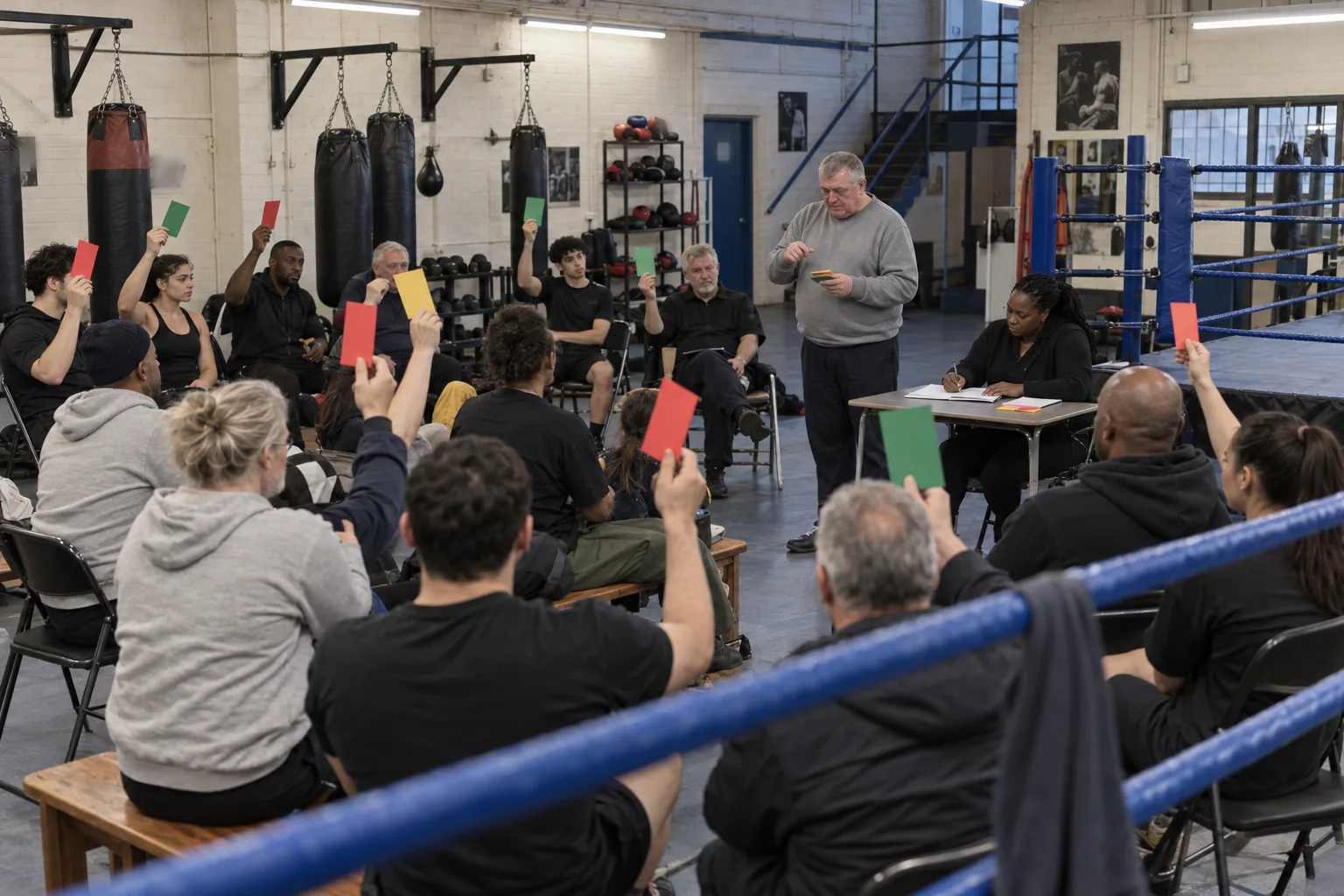

Many charity meetings are now held online, as the Commission noted when it refreshed CC48 in July 2024, but the rules that make them valid sit in documents written for a room: a constitution, articles of association or, for a maintained school, regulations. This guide sets out what those documents already say for each legal form, how to handle notice, quorum, conflicts and votes on a call, and how to minute the meeting so its decisions stand.
The rule: the governing document decides, and CC48 sets the minimum
Whether a charity's trustees may meet online is decided by the charity's governing document. The Charity Commission's Charity meetings (CC48) says trustees must “follow what your governing document says about how you must plan, run, and keep a record of meetings”, and sets a floor for the document that says nothing: “If your governing document does not set out details about meetings, you should make sure that everyone at your meeting can see and hear each other. This is based on the most widely accepted definition of a valid meeting, and you should follow this rule as a minimum.” Where it repeats that minimum later, it adds: “If you do not, any decisions you make may not be valid.”
CC48 recommends the test as a minimum because, in its legal note, “there is no settled legal position about the definition of a valid meeting.” It also says “Technology allows those who attend a meeting virtually to see and hear each other by using cameras and microphones”, so a video meeting with everyone's camera and microphone working can meet it. CC48 does not deal with telephone meetings directly, but on its wording a voice-only call, in which nobody can see anyone, would not meet the test, and the Commission's note to its model CIO clause in section 02 makes the same assumption. Whether a board may meet by phone is therefore a question for its governing document.
Nor does recent legislation settle it: the Charities Act 2022 contains no provision on virtual or electronic meetings. The rules that matter are in the governing document and, for schools, in the regulations and articles covered in section 02.
So CC48 recommends writing the rule down. “If you want to hold virtual and hybrid meetings, you should amend your governing document so that it explicitly says you can hold meetings that way. Your governing document should also say:”
- “whether all your charity meetings could be virtual or hybrid, or whether for example at least one a year should be face to face”
- “how you will give notice of virtual and hybrid meetings”
- “how you will hold votes at virtual and hybrid meetings”
- “how you may adjourn virtual and hybrid meetings”
CC48 was last updated on 19 July 2024. Announcing it in Regulator refreshes meetings guidance for the Zoom era, the Commission said that keeping the rules for meetings up to date and practical “has become particularly important now that many charity meetings are held online.”
What your governing document probably says already
Many charities and schools already have the wording they need, because the model document they started from includes it. The model is only where the document began, so check your own: it is your document's wording that binds the board.
- A CIO on the Commission's foundation model constitution. Clause 15(4) of the model, listed on the Commission's Setting up a charity: model governing documents, says “A meeting may be held by suitable electronic means agreed by the charity trustees in which each participant may communicate with all the other participants”, and that a trustee taking part that way “shall qualify as being present at the meeting”. The Commission's note calls the clause “strongly recommended but will be required if one or more of the CIO’s trustees may from time to time participate in meetings by telephone or other electronic means where participants may not all be able to see and hear each other.”
- A charitable company on the Commission's model articles. The model articles of association for a charitable company (GD1) offer, as optional bracketed wording, article 41(6): “A meeting may be held by suitable electronic means agreed by the directors in which each participant may communicate with all the other participants.” Article 42(1) then counts as “present” for the quorum a director “present by suitable electronic means”. Both are optional, so check whether your articles kept them.
- A company on the statutory model articles. Under article 10 of the model articles for private companies limited by guarantee, directors take part in a meeting when “they can each communicate to the others any information or opinions they have on any particular item of the business of the meeting”, and “it is irrelevant where any director is or how they communicate with each other.” The article opens “Subject to the articles”, so a charitable company's own articles come first.
- An academy trust. The Department for Education's model articles of association for academy trusts (June 2021) say in article 126 that “Any Trustee shall be able to participate in meetings of the Trustees by telephone or by any suitable electronic means agreed by the Trustees”, and in article 126A that a trustee taking part that way “shall be deemed to be present in person at the meeting and shall be counted in a quorum and entitled to vote.” A trust on older articles should check its own wording. The DfE's Academy trusts: governance guide, updated on 19 November 2026, says “Boards can decide how to hold meetings, as allowed in their articles of association”, face to face, virtually or using a hybrid model.
- A maintained school governing body in England. Regulation 14(8) of the School Governance (Roles, Procedures and Allowances) (England) Regulations 2013 says “the governing body may approve alternative arrangements for governors to participate or vote at meetings of the governing body including but not limited to by telephone or video conference.” It is a power the governing body has to use, by approving the arrangements, not an automatic right. The DfE's Maintained schools: governance guide says the governing body “can decide how to hold meetings, such as face to face, virtually or using a hybrid model”.
- An unincorporated charity. A trust or association has whatever its constitution or trust deed says. If that says nothing about how meetings are held, CC48's see-and-hear minimum applies until the document is amended.
- A Scottish charity. The Office of the Scottish Charity Regulator's guidance on governing documents and meetings says “if you are a SCIO or a company and want to use telephone or virtual meetings you must state this in your governing document.” CC48 is written for charities in England and Wales.
If the wording is missing, the charity can usually add it itself. CC48 says “You do not usually need the Charity Commission’s authority to make these changes”, and suggests either changing the definition of ‘meeting’ in the governing document to include virtual or hybrid meetings, or adding or amending a clause to allow them. It also asks trustees to look for the other clauses a virtual meeting touches, “For example, clauses that say how you must give notice of meetings or how you must hold votes.” Use the amendment power in the document itself, which may need the members' agreement rather than the trustees' alone, and take advice if the route is unclear.
Running a virtual or hybrid meeting: notice, quorum, the chair and conflicts
A virtual meeting follows the same rules as one in a room. CC48 adds a few points that only arise online.
- Notice. CC48 says the notice should include the date and time, the venue or platform and, “for virtual and hybrid meetings, details about how those entitled to attend can join the meeting electronically, such as a link”, with the agenda and papers sent in time to read them. Our guide to charity board papers covers the pack.
- Quorum. “Make sure the technology you use has the tools you need to monitor the number of people who attend virtual and hybrid meetings.” Only trustees count towards a trustee meeting's quorum. Where the governing document sets no quorum and cannot be amended in time, CC48 says “you should have a quorum of one-third of all your charity’s trustees plus one. For example, if you have twelve trustees in total, your quorum would be five.” A maintained school's quorum is fixed by regulation 14(1): “one half (rounded up to a whole number) of the membership of the governing body”, not counting vacancies.
- The chair and a moderator. “The chair should make sure that everyone who joins a virtual or hybrid meeting is able to join in discussions and make decisions. It may be useful to appoint a moderator to monitor those who attend a meeting electronically. A moderator can support the chair by bringing questions or concerns to their attention during the meeting.” In a hybrid meeting the secretary or clerk can take that role, following those on screen while the chair runs the room.
- Conflicts of interest. CC48 asks for “a standing item on conflicts of interest” on every agenda, says trustees “must manage any conflicts of interest when making decisions”, and adds: “You should also appoint a deputy to chair the meeting during agenda items where the chair has declared a conflict of interest.” In practice, a trustee who would leave the room for an item can leave the call, or be moved out of it by the host, and rejoin afterwards, with the minutes noting when they left and returned.
- Questions, debate and documents. “You should have a separate policy that says how people at virtual and hybrid meetings can ask questions, join in the debate, and how you will share and display documents such as resolutions.” Showing the exact wording of a resolution on screen before the vote is one way to meet the last part.
- When the technology fails. CC48 says trustees should decide in advance whether to continue the meeting if the quorum is still present or to adjourn it, and “You should set this out as a rule in your governing document.” Its list of reasons to adjourn includes technical issues “at a virtual or hybrid meeting that you cannot fix”, and “The chair should usually ask those at the meeting for their agreement to adjourn and should be clear that they are adjourning the meeting.”
CC48 also points to the Chartered Governance Institute's guidance on good practice for virtual board and committee meetings, written for companies, and says “Charities that are not companies may also find this guidance useful.” It is practice guidance, not a rule.
Voting at a virtual or hybrid meeting
Trustees can vote on a call. CC48 says “At virtual or hybrid meetings, the chair should make sure all trustees are able to vote, for example by:”
- “raising their hands electronically”
- “casting a vote in an electronic poll”
- “casting a vote by entering text into a chat box”
- “taking turns to say yes or no to the relevant question”
The list is a set of examples, not a closed list, and CC48 adds that trustees “should also make sure that everyone is clear about how they can vote at virtual and hybrid meetings.” In a hybrid meeting the chair has to count two sets of votes, in the room and on the screen, so reading the result aloud before moving on removes doubt. Taking turns by name is slow but leaves no question about who voted which way.
The governing document decides the rest. CC48 asks trustees to check whether it allows proxy votes, postal votes and “electronic votes, such as votes sent by email”, and whether it sets a particular majority for a decision. Where it is silent, CC48 is firm: “you must make your decisions or pass your resolutions by a simple majority at a meeting as long as you have a quorum.” In a maintained school, regulation 14(3) says every question “is to be determined by a majority of the votes of the governors present and voting on the question”, and under regulation 14(4) the chair has a second or casting vote on a tie.
A vote by email after the call has ended is not a vote at a virtual meeting. It is a decision taken outside a meeting, which CC48 treats separately: “Check if your governing document allows you to carry out charity business in other ways, for example by telephone, email, or on messaging apps.” That route has its own rules, set out in our guide to trustee decisions between meetings, and a trustees' group chat is not a meeting at all, as our guide to the trustees' WhatsApp group explains.

Minuting a virtual or hybrid meeting
CC48 says “Minutes are the written legal record of what happened at your meeting”, and they need not be word for word. Its list of what they should include does most of the work online too: “the names and roles of the people at your meeting”, which “helps to show that your meeting had the quorum required to make valid decisions”; the conflicts declared and the steps taken to manage them; “decisions made and the exact wording of resolutions that were voted on at the meeting”; “full reasons explaining why you made your decisions”; and “who voted on decisions made at the meeting (this may not be possible for a poll where the votes are cast in private)” and “how they voted on those decisions”.
A virtual or hybrid meeting adds a few lines worth writing down. CC48 asks, for an annual general meeting, that “For virtual and hybrid meetings, you should keep a record of the people who attend the meeting electronically”; doing the same for a trustee meeting is good practice. The others are practice too:
- how each person attended: in the room, by video or, where the governing document allows it, by telephone;
- any connection lost during a decision, and whether the quorum held;
- when a conflicted trustee left the call and was readmitted;
- how each vote was taken and, for a vote typed into the chat box, who typed what, noted for the minutes before the meeting closes, because the minutes, not the chat, are the record CC48 describes.
CC48 does not ask for the call to be recorded. If a board decides to record its meetings, tell everyone before the recording starts and decide who keeps the recording and for how long. CC48 says to send draft minutes to every trustee as soon as possible and approve them at the next meeting, after which “The chair should then sign the minutes and store them safely”; the governing document may say whether that is on paper or electronically. Our guides to minute taking and how long to keep board minutes cover the rest.
Where ComplyChat fits, and where it does not
ComplyChat is not a meeting or voting tool. It is for the conversation between meetings, and it does not provide board packs, agendas, minutes, registers of interests or e-voting. A chat is not a set of minutes or a formal resolution: the governing document and the board's own procedures decide how the board takes and records its decisions.
What it touches is the conversation around the meeting. Before a video board meeting, trustees message each other about the papers, and one who cannot join sends the chair her view on an item. Afterwards, the actions are agreed in a group, and a trustee who declared a conflict asks the chair what was decided. CC48 asks trustees to check whether their governing document allows them to carry out charity business “by telephone, email, or on messaging apps”, and those messages can matter later: if a decision is challenged, a subject access request arrives, or the board needs to show how a conflict was handled. When they sit in a group on trustees' own phones, the charity, trust or school may not be able to find them.
That is the conversation ComplyChat is designed for. The board talks in a channel the organisation runs; trustees and governors with no account on its systems join with a mobile number verified by SMS, which is the identity; everyone added is told the channel is on the record and can object or leave; and messages are recorded on the server as they are sent. On paid plans, once the organisation's tenant is connected, conversations are kept under the retention schedules within its own Microsoft 365 subscription, so they stay with the organisation when a trustee steps down. It replaces the board's group chat; it does not capture WhatsApp. ComplyChat Free is personal messaging with one private group, direct messages and three calendar months of recent history, with no Microsoft 365 archive, so it is not a way to keep a board's record.
A question for the next board meeting: when the call ends, where do the trustees' messages about it go, and could the board find them if a decision were questioned a year from now?
Questions people ask
Can a board meeting be held virtually?
Yes. Where the governing document sets rules for meetings, follow them; where it is silent, the Charity Commission's CC48 says everyone at the meeting should be able to see and hear each other, which a video meeting can meet, and recommends amending the document “so that it explicitly says you can hold meetings that way”. Charitable companies on the statutory model articles and academy trusts on the DfE's June 2021 model articles already allow it.
How do you chair a trustee meeting online?
CC48 says the chair should make sure everyone who joins a virtual or hybrid meeting can join in discussions and make decisions, and suggests a moderator to keep track of those attending electronically and bring their questions to the chair. It also asks for a deputy to chair any item where the chair has declared a conflict. In practice, on any video platform, check the quorum at the start and before each vote, and take votes in a way everyone can see.
Can trustees vote by typing in the chat box?
Yes. CC48 lists “casting a vote by entering text into a chat box” among its examples of how a chair can make sure all trustees can vote at a virtual or hybrid meeting; any voting rules in the governing document still apply. The minutes should then record who voted and how.
What happens if the connection drops during a virtual trustee meeting?
It depends on the rule the board set in advance. CC48 says trustees should decide whether to continue if the quorum is still present or to adjourn, and set that out as a rule in the governing document; technical issues that cannot be fixed are one of CC48's reasons to adjourn.
Can school governors meet virtually?
Yes. A maintained school governing body in England “may approve alternative arrangements for governors to participate or vote at meetings”, including by telephone or video conference, under regulation 14(8) of the 2013 school governance regulations. Academy trusts on the DfE's June 2021 model articles let trustees take part by any suitable electronic means and count them as present; a trust on older articles should check its own.
Is a phone call or an email exchange a trustee meeting?
A telephone meeting is safe only where the governing document allows it: a voice-only call cannot meet CC48's default that everyone can see and hear each other. The DfE's academy model articles allow telephone participation, and regulation 14(8) lets a maintained school governing body approve it. An email exchange is not a meeting: it is a decision outside a meeting, which works only where the governing document allows decisions to be made that way, for example by written resolution.
Official guidance and your next step
The Charity Commission's Charity meetings (CC48) is the regulator's guidance on meetings in England and Wales, and its model governing documents hold the clauses quoted above. For schools in England, read regulation 14 of the School Governance (Roles, Procedures and Allowances) (England) Regulations 2013 and the DfE's Academy trusts: governance guide and Maintained schools: governance guide. In Scotland, read OSCR's guidance on governing documents and meetings. Quotations are from the pages named as read between 23 and 24 November 2026.
This guide covers charities in England and Wales and schools in England, with a pointer for Scotland. It does not cover Northern Ireland, and it is not legal advice.
Then do one thing: open the governing document at its clause on meetings and check it against CC48's four points – whether meetings may be virtual or hybrid, how notice is given, how votes are held and how a meeting is adjourned. Wherever the answer is not written down, that is the amendment to put to the next meeting.
We build ComplyChat for the conversations a board needs to be able to find later, the ones that happen between its meetings. Explore Free personal messaging, or compare the paid plans if your organisation needs those conversations kept under the retention schedules within its own Microsoft 365 subscription.
Sources
Every document this guide quotes or links to, in the order it first cites them.
- Charity meetings (CC48) gov.uk
- Charities Act 2022 legislation.gov.uk
- Regulator refreshes meetings guidance for the Zoom era gov.uk
- Setting up a charity: model governing documents gov.uk
- Model articles of association for a charitable company (GD1) assets.publishing.service.gov.uk
- Article 10 of the model articles for private companies limited by guarantee legislation.gov.uk
- Model articles of association for academy trusts gov.uk
- Academy trusts: governance guide gov.uk
- School Governance (Roles, Procedures and Allowances) (England) Regulations 2013 legislation.gov.uk
- Maintained schools: governance guide gov.uk
- Guidance on governing documents and meetings oscr.org.uk