Supervision is also how a volunteer programme keeps volunteers: the check-in where someone says how the role is going, what worries them and what has changed. On 1 September 2026 it stopped doing one job it used to do, because supervision no longer takes a volunteer working often or overnight with children out of regulated activity. This guide sets out where the expectation to supervise volunteers comes from, what that change means, how to run a volunteer support and supervision session without turning a volunteer into a worker, and what to write down afterwards. The agreement that promises the support is covered in the volunteer agreement template guide.
What volunteer supervision is, and where the expectation comes from
No statute sets a general duty to supervise charity volunteers; the expectation comes from statutory safeguarding guidance in England, from health and safety law, which, where the charity employs anyone, requires it to protect volunteers from risks arising from its work, and, for volunteers in a CQC-registered service, from Regulation 18. Volunteer supervision, in the sense used across the voluntary sector, is the planned contact between a volunteer and a named person in the charity – usually the volunteer coordinator or volunteer manager – to check how the role is going, offer support and training, and make sure the volunteer and the people they work with are safe.
Working Together to Safeguard Children 2026. The Department for Education's Working together to safeguard children 2026, published on 18 March 2026, replaced the 2023 edition and applies in England only (paragraph 3). Paragraph 259 lists the arrangements the statutory bodies named in paragraph 258 should have, including “appropriate supervision and support for staff, including undertaking safeguarding training”. Paragraph 359 applies that list to the voluntary sector: “Every VCSE, faith-based organisation and private sector organisation or agency should have in place the arrangements described in this chapter.” Paragraph 357 says practitioners in those organisations who work with children and families “are subject to the same safeguarding responsibilities, whether paid or a volunteer.” For a charity these are “should”s, not statutory duties, though paragraph 6 says the guidance “should be complied with unless exceptional circumstances arise”. One “must” sits beside them: charities are within the Relevant Agency Regulations, so paragraph 359 says that “if the safeguarding partners name them as a relevant partner they must cooperate”.
Paragraph 259 also asks that the designated safeguarding practitioner be given “sufficient time, funding, supervision, and support to fulfil their child welfare and safeguarding responsibilities effectively”. In a small charity that person may be a volunteer too, and the person who supervises everyone else needs supervision of their own; the designated safeguarding lead guide covers the role.
Health and safety. The Health and Safety Executive's guidance for employers on volunteering says: “If your organisation has at least one employee, or if you are self-employed and employ others, you will have duties under health and safety law. This means you must protect your employees but also others, including volunteers, from any risks arising from your work activities.” Volunteers belong in the risk assessment, and “You should provide the same level of protection to volunteers where they carry out similar activities and are exposed to the same level of risk as employees.” Where no one is employed, the HSE says “In most cases, health and safety law does not apply where volunteering does not involve an employer”, though a common law duty of care still applies. Supervision is where a charity checks that a volunteer working alone or with risk is still working safely; the lone working policy guide covers befrienders and drivers.
Volunteers in a CQC-registered service. Regulation 18(2)(a) of the Health and Social Care Act 2008 (Regulated Activities) Regulations 2014 says persons employed by the provider in a regulated activity must “receive such appropriate support, training, professional development, supervision and appraisal as is necessary to enable them to carry out the duties they are employed to perform”. Regulation 2(2)(c) brings volunteers into “employment”: it includes work “under arrangements for persons to provide their services voluntarily”. So a hospice or care charity's volunteers working in the provision of the regulated activity are covered; the volunteers in the same charity's shop are not. The supervision records in care guide covers Regulation 18 in full.
The volunteer's side. GOV.UK's page on volunteers' rights says a volunteer agreement usually explains “the level of supervision and support you'll get”. That is the promise supervision keeps. None of these sources sets how often supervision should happen or what form it takes; Working Together and Regulation 18 ask only that it be “appropriate”.
What changed on 1 September 2026: supervision and regulated activity with children
Since 1 September 2026, supervising a volunteer no longer decides whether their work with children is regulated activity. Section 139 of the Crime and Policing Act 2026 amended Schedule 4 to the Safeguarding Vulnerable Groups Act 2006 in England and Wales, in force on that date under S.I. 2026/939, and section 140 made the same change in Northern Ireland, in force the same day under S.R. 2026/153. Scotland, which runs the PVG scheme, is outside it.
Before the change, an unpaid volunteer who taught, trained, instructed, cared for or supervised children was not in regulated activity if someone in regulated activity supervised them, day to day and on a regular basis, to the level reasonable in all the circumstances to protect the children concerned. The Disclosure and Barring Service's announcement of the change names who is affected, including “people who work or volunteer with children in outdoor activity centres, youth groups, charities or community groups, and are supervised by someone else who is in regulated activity with children”, and says they are now in regulated activity if they do the work “on more than 3 days in any 30-day period” or “once overnight, between 2am and 6am”. Its myth-busting page on common misconceptions puts it in one line: “The key change is that supervision of paid staff and volunteers no longer determines whether the role itself is regulated activity with children.”
What that means for a charity's volunteer management:
- Eligibility moves, the duty does not appear. A role now in regulated activity is eligible for an enhanced DBS check with the children's barred list, but DBS says “The legislation does not create a new requirement for organisations to carry out DBS checks, nor does DBS mandate that checks must be obtained.” Nor does it require a charity “to remove an individual from their role solely because a DBS check application is being processed.”
- Adults are unchanged. “This change only impacts regulated activity with children. No change is being made to the definition of regulated activity with adults.” There was never a supervision exemption for adults.
- Frequency adds up. The Department for Education's guidance on the removal of the supervision exemption, written for schools, colleges and childcare in England, says each instance in different settings “counts towards the ‘on more than 3 days in a 30-day period’ period condition”, and adds: “DBS checks for volunteers are free of charge.”
- Trustees review the roles. The Charity Commission's Safeguarding and protecting people for charities and trustees, updated on 8 October 2026, says: “Trustees should ensure their charity reviews affected roles and updates DBS checking arrangements where necessary.”
Some older sector training pages still say a supervised volunteer is outside regulated activity, or that supervision allows a lower-level check. For work with children in England, Wales and Northern Ireland, that has been wrong since 1 September 2026. The volunteer agreement guide covers updating the agreement, and the DBS record keeping guide what to keep about a check.
What supervising volunteers is for now
With the supervision exemption gone, volunteer supervision is about three things: support, safety and safeguarding. Volunteers feel valued when someone notices their work, and charities keep volunteers who know whom to ask. Of everything involved in managing volunteers, supervision shapes much of the volunteer's experience, and it is often where poor engagement shows first: missed shifts, short replies, a volunteer who stops coming without saying why.
- A named contact. Every volunteer should know who supervises them and how to reach that person. In a small team that may be the volunteer coordinator for everyone; in a larger volunteer programme it may be an experienced volunteer or a member of staff for each project.
- From induction to the first session. Plan the first supervision session at induction, early enough to catch a mismatch between the role description and the role, and agree when the next contact will be.
- Support and training. Supervision is where training needs surface, from a refresher on safeguarding to the practical skills a new task needs. Keep training to what the role needs: the volunteer agreement guide explains why training beyond that can count as a benefit in kind.
- Safety and wellbeing. Whether the volunteer is working safely, whether the work is weighing on them, and whether the risk assessment still matches what they do.
- Anything that has changed in the role. DBS says: “If a person's role changes, or the way they do the role changes, organisations should check DBS eligibility again.” A volunteer who started helping one evening a month and now helps every week, or who has begun staying overnight at camp, may have moved into regulated activity. Supervision is the conversation most likely to notice it.
How often is a decision for the charity, by the risk of the role. No law or regulator sets a frequency; the “weekly or monthly” check-in some volunteer management pages suggest is practice, not a rule. A befriender visiting a vulnerable adult at home, or a youth leader, needs more frequent contact than a volunteer stewarding an annual event. Write what the charity will offer into the volunteer agreement as a promise from the charity, not an obligation on the volunteer.
A volunteer support and supervision session, step by step, with a template
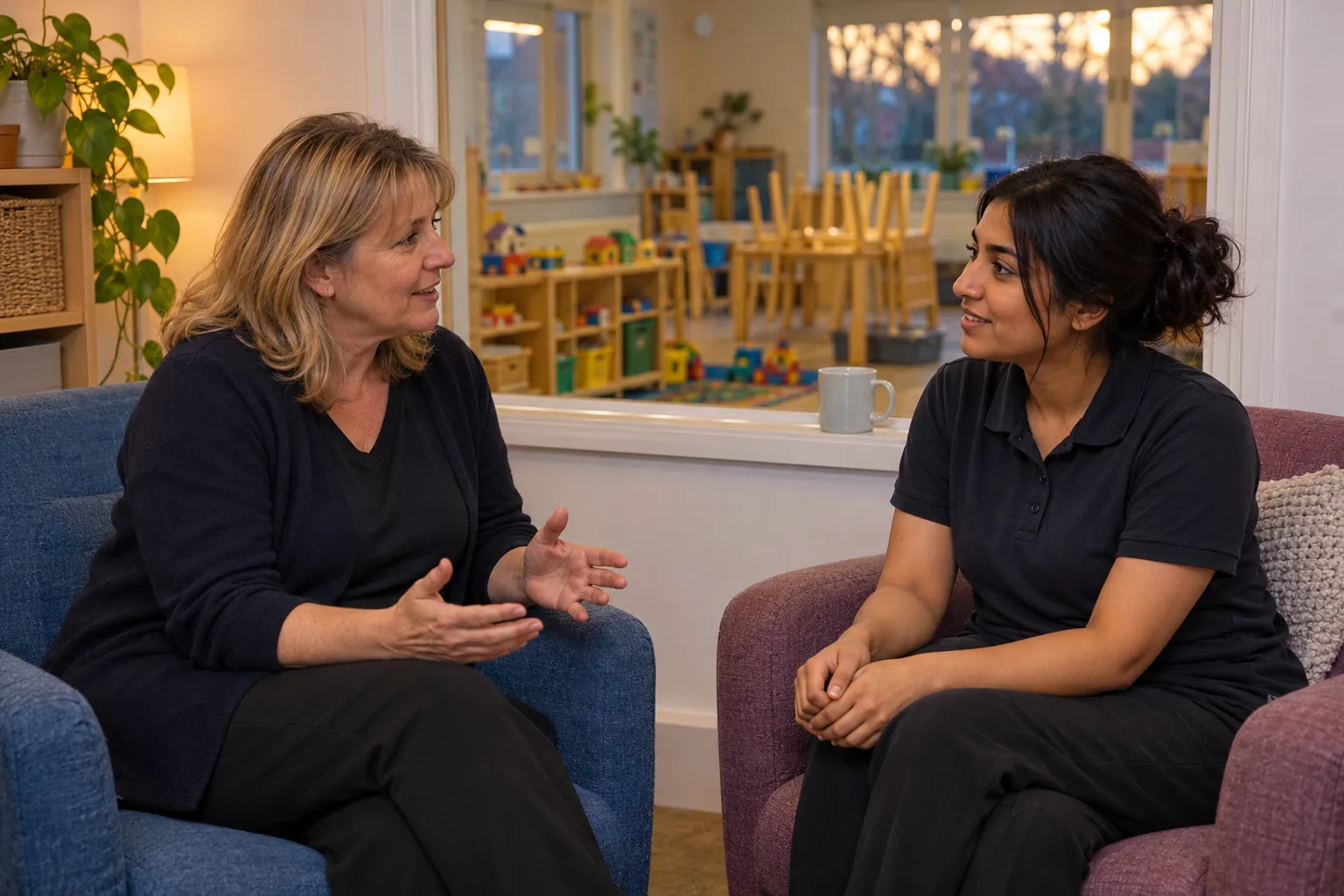
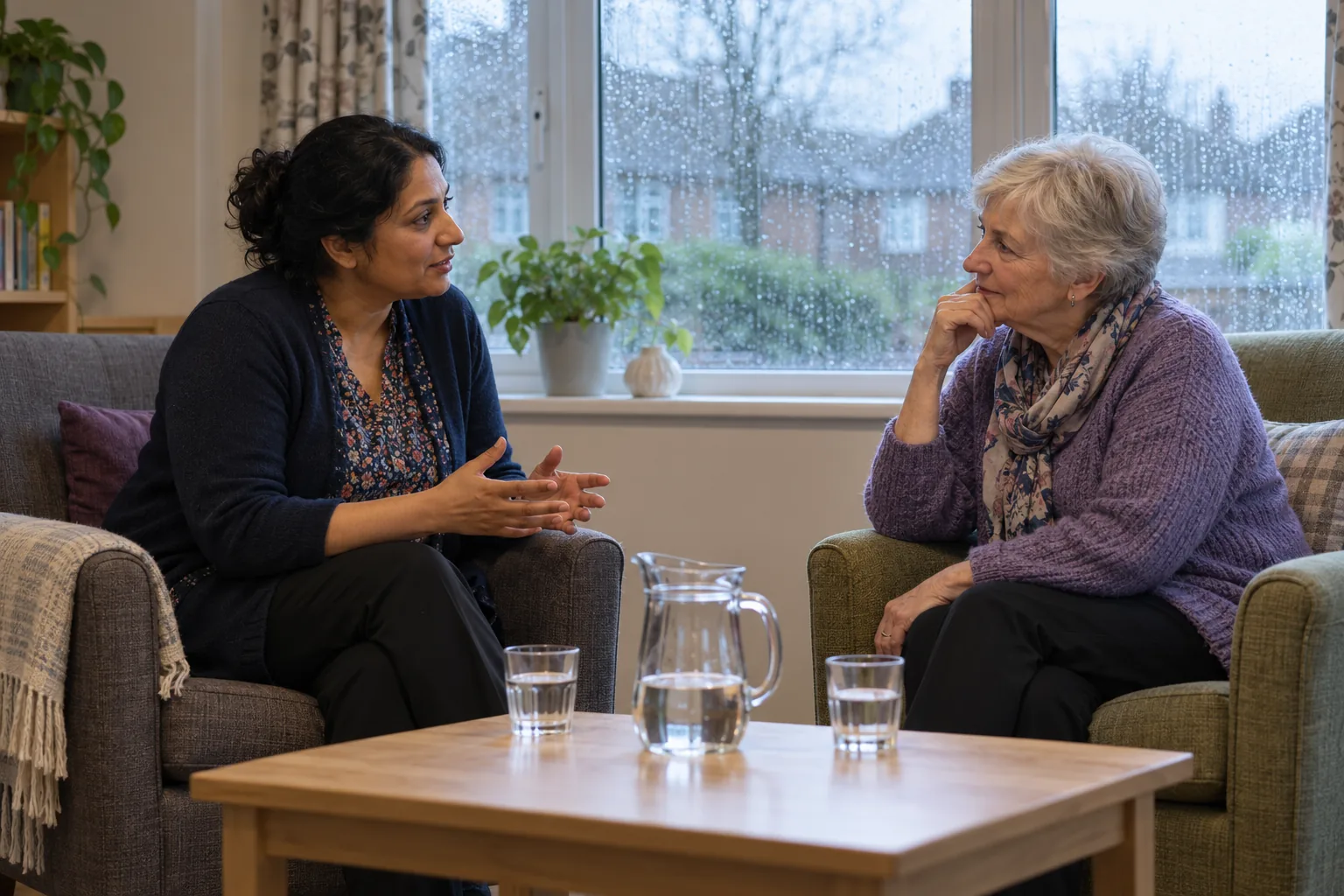
A volunteer support and supervision session is a conversation, not a review. The language matters: a tribunal looks at the reality of the relationship, and a session run like a staff appraisal, with targets, required hours and warnings, makes a volunteer look more like a worker. Use the words of hopes and offers – “we hope”, “we can offer”, “would you like” – and keep “performance review”, “targets” and “disciplinary” out of it. The volunteer agreement guide covers worker status in detail.
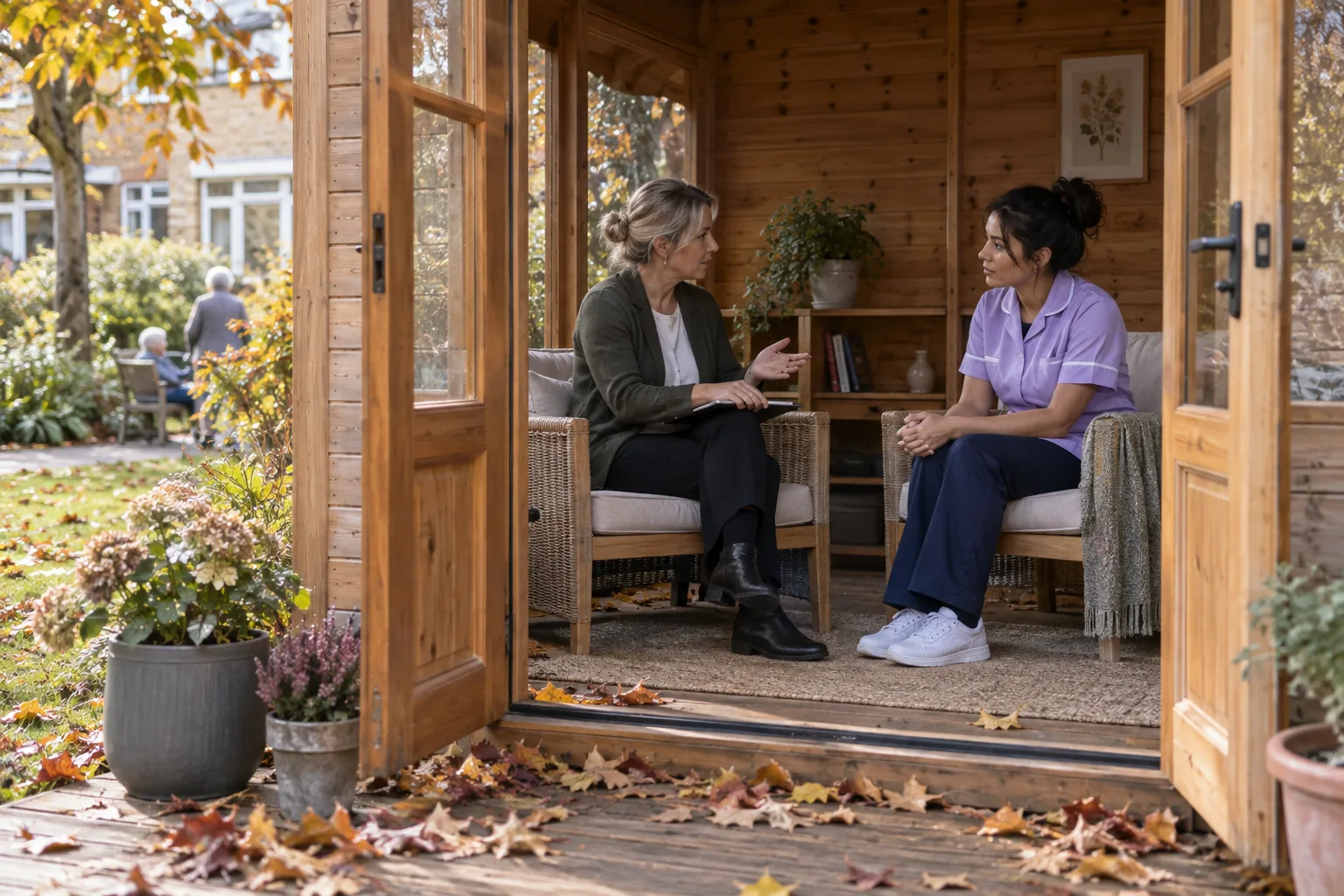
A practical shape for a one-to-one session of half an hour or so:
- How it is going. What has gone well, what the volunteer has enjoyed, and anything they would like to do differently.
- Safeguarding and wellbeing. Anything that has worried them about the people they work with, and how they are themselves. A concern is noted and passed to the safeguarding lead the same day; it is not investigated in the session.
- What has changed. The days, hours, setting or tasks of the role, and whether the volunteer now works with children more often or overnight.
- Training and support. What would help, and what the charity can offer.
- Practical matters. Expenses queries, equipment, rotas the volunteer has offered to cover.
- Next contact. When and how the next check-in will happen, and who to contact in between.
Date and how the session took place (in person, phone, video) · volunteer and supervisor · role, and any change to its days, hours, setting or tasks since the last session · whether that change needs a DBS eligibility check, and who will do it · what the volunteer said is going well, and anything they would like changed · any concern raised, with the time it was passed to the safeguarding lead (the detail goes in the safeguarding record, not here) · training or support requested, and what was offered · expenses or practical queries, and what was agreed · date of the next contact.
Keep the note short and factual, write it the same day, and write it as if the volunteer will read it, because they may ask to. The supervision note is part of the volunteer's record; the volunteer records guide covers what else that record holds, who can see it and how long to keep it after the volunteer leaves. A safeguarding concern goes on the charity's safeguarding concern form, not in the supervision note, so it reaches the people who need it and nobody else.
Group supervision. For roles that carry emotional weight, such as befriending or a helpline, a regular group session alongside one-to-ones lets volunteers support each other and lets the coordinator spot a pattern no single volunteer sees. Agree at the start what stays in the room and what must be passed on: a safeguarding concern always is.

When supervision raises a concern or a problem
Supervision is support, not discipline and not an investigation. When something serious comes up, the session's job is to send it to the right route at once.
- A safeguarding concern about a child. Paragraph 358 of Working Together 2026 says individual practitioners, “whether paid or volunteer, should be aware of their responsibilities for safeguarding and protecting children from harm, how they should respond to child protection concerns and how to make a referral to local authority children's social care or the police, if necessary.” The supervisor passes the concern to the safeguarding lead under the charity's safeguarding policy, and the lead decides on any referral.
- A concern about an adult at risk. The same route applies under the policy: record what was said, pass it to the safeguarding lead, and do not question the person further.
- A concern about the volunteer. Behaviour that breaks the code goes to the charity's volunteer problem-solving process, not into the supervision note; the volunteer code of conduct guide covers it. If a volunteer in regulated activity is removed because of harm or risk of harm, the duty to refer guide applies.
- A health and safety issue. An injury, near miss or unsafe task goes into the accident or incident record and back into the risk assessment.
What the trustees see. Trustees do not need supervision notes. They need to know that every volunteer has a named contact and that sessions happen; how many concerns came through supervision and that each reached the safeguarding lead; which roles changed and whether their DBS eligibility was checked, which is the review the Charity Commission now asks for; and any themes, such as volunteers leaving a project or asking for the same training. The safeguarding trustee guide covers how that reaches the board.
Wales and Northern Ireland. Working Together applies to England only. In Wales, the Wales Safeguarding Procedures guide practice for those working in the statutory, third (voluntary) and private sectors. In Northern Ireland, the Department of Health's Co-operating to Safeguard Children and Young People in Northern Ireland is the policy framework for the statutory, private, independent, community, voluntary and faith sectors. The 1 September 2026 change to regulated activity applies in both.
The volunteer supervision that happens between sessions
Most volunteer supervision does not happen in the session. It happens by text to the coordinator's personal phone and in the volunteers' WhatsApp group, because volunteers often have no work email or account on the charity's systems. A befriender messages at eight in the evening to say the man she visits seemed frightened of a new carer. A youth volunteer asks whether he can do the overnight at camp after all. A helpline volunteer replies to the group that the last call has stayed with her.
The first is the start of a safeguarding concern, the second is a change to the role that may move it into regulated activity, and the third is the wellbeing check the session is meant to make. Each is supervision, and each is held on a personal phone or in a group the charity may not have set up, cannot search and cannot produce if a concern is later questioned. The supervision note records the session; the messages show what the volunteer told their supervisor and when.
ComplyChat is designed to keep those conversations where the charity can see them. Staff and volunteers talk in channels the charity runs; a mobile number verified by SMS is an identity, so a volunteer does not need a work account; and everyone added to a channel is told it is on the record and can object or leave. On paid plans, once the charity's Microsoft 365 tenant is connected, conversations are kept under the retention schedules within its own Microsoft 365 subscription. ComplyChat is not a volunteer management system: it does not hold rotas, agreements, supervision notes or DBS checks, and the safeguarding record belongs in the system your policy names.
A question for the next trustees' meeting: when a volunteer tells their supervisor something worrying by message, where is that message held, and could the charity find it a year later?
Questions people ask
Do volunteers need supervision?
No statute sets a general supervision duty for charity volunteers, but in England Working Together to Safeguard Children 2026 says voluntary and charity organisations working with children should have its chapter 4 arrangements, including “appropriate supervision and support for staff” (paragraphs 259 and 359), and that practitioners have the same safeguarding responsibilities “whether paid or a volunteer” (paragraph 357). In a CQC-registered service, Regulation 18's supervision duty covers volunteers working in the regulated activity, because “employment” includes “arrangements for persons to provide their services voluntarily” (regulation 2(2)(c)).
How often should volunteers have supervision?
No law or regulator sets a frequency for volunteer supervision. Decide it by the risk of the role and write it into the volunteer agreement as what the charity will offer, not as an obligation on the volunteer. The “weekly or monthly” check-in some volunteer management pages suggest is practice, not a rule, and roles such as befriending and youth work, where volunteers are with vulnerable people, usually need more frequent contact than an occasional event role.
Do supervised volunteers still need a DBS check with a barred list check?
From 1 September 2026, supervision no longer decides it: in England, Wales and Northern Ireland a volunteer who teaches, trains, instructs, cares for or supervises children on more than three days in any 30-day period, or overnight between 2am and 6am, is in regulated activity even if supervised, so the role is eligible for an enhanced check with the children's barred list (Crime and Policing Act 2026 sections 139 and 140). DBS adds that the change “does not create a new requirement for organisations to carry out DBS checks”.
Does supervision change regulated activity with adults?
No. DBS says “This change only impacts regulated activity with children. No change is being made to the definition of regulated activity with adults”, and that “The concept of a supervision exemption does not apply to regulated activity with adults”.
What is a volunteer supervisor called?
There is no fixed title: most charities call the role a volunteer coordinator or volunteer manager, and the volunteer agreement names that person as the volunteer's contact or supervisor.
Official guidance and your next step
The primary sources are chapter 4 of the Department for Education's Working together to safeguard children 2026 (paragraphs 259 and 354 to 359), sections 139 and 140 of the Crime and Policing Act 2026, the Disclosure and Barring Service's announcement and myth-busting page on common misconceptions, the Department for Education's Regulated activity: removal of the supervision exemption, the Schedule to the Child Safeguarding Practice Review and Relevant Agency (England) Regulations 2018, which lists charities as relevant agencies, the Charity Commission's Safeguarding and protecting people for charities and trustees, the HSE's guidance on duties to volunteers, regulations 18 and 2 of the 2014 Regulated Activities Regulations for CQC-registered services, and GOV.UK's volunteers' rights page; for Wales and Northern Ireland, the Wales Safeguarding Procedures and Co-operating to Safeguard Children and Young People in Northern Ireland. Quotations are from those pages as checked on 1 November 2026.
This guide covers charities in England, with notes on Wales and Northern Ireland, and is not legal advice. Your local council for voluntary service or volunteer centre may run volunteer management training and publish model supervision forms to adapt; check that any form written before September 2026 does not treat supervision as a reason to skip a check.
Then do one thing: list every volunteer role that involves children, mark which are done on more than three days in 30 or overnight, and check that each has the right DBS check and a named supervisor who asks, every session, whether the role has changed.
We build ComplyChat for the work conversations organisations need to keep, and what a volunteer tells their supervisor between sessions is often one of them. Explore Free personal messaging, or compare the paid plans if your charity needs to meet its retention schedules within its own Microsoft 365 subscription.
Sources
Every document this guide quotes or links to, in the order it first cites them.
- Working together to safeguard children 2026 gov.uk
- Guidance for employers on volunteering hse.gov.uk
- Regulation 18(2)(a) of the Health and Social Care Act 2008 (Regulated Activities) Regulations 2014 legislation.gov.uk
- Regulation 2(2)(c) legislation.gov.uk
- Volunteers' rights gov.uk
- Section 139 of the Crime and Policing Act 2026 legislation.gov.uk
- Section 140 legislation.gov.uk
- Announcement of the change gov.uk
- Myth-busting page on common misconceptions gov.uk
- Guidance on the removal of the supervision exemption gov.uk
- Safeguarding and protecting people for charities and trustees gov.uk
- Wales Safeguarding Procedures safeguarding.wales
- Co-operating to Safeguard Children and Young People in Northern Ireland health-ni.gov.uk
- Schedule to the Child Safeguarding Practice Review and Relevant Agency (England) Regulations 2018 legislation.gov.uk