Part one runs to 82 paragraphs and is published on its own as well as inside the full guidance. This guide explains who must read what, what Part one covers, what Annex A now is and who should read it, and how to keep a staff declaration that shows the reading happened and was understood.
The rule: who must read Part one of KCSIE 2026
Governing bodies and proprietors “should ensure that those staff who work directly with children read at least Part one of this guidance”, says the opening of Keeping children safe in education 2026, and, working with their senior leadership teams and especially their designated safeguarding lead, “should now also ensure that those staff who do not work directly with children read Part one of this guidance”. They “should ensure that mechanisms are in place to assist staff to understand and discharge their roles and responsibilities as set out in Part one”.
The Department’s own overview puts it in one line: “All staff must read part one in full and follow their school’s or college’s safeguarding policies and procedures.” Annex C, the summary of changes, explains why: “References to the withdrawn Annex A (condensed Part one) have been removed, as all staff are expected to read Part one in full.” Until September 2026 a school could give the condensed Annex A to staff who did not work directly with children – often site, catering, cleaning and office staff. That option has gone.
KCSIE is statutory guidance issued under section 175 of the Education Act 2002, the Education (Independent School Standards) Regulations 2014, the Non-Maintained Special Schools (England) Regulations 2015 and the Apprenticeships, Skills, Children and Learning Act 2009, and schools and colleges in England “must have regard to it” when carrying out their duties to safeguard and promote the welfare of children and young people under 18. It applies to maintained schools and nursery schools, academies and free schools, independent schools, non-maintained special schools, pupil referral units and colleges. KCSIE 2026 replaced the September 2025 version, and the 2026 versions came into force on 1 September 2026.
What Part one covers, paragraph by paragraph
Part one, “Safeguarding information for all staff”, is paragraphs 1 to 82 of the full guidance, and the Department also publishes it as a separate 50-page document, with the same paragraph numbers, ending with the further information annex. Its contents page lists four headings:
- What school and college staff should know and do (paragraphs 1 to 10): safeguarding “is everyone’s responsibility”, children means everyone under 18, the child-centred approach, the role of staff in identifying children who may benefit from Family Help, and the designated safeguarding lead.
- What school and college staff need to know (paragraphs 11 to 17): the systems explained at induction – the child protection policy, behaviour policy, staff behaviour policy (“sometimes called a code of conduct”), the response to children absent from education and the identity of the DSL and deputies; safeguarding training including online safety and the roles in filtering and monitoring (paragraph 12); Family Help and statutory assessments; and how to respond when a child tells you they are being abused. Staff “should never promise a child that they will not tell anyone about a report of any form of abuse” (paragraph 14).
- What school and college staff should look out for (paragraphs 18 to 56): the children who may need support before statutory intervention, the definitions, indicators and signs of abuse, neglect and exploitation, child-on-child abuse, child criminal and sexual exploitation, domestic abuse, female genital mutilation (including the legal duty on a teacher who discovers that an act of FGM appears to have been carried out on a girl under 18 to report it to the police, paragraph 46), mental health and serious violence.
- What school and college staff should do if they have concerns about a child (paragraphs 57 to 76): act immediately, follow the child protection policy and speak to the DSL or a deputy; the options that follow; that “staff should not assume a colleague or another professional will take action” (paragraph 62); that data protection laws do not prevent sharing information to keep children safe (paragraph 63); and the record keeping in paragraph 74. Paragraphs 77 to 82 cover safeguarding concerns or allegations about another member of staff, including supply staff, trainee teachers, volunteers and contractors – those that may meet the harm threshold go to the headteacher or principal, and those that do not are shared under the low-level concerns policy – and concerns about the school’s own safeguarding practice, with the NSPCC Whistleblowing Advice Line.
Paragraph 74 is the one that turns reading into records: “All concerns, discussions and decisions made, and the reasons for those decisions, should be recorded in writing.” What follows from that for the school is in our guide to what KCSIE requires you to record.
The Department also publishes a short web page, Part one – overview for all staff, covering core principles, what to know, what to do, information sharing, record keeping, concerns about staff and whistleblowing. It is “intended to complement, not replace, any part of the guidance”: a useful handout after the reading, not instead of it.
Annex A in KCSIE 2026, and who should read it
Annex A has changed meaning. In KCSIE 2025 it was the condensed Part one; in KCSIE 2026 it is “Further information”, the material that was Annex B in 2025. Annex C records the change in a line: “Annex A (condensed Part one) removed and replaced with previous Annex B.”
Who should read the new Annex A is set out in paragraph 56 of Part one: “Annex A contains important additional information about specific forms of abuse, exploitation, and safeguarding issues. School and college leaders and those staff who work directly with children should read Annex A.” So the reading requirement now has two tiers:
- Every member of staff reads Part one in full.
- Leaders and staff who work directly with children also read Annex A.
Annex A covers child abduction and community safety incidents, child criminal and sexual exploitation, county lines, children and the court system, children absent from education, children with family members in prison, cybercrime, domestic abuse, homelessness, modern slavery and the National Referral Mechanism, preventing radicalisation, serious violence, and honour or faith-based abuse including female genital mutilation and forced marriage. A school’s reading list and declaration from September 2026 should name Annex A for the second group and should no longer mention a condensed Part one for anyone. Old templates that offer “Part one or Annex A” are out of date.
The staff declaration and the record of reading
KCSIE does not prescribe a declaration form or ask for a signature. What it asks of governing bodies is that staff read Part one, that “mechanisms are in place” to help them understand it, and, in paragraph 124, that the safeguarding policies, “along with Part one of this guidance and information regarding the role and identity of the designated safeguarding lead (and deputies), should be provided to all staff on induction”. A school that is asked whether its staff have read Part one needs to be able to show it, and a dated record of reading is the usual way to do that. Many schools ask each member of staff to confirm each September, when the new edition comes into force, and at induction for anyone who joins during the year.
A record that does its job holds, for each person:
- name, role and whether they work directly with children (which decides whether Annex A applies);
- exactly what was issued, by title and edition – KCSIE 2026 Part one, Annex A where it applies, the child protection policy, the staff behaviour policy, and the name of the DSL and deputies;
- the date issued and the date the person confirmed they had read and understood it;
- how they confirmed – a signature, an electronic acknowledgement in the school’s HR or safeguarding system, or a signed sheet at a training session; and
- who chased anyone who had not confirmed, and when they did.
The wording of the declaration matters less than its accuracy. A useful one says: “I have read and understood Part one of Keeping children safe in education 2026 [and Annex A], the school’s child protection policy and staff behaviour policy; I know who the designated safeguarding lead and deputies are and how to raise a concern.” Review and update it, and re-issue it, when the school’s own policies change materially, not only when a new edition of KCSIE comes into force.
Reading is not training. Paragraph 12 asks for safeguarding and child protection training at induction, “regularly updated”, and updates “at least annually”, and governors should receive training at induction under paragraph 87. Keep the two records side by side, as our safeguarding training records guide describes, so the school can show both that staff read the guidance and that they were trained on it.

Supply staff, volunteers, contractors and governors
Paragraph 125 allows a different approach for people who are not permanent staff: “Governing bodies and proprietors should take a proportionate risk-based approach to the level of information that is provided to temporary staff, volunteers and contractors.” A long-term volunteer who helps with reading every week is in a different position from a contractor repairing a roof in the holidays. Decide the level for each group, write it in the child protection policy, and record what each person received – a regular volunteer might read Part one and sign the same declaration; a short-term visitor might get a safeguarding leaflet naming the DSL and how to raise a concern.
Supply staff need particular care because they move between schools: the local arrangements – who the DSL is, how concerns are recorded here – are the school’s to explain on day one. Part one’s own paragraphs on safeguarding concerns about adults (77 to 79) name supply staff, trainee teachers, volunteers and contractors explicitly, so they need to know the route for a concern about an adult as well as about a child.
Governors are not “staff”, but the whole of KCSIE is addressed to them: the guidance “should be read and followed by” governing bodies, proprietors, management committees and senior leadership teams. Paragraph 87 asks that all governors and trustees receive safeguarding and child protection training at induction, updated regularly, to “provide strategic challenge” on the school’s arrangements. Many boards ask governors to sign the same Part one declaration, and it is a reasonable thing to record.
When support staff read Part one for the first time
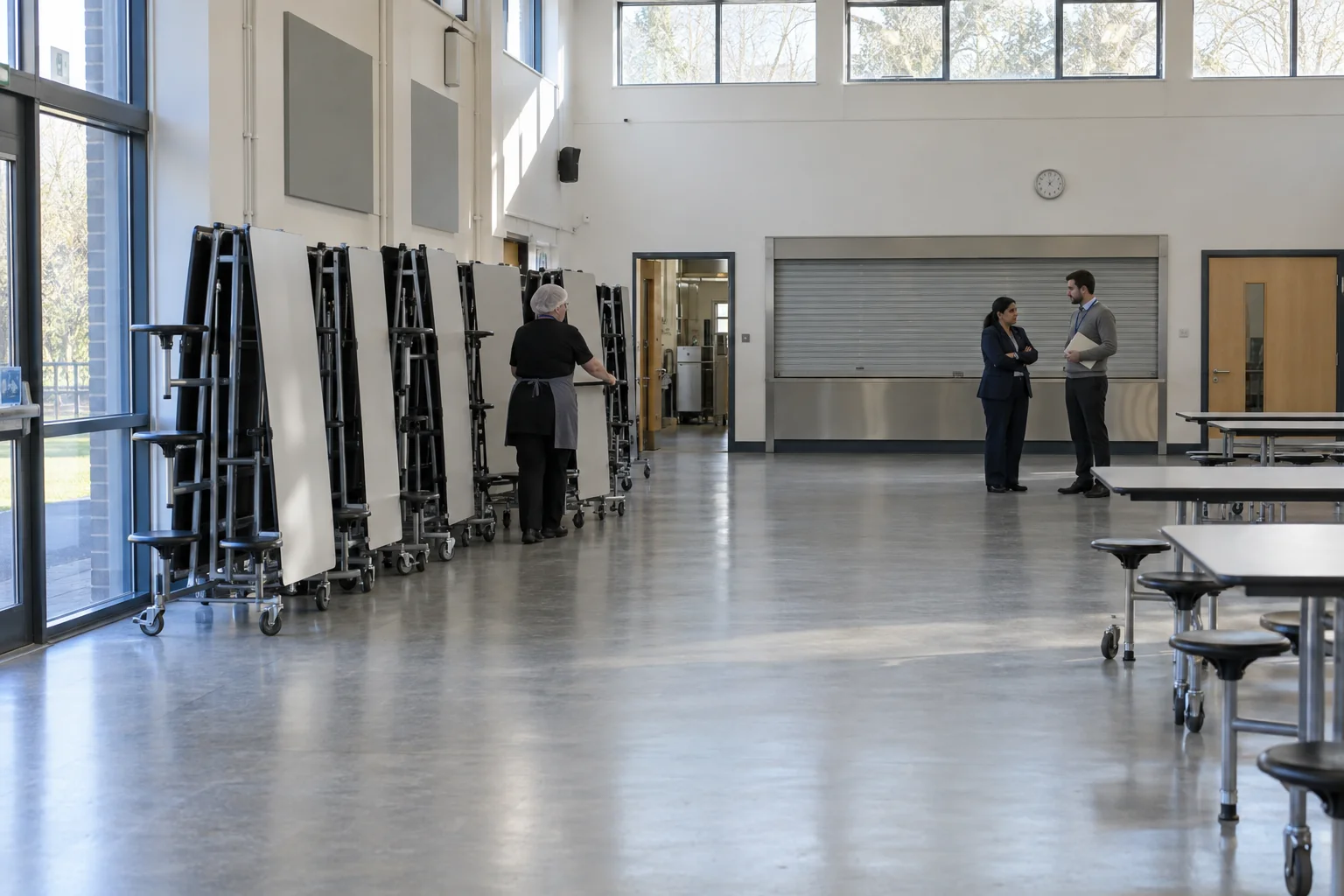
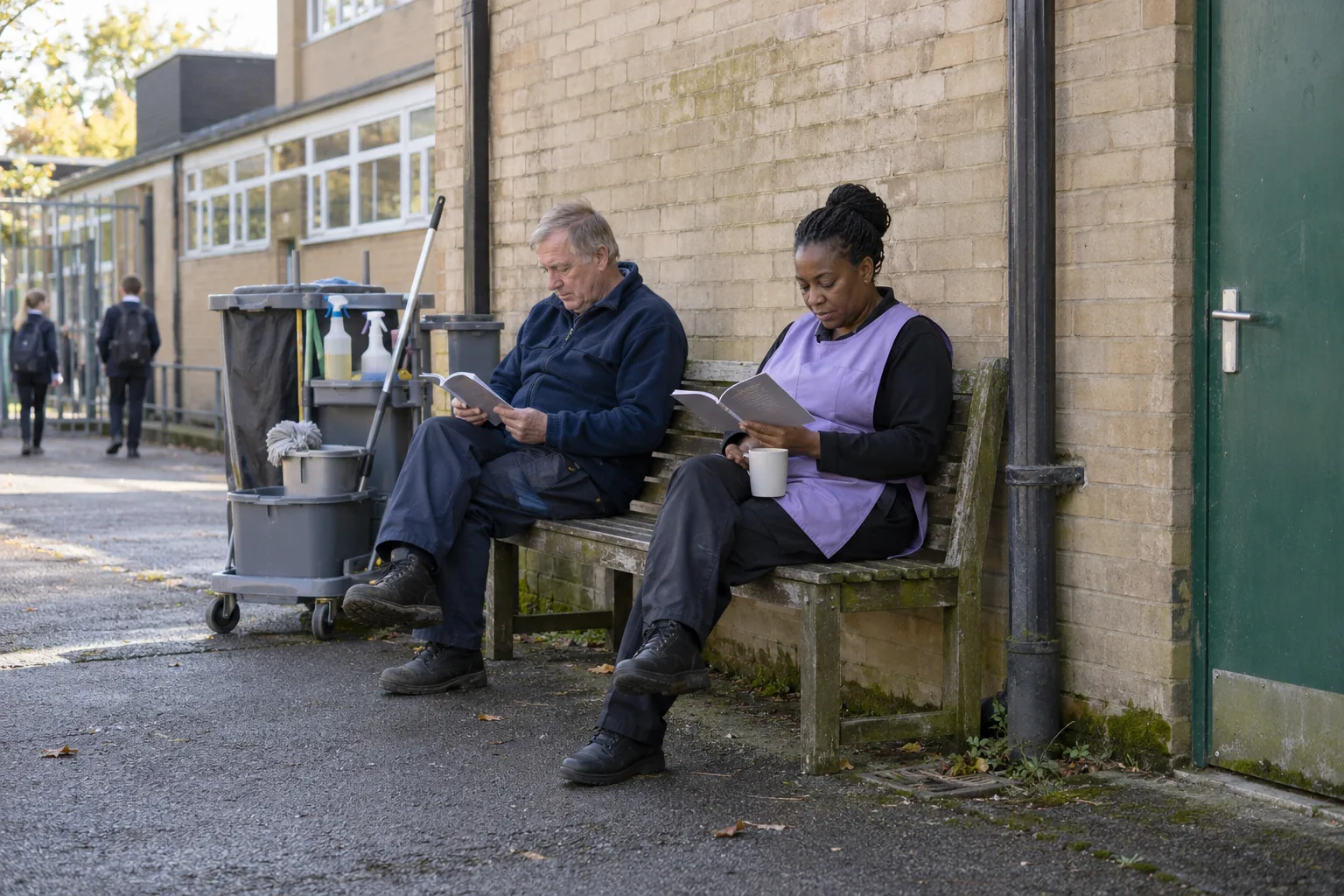
The 2026 change means that the site manager, the cook, the cleaner on the early shift and the receptionist now read the same 82 paragraphs as the teachers. Many of them are on no school email list, and some are employed by a contractor rather than the school. Their safeguarding information reaches them as the teachers’ does, at induction and in updates, but the conversations about it happen wherever they already talk to colleagues, which is usually a group chat on their own phones.
Part one tells them what to do with a concern: act immediately, speak to the DSL or a deputy, and do not assume a colleague will take action. What it cannot control is what happens to the first message. A lunchtime supervisor sees a bruise and asks in the support staff group whether anyone else noticed it; a colleague replies that she thinks the DSL already knows. Paragraph 62 is written for exactly that reply, and paragraph 74 asks for concerns, discussions and decisions to be recorded – but the discussion took place in an app the school does not run and cannot produce.
The declaration on file shows the supervisor read and understood Part one. The record of how she acted on it is the conversation, and it belongs to her phone and to a group the school is not in. A question for the next leadership or governors’ meeting: for the staff who read Part one for the first time this September, through which channel would their first concern reach the designated safeguarding lead, and could the school show that it did?
Questions people ask
Who needs to read KCSIE Part 1?
All school and college staff in England need to read KCSIE Part one in full from 1 September 2026, including staff who do not work directly with children, such as site, catering and office staff. The condensed version that used to be Annex A has been withdrawn, and governing bodies and proprietors are responsible for making sure the reading happens.
Which parts of the KCSIE document are mandatory for all staff?
Part one, “Safeguarding information for all staff”, is the part every member of staff should read. School and college leaders and staff who work directly with children should also read Annex A, the further information on specific forms of abuse and safeguarding issues (paragraph 56). Leaders, governors and the designated safeguarding lead work from the whole document.
Is there a KCSIE staff declaration template?
The Department for Education does not publish a staff declaration form, and KCSIE 2026 does not require a signature. Schools and local safeguarding partnerships use their own: it should name the edition read (KCSIE 2026 Part one, plus Annex A where it applies), the school’s child protection and staff behaviour policies, and the date the person confirmed they had read and understood them.
What part of KCSIE should school governors read?
Governors should know the whole of KCSIE, because the statutory guidance is addressed to governing bodies and proprietors, who “must have regard to it”. Part two, the management of safeguarding, sets out their own responsibilities, and paragraph 87 says all governors and trustees should receive safeguarding and child protection training at induction, regularly updated.
What is the second part of the KCSIE document?
Part two of KCSIE 2026 is “The management of safeguarding”: the responsibilities of governing bodies and proprietors, safeguarding policies, the designated safeguarding lead, multi-agency working, information sharing, staff training, online safety including filtering and monitoring, and children potentially at greater risk of harm. Parts three to five cover safer recruitment, concerns or allegations about staff, and child-on-child sexual harassment and sexual violence.
What are the key changes in KCSIE 2026?
KCSIE 2026, in force from 1 September 2026, withdrew the condensed Part one so all staff read Part one in full, renamed the further information annex as Annex A, added sections on mobile phone policy and on boarding and residential accommodation, added guidance on generative AI, and removed the supervision exemption from regulated activity following the Crime and Policing Act 2026. Annex C of the guidance lists every change.
Where to read Part one and your next step
Read the source rather than a summary. The Keeping children safe in education 2026 publication page carries the full guidance, Part one as a separate document and the Part one overview for all staff. Annex C lists every change from 2025. Your local safeguarding partnership’s procedures set the referral routes that Part one tells staff to follow.
This guide is a summary of statutory guidance for schools and colleges in England, not a substitute for it and not legal advice. Wales, Scotland and Northern Ireland have their own guidance.
Then do one thing: open last September’s reading record and check that every member of staff has a 2026 entry – especially the staff who were given the condensed Annex A last year and now need Part one in full.
We build ComplyChat for the work conversations organisations need to keep, including staff who have no account on the school’s systems: a mobile number verified by SMS is their identity, and everyone added to a channel is told it is on the record. It does not replace the safeguarding system or the reading record; on paid plans, once the school’s Microsoft 365 tenant is connected, the lasting record of those conversations files there under the school’s own retention rules.
Sources
Every document this guide quotes or links to, in the order it first cites them.