
The framework asks for the procedure but does not write it. It sets no waiting time before staff ring round, no deadline for calling children's social care, no rule that two staff stay behind and no late-collection fee; those are choices each setting makes and records. This guide is for the nursery or pre-school manager, the childminder and the EYFS lead in a school with a nursery or reception class who is writing or reviewing the procedure. It sets out the paragraphs behind each step, what prevents a child going missing or leaving with the wrong adult, what happens on the day for a missing child and for an uncollected one, when Ofsted must hear, and what the record should show afterwards.
The rule: EYFS 3.100, and 3.99 for childminders
Paragraph 3.100 of the EYFS statutory framework for group and school-based providers requires providers to share details of their policies and procedures with parents and carers, “making copies available on request”, and names one procedure in particular: “the procedure to be followed in the event of a parent and/or carer failing to collect a child at the appointed time, or in the event of a child going missing at, or away from, the setting.” Paragraph 3.99 of the EYFS statutory framework for childminders says the same of childminders. Both frameworks are dated 13 July 2026 and took effect on 1 September 2026, as the EYFS framework publication page records.
The missing child and the uncollected child sit in one sentence, which is why most settings write one “lost or uncollected child” procedure. “Away from the setting” matters: the procedure covers an outing, a walk to the park and a trip to a school hall, not only the building.
The framework has legal force through the Early Years Foundation Stage (Welfare Requirements) Regulations 2012, regulation 3: the sentences in section 3 that use “must”, apart from a short list the regulation excludes (the notification paragraphs among them, because the Regulations impose those directly), are welfare requirements under section 39(1)(b) of the Childcare Act 2006, and providers must “have regard to” the sentences that use “should”. Paragraph 3.100 is a “must”.
- Group and school-based providers “must have and implement policies and procedures to keep children safe”, and where the framework requires a procedure it “should be recorded in writing” (group 3.5). A school need not write a separate EYFS policy if an existing policy already meets the requirement.
- Childminders registered only on the Early Years Register or with an early years childminder agency “are not required to have written policies and procedures”, but “must be able to explain their policies and procedures to parents, carers, and others (for example Ofsted inspectors or the CMA with which they are registered)” (childminder 3.6). Many write it down anyway, because a parent asking for a copy is easier to answer with one.
Neither framework sets a waiting time, a deadline for calling social care or the police, a minimum number of staff to stay with an uncollected child, or any late-collection fee; we searched the full text of both. The DfE's summary of the changes from 1 September 2026 lists no change to the collection or missing-child requirements. The rules here are for England; Wales, Scotland and Northern Ireland have their own standards and regulators.
Because the framework leaves the content to the provider, a useful test is whether the written procedure answers these questions in your own setting's terms:
- Who is in charge on the day, and who deputises when the manager is off site or on the outing.
- How a missing child is noticed: when headcounts happen, against what list, and who does them.
- The first five minutes: who searches where, who stays with the other children, who rings the parents and who dials 999.
- For a late collection: how long staff wait before ringing, which numbers in which order, and at what point the setting calls children's social care or the police.
- What staff do if an adult arrives whom the parent has not named, or who does not seem fit to take the child home.
- Who decides whether Ofsted or the childminder agency is notified, and who writes the record.
What stops a child going missing or leaving with the wrong adult
Most of a missing child procedure is prevention, and the framework puts the prevention in other paragraphs. A procedure that cites them is easier to inspect against and easier to train on.
- Release only to a named adult. Providers must ensure that “Children are only released into the care of individuals of whom the parent and/or carer has explicitly notified the provider” and that “Children do not leave the premises unsupervised” (group 3.89, childminder 3.88). The same paragraphs require an agreed procedure for checking the identity of visitors. The collection procedure should say how a parent notifies a change on the day, and what a password or photograph check looks like at the door.
- Sight and hearing. “Children must usually be within sight and hearing of staff and always within sight or hearing” (group 3.44; childminder 3.48 for the childminder and any assistants).
- Outings. “Children must be kept safe while on outings”, and providers must assess the risks, including “consideration of staff to child ratios”; the assessment “does not necessarily need to be in writing” (group 3.91, childminder 3.90). Headcounts at each change of place, a list of the children on the trip and a charged phone are the usual answers. Nursery risk assessment covers the outing assessment itself.
- Emergency contacts. Providers must record emergency contact details for parents and carers, and “Where possible, settings should hold more than two emergency contact numbers for each child” (group 3.99, childminder 3.98). A late collection is when an out-of-date number is discovered; checking the list each term is cheaper.
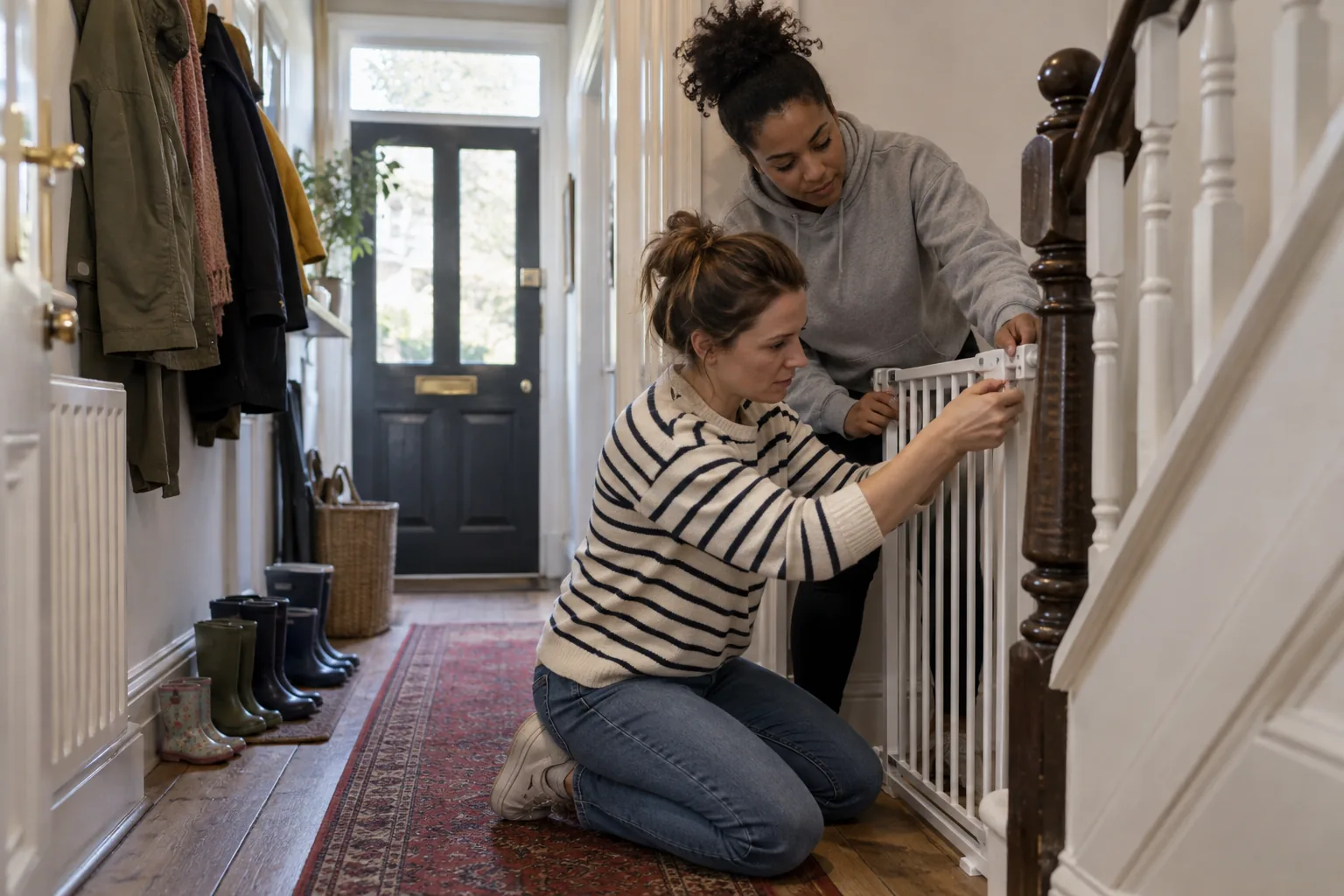
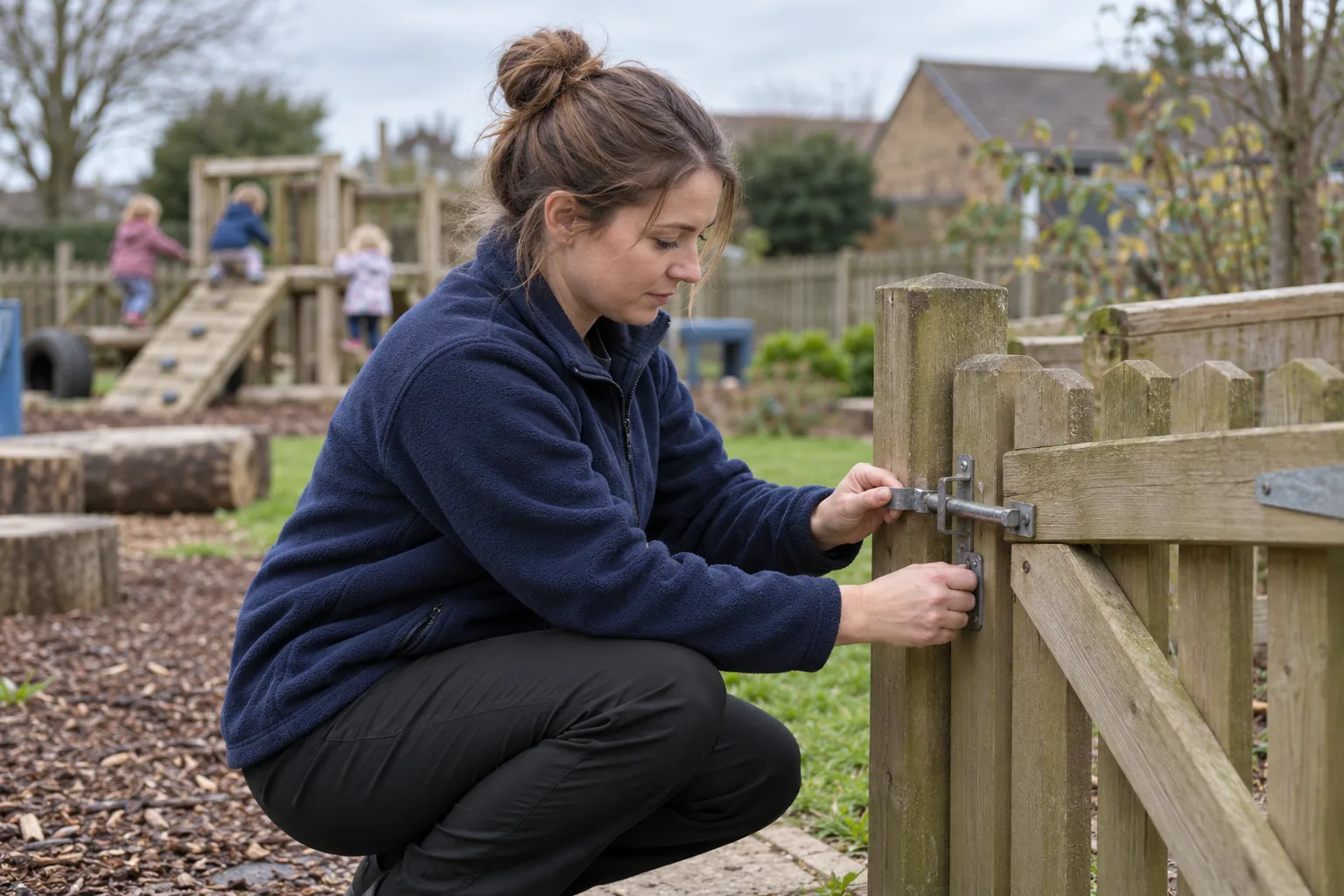
- Unauthorised entry. Providers must “take all reasonable steps to prevent unauthorised persons entering the premises” (group 3.89, childminder 3.88). Read with “Children do not leave the premises unsupervised”, that in practice means gates and doors a small child cannot open.
Keep a missing child apart from an absent one. A child who does not arrive is covered by the absence paragraphs (group 3.11 to 3.12, childminder 3.12 to 3.13): providers “must follow up on absences in a timely manner”, try the parents and the emergency contacts, and “Any concerns must be referred to local children's social care services and/or a police welfare check requested”, under an attendance policy shared with parents. A child who was in your care and cannot now be found is the 3.100 procedure.
A child is missing, on the premises or on an outing
A missing child is usually noticed at a headcount that comes out one short, or when a parent arrives and the child is not where they should be. The procedure's job is to turn the next few minutes into a sequence nobody has to invent under pressure.
- Raise the alarm and take charge. The member of staff who notices tells the person in charge at once; that person runs the search and the calls.
- Check the register and count everyone. Confirm which child is missing and when and where they were last seen, against the register or the outing list.
- Keep the other children safe. Gather them in one place with enough staff to keep ratios; the search must not leave a second group unsupervised.
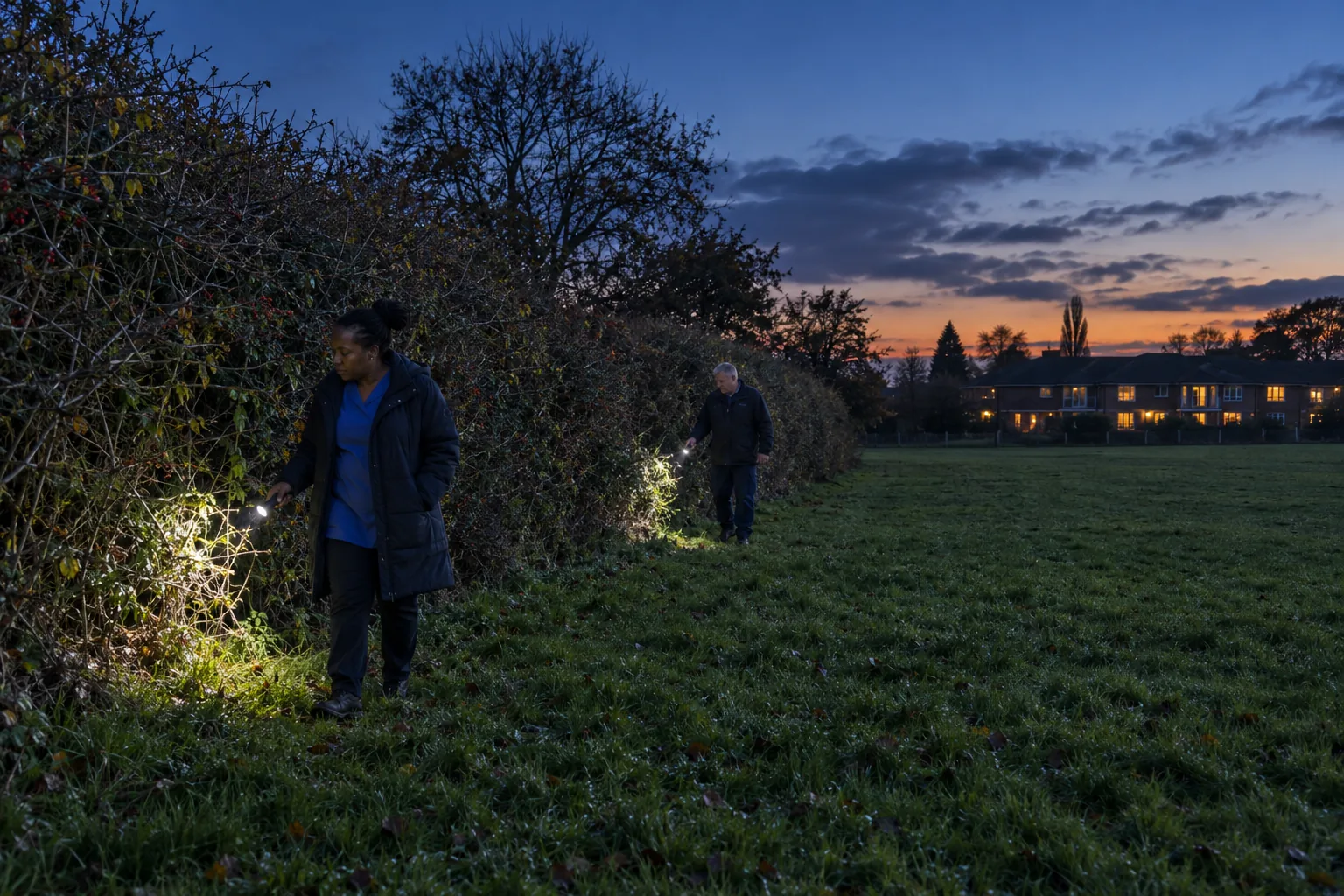
- Search quickly and systematically. Rooms, toilets, cupboards, the garden, the gate and the route to it, or on an outing the area around the last sighting, with one person at the meeting point. Ask the venue's staff to watch the exits.
- Call 999 without waiting if the child is not found at once. Name in the procedure who makes the call, and give the police the description, clothing, last known place and time, and any medical needs.
- Tell the parents. The person in charge, or someone they name, rings the parents and says what is being done.
- Note the times as you go. When the child was missed, where each person searched, when each call was made and when the child was found.
The framework's own words for the police are short. If providers have concerns about a child's safety or welfare they “must immediately notify their local authority children's social care team, in line with local reporting procedures, and, in emergencies, the police” (group 3.9; childminder 3.10). A young child who cannot be found after an immediate search is an emergency, and the procedure should say so rather than leave staff to weigh it. The College of Policing's missing persons authorised professional practice treats anyone whose whereabouts cannot be established as missing until they are located and their wellbeing is confirmed.
When the child is found, check them for injury, comfort them, tell the police and the parents, and keep the rest of the group settled. Then the work of section 05 begins: whether to notify Ofsted, the record and the review.
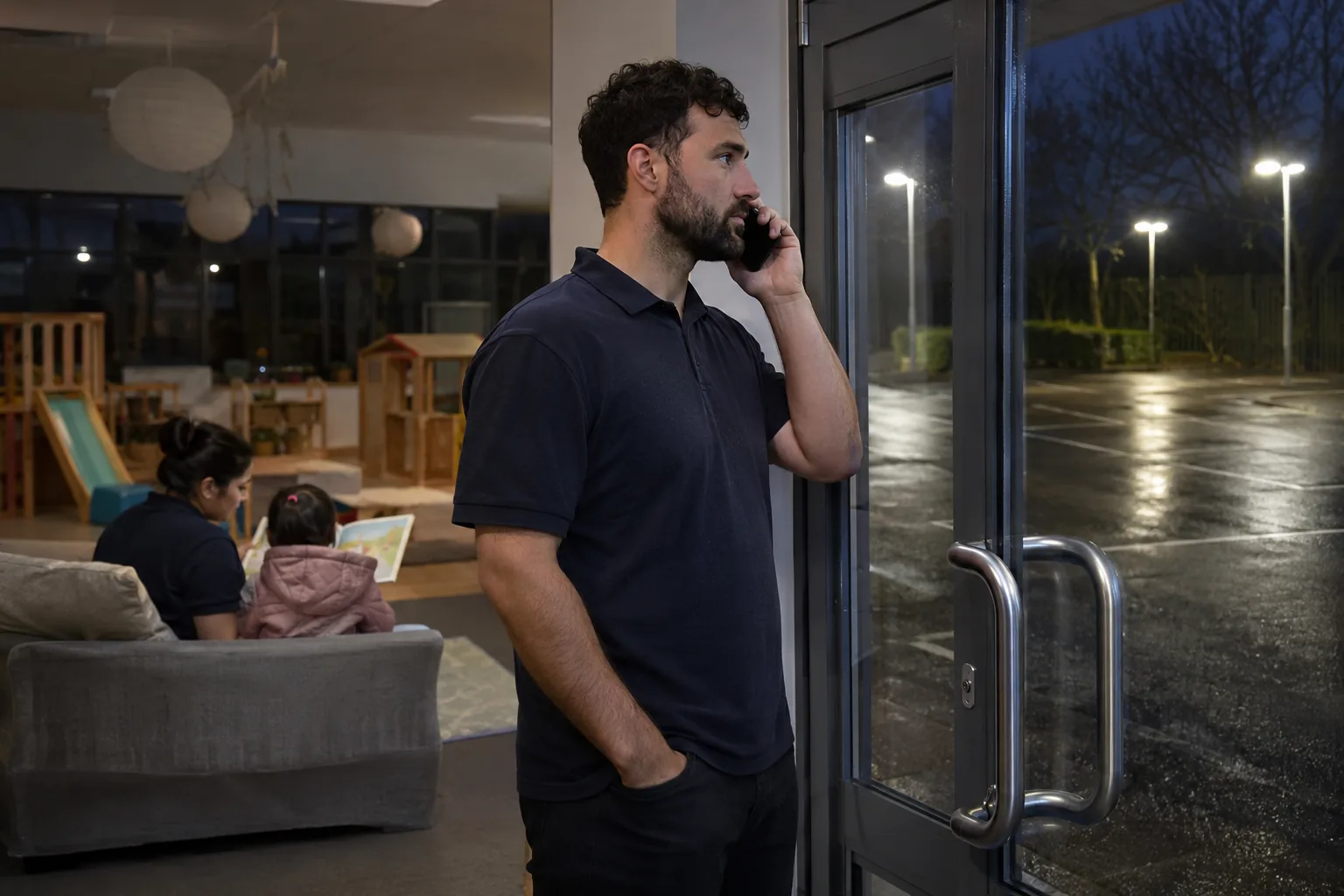
A child is not collected: the waiting time is yours to set
No law sets how long a nursery waits before ringing round, or when it calls children's social care about an uncollected child. The provider decides, writes it into the procedure that 3.100 requires it to share with parents, and keeps to it. Some local authority guidance asks settings to set out their own time frames; City of Doncaster Council's note on developing an uncollected child procedure asks “What would be the time frame before contacting parents” and “What would be the time frame police or social care”. Check what your own local safeguarding partnership publishes, because group settings' policies “should be in line with the guidance and procedures of the relevant Local Safeguarding Partners” (group 3.5).
- Keep caring for the child. Staff stay with the child in a familiar room, with a drink and something to do, and keep ratios for any other children still in. A person who has care of a child without parental responsibility “may … do what is reasonable in all the circumstances of the case for the purpose of safeguarding or promoting the child's welfare” (Children Act 1989, section 3(5)).
- Try every number, and write down each attempt. Parents first, then each emergency contact, with the time of each call and message and any reply.
- When no one can be reached, call children's social care. At the time your procedure sets, or sooner if something about the child or the family worries you, contact the local authority children's social care team (out-of-hours if it is late), under group 3.9 or childminder 3.10. In an emergency, call the police. A constable who “has reasonable cause to believe that a child would otherwise be likely to suffer significant harm” may take the child into police protection (Children Act 1989, section 46).
- An adult the parent has not named. The child is not released to them (group 3.89, childminder 3.88) until the parent confirms; the procedure should say how that confirmation is given and recorded. If the named adult arrives and seems unfit to care for the child, for example under the influence of alcohol, follow the safeguarding procedure and the 3.9 route rather than the late-collection one.
- Persistent late collection. A pattern is worth noticing and recording, and talking about with the family; read with the rest of what the setting knows, it may be a welfare concern.
Two things often written as rules are not. The framework has no requirement that two members of staff stay with an uncollected child; ratios and the setting's own procedure apply. Many procedures say staff do not take a child to their own house or in their own car, which is sensible practice, but it is the provider's rule, not an EYFS paragraph. Late-collection fees are a term of the parent contract, not an EYFS or Ofsted requirement.
For schools. Children in a school's nursery or reception class are within the EYFS, so 3.100 applies to them and the school's procedure must cover them, though an existing whole-school policy can meet the requirement (group 3.5). For older pupils, Keeping children safe in education 2026 has no specific provision on children not collected (we searched the edition re-issued on 17 November 2026), so the school's own procedure and safeguarding policy, read with the local safeguarding partnership's arrangements, decide the steps and the times.
Afterwards: Ofsted, the record and the review
A registered early years provider must notify Ofsted, or its childminder agency, of “any other significant event which is likely to affect the suitability of the early years provider or any person who cares for, or is in regular contact with, children on the premises on which childcare is provided to look after children” (Schedule, paragraph 7 of the 2012 Welfare Requirements Regulations). Regulation 8(2)(b) sets the clock: “as soon as reasonably practicable, but in any event within 14 days beginning with the date that the event occurred”. The frameworks repeat the duty at group 3.105 and childminder 3.104.
Whether a particular missing child is a significant event is the provider's judgement. Ofsted's Childcare: significant events to notify Ofsted about (updated 22 October 2026) gives as examples of an incident where a child may have been at risk of harm “a child was able to leave a setting or was missing for any period” and “a child was not adequately supervised”, and says: “The greater the risk to children posed by the event, the more likely it counts as a serious incident that you should notify us about.” Our reading is that a child who left the premises unnoticed, or was lost on an outing, is likely to meet that test, and that a late collection handled under the procedure is less likely to; the judgement stays the provider's. Ofsted's list of events you do not need to notify includes “referrals you make to other agencies following a concern about a child in your care, such as a child protection referral”, so a call to children's social care about an uncollected child does not by itself need notifying. Notification is made through Ofsted's Report a serious childcare incident form. Childminders notify Ofsted or their agency depending on how they are registered (3.104); a group provider of childcare on domestic premises registered with an agency notifies the agency (group 3.107); a nursery on non-domestic premises notifies Ofsted. Notifying Ofsted of changes covers the mechanics.
The record is what the notification, the police and the review all draw on. Providers “must maintain records, obtain and share relevant and accurate information (with parents and/or carers, other professionals working with the child, the police, social services and Ofsted or their CMA, as appropriate)” (group 3.95, childminder 3.94). For a missing or uncollected child, write down while it is fresh:
- the time the child was missed or the collection time passed, and who noticed;
- where and when the child was last seen, and the search: who looked where, and when;
- every call and message, to parents, emergency contacts, the police and social care, with times and replies;
- the decisions and who made them: calling 999, contacting social care, notifying Ofsted;
- when and where the child was found or collected, and by whom, and the child's condition;
- what the parents were told, and when.
Then review: what allowed it, whether the headcount routine, the gate, the outing risk assessment or the contact list needs to change, and whether staff need retraining. Tell the parents what happened and what has changed, and date the revised procedure.
Where ComplyChat fits, and where it does not
ComplyChat does not find children. It is not a register, a headcount or a door-entry system, it does not contact the police or social care, and it never replaces a 999 call; the person in charge on the day decides and acts.
What it touches is the record. A search or a late collection runs on phone calls and messages: the outing leader texting the manager that a child is missing by the pond, the deputy messaging three emergency contacts, a parent replying from the car that she is stuck on the ring road. Those times and words are what Ofsted, the police and the review will ask for, and when they sit on personal phones and a staff WhatsApp group the setting cannot produce them, or can produce only the version written up the next morning.
ComplyChat is designed to bring those conversations into channels the setting runs. Staff, and parents added by their mobile number, take part without an account on the setting's systems, because a mobile number verified by SMS is the identity. Everyone added is told the channel is on the record and can object or leave. Messages are recorded on the server as they are sent, and on paid plans, once the provider's tenant is connected, they are kept under the retention schedules within its own Microsoft 365 subscription. It replaces the group chat; it does not capture WhatsApp.
A question for the next staff meeting: if a child went missing on Friday's outing, where would the timeline of messages be on Monday?
Questions people ask
What happens if a child is not collected from school or nursery?
The setting follows its own uncollected child procedure, which every early years provider in England must have and share with parents under EYFS 3.100 (3.99 for childminders); no law sets a waiting time. Staff keep caring for the child, try the parents and every emergency contact, and contact children's social care if no one can be reached or they are concerned, or the police in an emergency (group 3.9). For pupils above reception, Keeping children safe in education 2026 has no specific rule, so the school's own procedure applies.
Do you have to tell Ofsted if a child goes missing from nursery?
If the provider judges it a significant event, yes. Ofsted lists “a child was able to leave a setting or was missing for any period” among its examples of significant events, and the provider judges whether the event is one to notify, bearing in mind that the greater the risk, the more likely it is. A significant event must be notified as soon as reasonably practicable and in any event within 14 days, under regulation 8(2)(b) of the 2012 Welfare Requirements Regulations (group 3.105, childminder 3.104).
When should a nursery call the police about a missing child?
As soon as an immediate search has not found the child. The EYFS tells providers with concerns about a child's safety to notify children's social care and, “in emergencies, the police” (group 3.9, childminder 3.10), and police guidance treats anyone whose whereabouts cannot be established as missing until they are found. The procedure should name who dials 999.
How long should a nursery wait before calling social care about an uncollected child?
No statute or EYFS paragraph sets a time: the provider decides it, writes it into the procedure it shares with parents (3.100) and keeps to it. Check your local safeguarding partnership's guidance, and call sooner if anything about the child or family worries you.
Who can collect a child from nursery?
Only an adult the parent has named: the EYFS requires that “Children are only released into the care of individuals of whom the parent and/or carer has explicitly notified the provider” (group 3.89, childminder 3.88). The procedure should say how a parent tells the setting about a change on the day and how staff check an adult they do not know.
Does a childminder need a written missing child policy?
Not if registered only on the Early Years Register or with an early years childminder agency: those childminders “are not required to have written policies and procedures” but must be able to explain them to parents and to Ofsted or their agency (childminder 3.6). Group and school-based providers' procedures “should be recorded in writing” (group 3.5).
Official guidance and your next step
The requirements are in the EYFS statutory framework for group and school-based providers and the EYFS statutory framework for childminders, both effective from 1 September 2026, with their legal force in the Early Years Foundation Stage (Welfare Requirements) Regulations 2012. Ofsted's significant events guidance and Report a serious childcare incident cover notification. The College of Policing's missing persons authorised professional practice is the police's own guidance. Quotations are from the pages named as read on 23 and 24 November 2026.
This guide covers early years providers and schools in England and is not legal advice. Childminder policies lists every procedure a childminder must be able to explain, and EYFS safeguarding and welfare requirements maps the rest of section 3.
Then do one thing: at the next staff meeting, read your missing and uncollected child procedure aloud and ask who in the room would dial 999, and how long you would wait at closing time before ringing the first emergency contact. If the answers differ, or the procedure does not say, that is the first edit.
We build ComplyChat for the work conversations organisations need to keep. A missing or uncollected child is a decision made in minutes, in calls and messages, that later has to be shown step by step to Ofsted, the police and a family. Explore Free personal messaging, or compare the paid plans if your setting needs its conversations kept under the retention schedules within its own Microsoft 365 subscription.
Sources
Every document this guide quotes or links to, in the order it first cites them.
- EYFS statutory framework for group and school-based providers assets.publishing.service.gov.uk
- EYFS statutory framework for childminders assets.publishing.service.gov.uk
- EYFS framework publication page gov.uk
- Early Years Foundation Stage (Welfare Requirements) Regulations 2012, regulation 3 legislation.gov.uk
- Summary of the changes from 1 September 2026 help-for-early-years-providers.education.gov.uk
- Missing persons authorised professional practice college.police.uk
- City of Doncaster Council's note on developing an uncollected child procedure doncaster.gov.uk
- Children Act 1989, section 3(5) legislation.gov.uk
- Children Act 1989, section 46 legislation.gov.uk
- Keeping children safe in education 2026 gov.uk
- Schedule, paragraph 7 of the 2012 Welfare Requirements Regulations legislation.gov.uk
- Regulation 8(2)(b) legislation.gov.uk
- Childcare: significant events to notify Ofsted about gov.uk
- Report a serious childcare incident gov.uk