
The framework says what must happen but not what the entry should look like, so most of what follows is about writing an entry that still makes sense to a parent, an inspector or a solicitor years later. This guide sets out the rule, what each entry should hold, how to tell parents and whether they must sign, which accidents go further – to Ofsted, to local child protection agencies or under RIDDOR – and the separate accident book a nursery keeps for its staff.
The rule: EYFS paragraphs 3.78 and 3.79
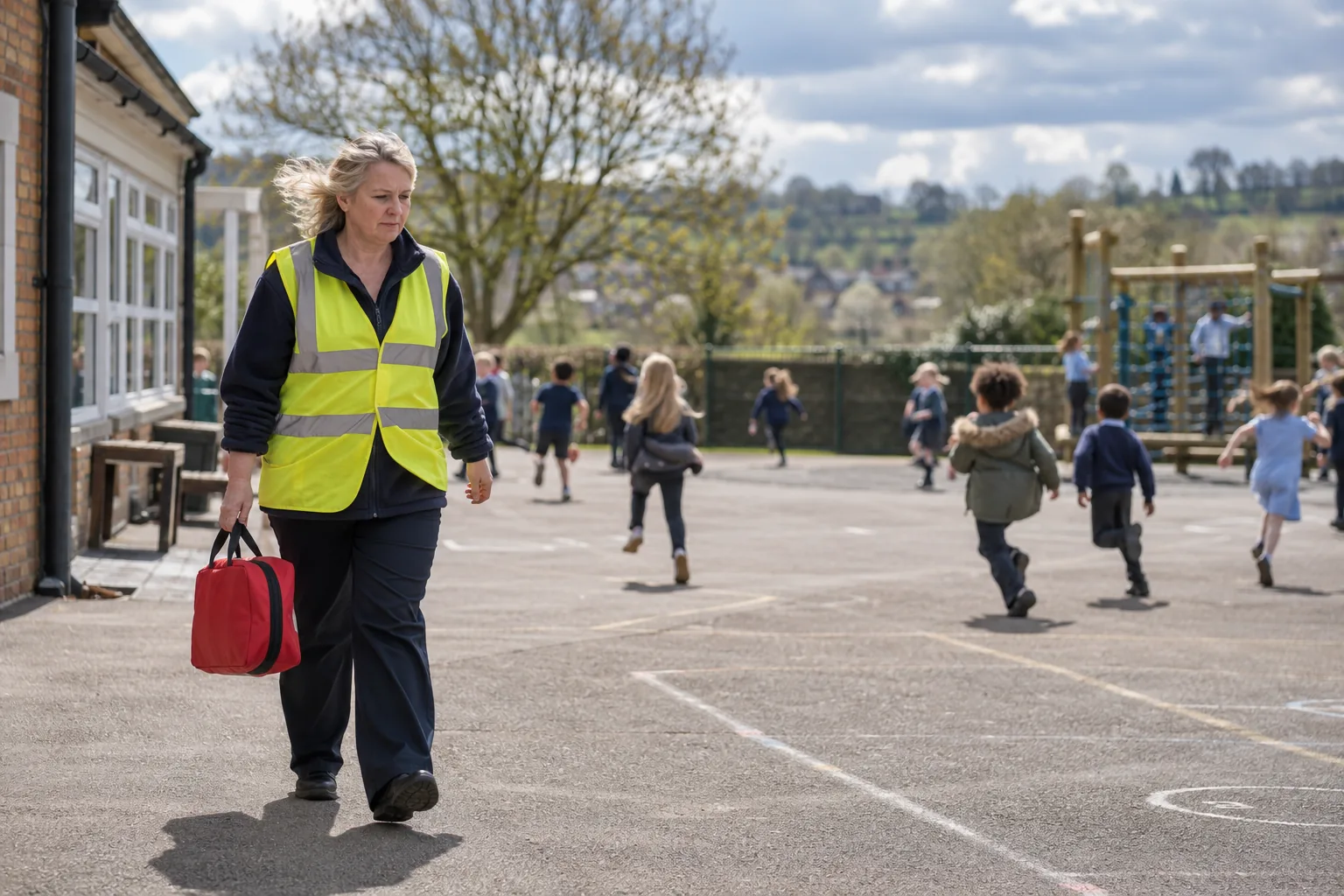
Every registered nursery and pre-school in England must keep a written record of accidents, injuries and first aid treatment to children, under paragraph 3.78 of the Early Years Foundation Stage (EYFS) statutory frameworks published by the Department for Education, dated 13 July 2026 and in force from 1 September 2026. The paragraph says: “Providers must keep a written record of accidents or injuries and first aid treatment. Providers must inform parents and/or carers of any accident or injury sustained by the child on the same day as, or as soon as reasonably practicable after, and of any first aid treatment given.” It also requires “a first aid box with appropriate items for use on children” to be “always accessible”.
Paragraph 3.79 adds the notification duty. Registered providers “must notify Ofsted, or the CMA with which a provider of CoDP is registered, of any serious accident, illness, or injury to, or death of, any child while in their care, and of the action taken”. That must be done “as soon as is reasonably practicable, but in any event, within 14 days of the incident occurring”, and a provider who fails to do so “without reasonable excuse” commits an offence. Providers must also notify local child protection agencies of any serious accident or injury to, or the death of, any child in their care, “and must act on any advice from those agencies”.
The people who give first aid are part of the same section. Paragraph 3.37 requires at least one person with a current paediatric first aid certificate to be “on the premises and available at all times when children are present” and to go on outings, with the training renewed every three years. Annex A sets the course criteria, and they include “how to record accidents and incidents”: writing the entry is part of the first aider's training, not an afterthought.
Childminders have the same duties under their own framework, at paragraph 3.77 (the record and telling parents) and 3.78 (Ofsted or the childminder agency within 14 days, and local child protection agencies). Other numbers differ by one or more – paediatric first aid is 3.42 and records are 3.94 to 3.97 in the childminder framework – so this guide uses the group framework's numbers throughout; the childminder record-keeping guide has the childminder view. The 2026 frameworks did not change the wording of the accident paragraphs, but they renumbered them: in the 2025 group framework they were 3.77 and 3.78, paediatric first aid was 3.36 and the records paragraphs were 3.92 to 3.95, so a policy that cites those numbers needs updating. The Department for Education's change note lists the main changes as “updates on safer sleep, a requirement for providers to have regard to screen use, prohibiting childcare where banned dog breeds are present and other safeguarding clarifications”.
What each accident record entry should include
The EYFS sets no field list and no form for the accident record. The nearest official model is in the Department for Education's non-statutory guidance First aid in schools, early years and further education, which employers “should have regard to”. Its section for schools and colleges says the record should be readily accessible and that details recorded should include:
- the date, time and place of the incident
- the name of the injured or ill person
- details of the injury or illness
- details of what first aid was given
- what happened immediately after the incident, “for example, went home, went back to class, went to hospital”
- the name and signature of the first aider or person dealing with the incident
That list was written for schools, but it is a sound base for a nursery accident form. Add the things the EYFS makes you do and that you will be asked about later:
- Telling the parent: when, how and by whom the parent or carer was told, and what they were told about first aid, because 3.78 requires it on the same day or as soon as reasonably practicable after.
- Who saw it: the names of staff who witnessed the accident, or a note that nobody did and how it was found.
- How it happened: where the child was, what they were doing and any equipment involved, in plain and neutral words.
- What changed later: swelling that appeared, a call from the parent that evening, a visit to a GP, each added as a dated note by the person who learned of it.
- Where it went next: whether Ofsted, local child protection agencies or the enforcing authority under RIDDOR were notified, and when.
Describe, do not diagnose. “A red raised mark about 2cm across above the left eyebrow; she cried for about a minute and went back to the sand tray” will still be useful in three years; “minor bump” or “concussion” will not. Write what was seen and done, by whom and when, sign it, and add any later information as a new dated note rather than changing the original. Keep one child to an entry.
An injury caused by another child – a bite, a push, a scratch – is recorded like any other. Keep the other child's name out of the injured child's entry where you can, and do not tell one family the name of the child who hurt theirs: parents can ask to see the records about their own child (3.97, subject to Data Protection Act exemptions), and the other child's details belong in that child's records. Many settings write an accident and incident policy and keep a separate incident form for near misses, such as a gate found open or a fall with no injury. That is good practice for spotting hazards, though 3.78 itself names only accidents, injuries and first aid treatment. A bound accident book, printed forms in a binder or software all satisfy the duty; Ofsted's inspection information expects records to be available “either online or in printed form”.
Telling parents the same day, and whether they must sign
Paragraph 3.78 requires providers to inform parents and/or carers of any accident or injury “on the same day as, or as soon as reasonably practicable after”, and of any first aid treatment given. The same day is the rule; “as soon as reasonably practicable after” covers the day when a parent genuinely cannot be reached, not a habit of mentioning it at the next session. The parent should hear about every accident and every plaster, not only the ones that look serious. Where a child needs medical attention beyond first aid, or an ambulance is called in an emergency, most settings phone the parent at once rather than wait for collection, and the entry should record the time of that call.
No primary source requires a parent to sign the accident form. Many settings ask the parent to sign or initial the entry at collection, and that is a sensible way to show they were told, but the legal duty is to inform. When a grandparent, a neighbour or another adult collects, or a parent leaves in a hurry, phone or message the parent the same day and record when, how and who made the contact. If a parent wants to add to or disagree with the account, paragraph 3.95 says providers should, if requested, “incorporate parents' and/or carers' comments into children's records”.
Head bumps get their own routine in most settings: a phone call to the parent straight away and a head injury advice sheet sent home. No EYFS paragraph requires either – the framework's only reference is the paediatric first aid criterion on helping a baby or child with “head, neck or back injuries” – but it is common practice, and your accident and first aid policy should say what yours is so that every practitioner does the same thing.
When an accident goes further: Ofsted, child protection and RIDDOR
Only serious accidents go to Ofsted. Ofsted's guidance Childcare: reporting children's accidents and injuries lists what you must tell it about, including anything that requires resuscitation, admittance to hospital for more than 24 hours, a broken bone or fracture, dislocation of any major joint “such as the shoulder, knee, hip or elbow”, any loss of consciousness, severe breathing difficulties including asphyxia, hypothermia or heat-induced illness, any loss of sight, a penetrating injury or a chemical or hot metal burn to the eye, and any injury from, or medical treatment needed after, absorbing a substance, an electric shock or electrical burn, or exposure to a harmful substance, biological agent, toxin or infected material. Minor injuries – insect bites without an allergic reaction, sprains, strains and bruising, cuts and grazes, minor burns and scalds, dislocation of minor joints such as a finger or toe, and wound infections – are not notified. “However, you must tell Ofsted if the minor injury needs to be treated at a hospital for more than 24 hours.”
Notification is through Ofsted's online form, which its page Report a serious childcare incident asks you to submit “as soon as possible but always within 14 days”; the legal test remains 3.79's “as soon as is reasonably practicable, but in any event, within 14 days”. The same page lists food poisoning affecting at least two children. The guide to notifying Ofsted covers every notifiable event and the log to keep. Paragraph 3.79 also requires serious accidents and injuries to be notified to local child protection agencies, whose advice you must act on; your local safeguarding partnership's procedures say who that is.
RIDDOR applies to a child in two narrow cases: a work-related accident that kills the child, or one after which the child is taken to hospital for treatment. Under regulation 5 of the Reporting of Injuries, Diseases and Dangerous Occurrences Regulations 2013, where a person not at work suffers an injury “as a result of a work-related accident” and “is taken from the site of the accident to a hospital for treatment in respect of that injury”, the responsible person must follow the reporting procedure; under regulation 6 of RIDDOR the same applies “where any person dies as a result of a work-related accident”. The Health and Safety Executive's guidance Incident reporting in schools (EDIS1) gives the test: “whether the accident was caused by the condition, design or maintenance of the premises or equipment, or because of inadequate arrangements for supervision of an activity”. Normal rough and tumble is not reportable, examinations and diagnostic tests “do not constitute treatment”, a child taken to hospital purely as a precaution with no apparent injury is not reportable, and a deliberate bite, push or hit by another child (EDIS1: “Violence between pupils is a school discipline matter and not reportable under RIDDOR”), or a medical condition such as an asthma attack, is not a RIDDOR matter.
A reportable injury must be notified “by the quickest practicable means without delay” and reported within 10 days, under Schedule 1 to RIDDOR. For most private and voluntary nurseries the enforcing authority is the local authority, under Schedule 1 to the Health and Safety (Enforcing Authority) Regulations 1998 (“the provision of child care, or playgroup or nursery facilities”), but you do not need to work that out: EDIS1 says “You can report all incidents online”, through HSE's RIDDOR service. The school accident book guide covers RIDDOR for staff and pupils in more depth.
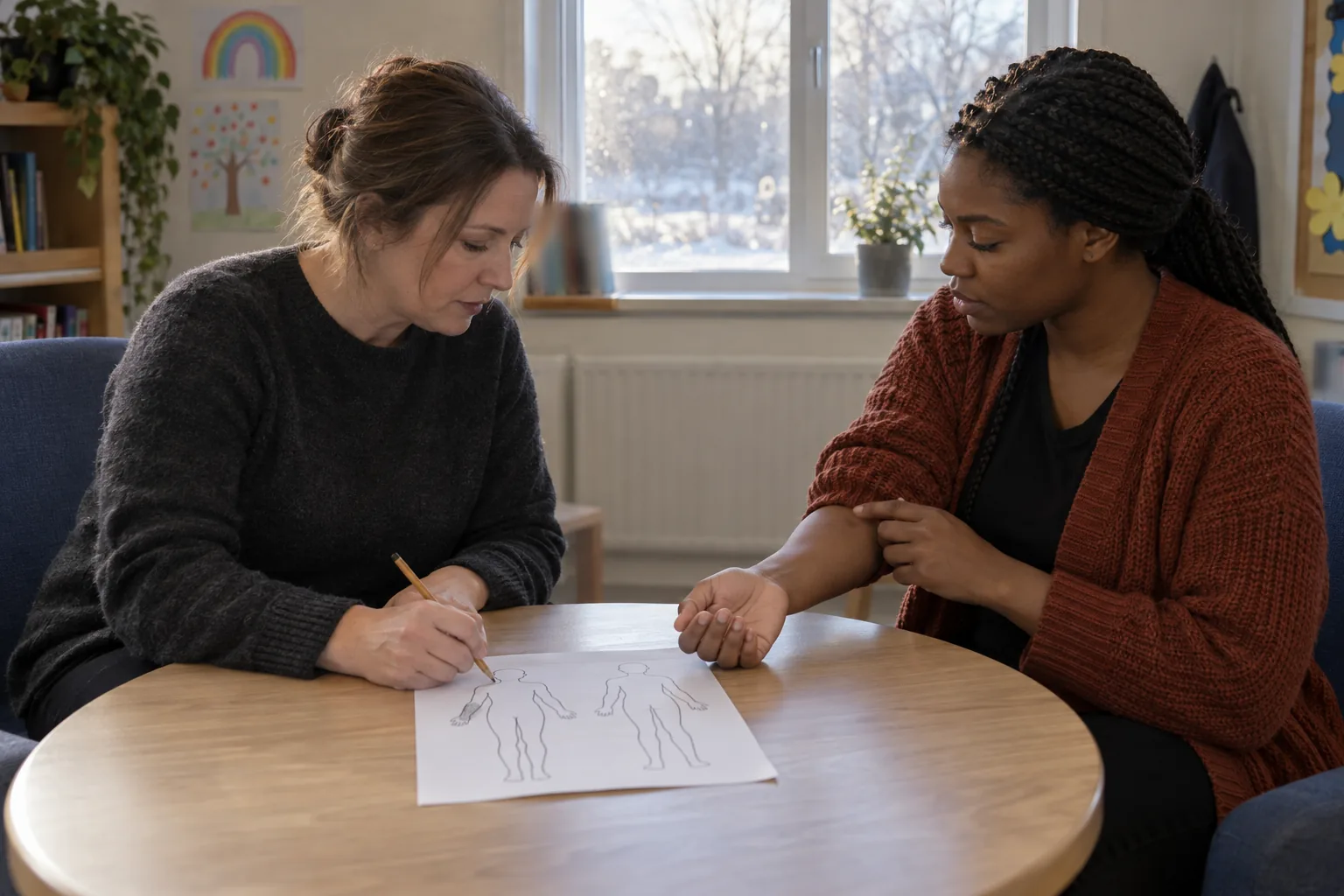
Some injuries are not accidents at the setting. An injury a child arrives with is recorded separately, usually on an existing injury form, not in the accident record; the body map guide covers how. If that injury, or any injury whose explanation does not fit, raises a concern about the child's safety or welfare, paragraph 3.9 says providers “must immediately notify their local authority children's social care team”. If an accident leads to an allegation that someone at the setting harmed the child, paragraph 3.10 applies separately; since 1 September 2026 it covers allegations of “harm” rather than “serious harm”, and the EYFS safeguarding and welfare guide sets it out.

The staff accident book, who can see the record and how long to keep it
Staff injuries need a separate record. Under regulation 25(3) of the Social Security (Claims and Payments) Regulations 1979, every employer by whom 10 or more people are “normally employed at the same time on or about the same premises in connection with a trade or business carried on by the employer” must keep readily accessible a means of recording accidents causing personal injury to employees, “whether in a book or books or by electronic means”, and must preserve every entry for at least three years. Schedule 4 to the 1979 Regulations sets the particulars: the injured person's full name, address and occupation; the date and time; the place; the cause and nature of the injury; and the name, address and occupation of the person giving the notice, if other than the injured person. Regulation 25(1) also requires the employer to investigate each accident reported to it.
HSE publishes an Accident Book (BL510) for this purpose. The Department for Education's first aid guidance says the first aid record it recommends for schools and colleges “is not the same as the statutory accident book”, although schools and colleges can choose to combine them. A nursery with fewer than 10 staff on the premises at the same time may not need the staff book, but it still needs the EYFS record for children. Whatever its size, an employer must keep a record of any reportable incident – including an injury to a child under regulation 5 – and of any work injury that keeps a member of staff from their routine work for more than three consecutive days, not counting the day of the accident, for at least three years under regulation 12 of RIDDOR.
A child's accident entry is health data, a special category of personal data under Article 9 of the UK GDPR. Paragraph 3.96 says records “must be easily accessible and available (these may be kept securely off the premises)”, and that confidential records about children must be held securely and be available only “to those who have a right or professional need to see them”. Paragraph 3.97 gives parents access to all records about their own child, subject to Data Protection Act exemptions. The GDPR guide for nurseries covers the rest.
There is no statutory retention period for a child's accident record. Paragraph 3.98 says records relating to individual children “must be retained for a reasonable period of time after they have left the provision”, and its footnote leaves it to individual providers to decide how long. The three-year minimums belong to the staff book and RIDDOR records. The reasoning for keeping a child's injury record longer comes from the Limitation Act 1980: a personal injury claim normally has a three-year limit (section 11), but a child is treated as “under a disability” while an infant (section 38(2)), and the three years run from the date they cease to be, under section 28 – so a claim for an injury at nursery can usually be brought until the child is 21. Set your period, write it in your retention policy and apply it; the nursery record-keeping guide covers how to decide one.
The record is also evidence that the setting learns. Ofsted's early years inspection information lists “records of accidents” among the documents inspectors may need to see, and the Department for Education says a first aid record “will help identify trends in accidents and areas for improvement”. A monthly read of the entries – the same corner of the garden, the same piece of equipment, the same time of day, the same handover – turns a pile of forms into a risk assessment.
The first account of a bump is usually a message
The accident record is a form, but the first account of most accidents is a message. A room leader texts the manager from the garden that a toddler has caught her head on the climbing frame. An agency practitioner who saw it says so in the staff group chat before her shift ends. The parent who collected in a hurry messages the key person at eight that evening to say their child seems sleepy, and asks what happened. The manager replies the next morning.
Those messages show what the accident record is meant to show: when the setting knew, what was seen and when the parent was told – the same-day duty in 3.78. If they sit on staff members' personal phones, the setting may not be able to produce them when a parent questions the account, when Ofsted asks about a serious injury, or when a claim arrives years later. When the agency practitioner moves on, her account of what she saw moves with her.
ComplyChat is built for the work conversations a setting needs to keep. On paid plans, staff, and parents added by their mobile number, talk in channels the setting controls, everyone added is told the channel is on the record, and once the setting's Microsoft 365 tenant is connected, conversations are kept within its own Microsoft 365 subscription, under the retention schedules it already runs. It is not an accident book or a first aid log, it does not notify Ofsted or report under RIDDOR, and the entry itself still belongs in your accident record. The question for the next staff meeting: if a parent asked in three years when the setting first told them about a bump to their child's head, could you show the message?
Questions people ask
Is an accident book a legal requirement for a nursery?
Yes, for children: paragraph 3.78 of the EYFS framework requires every registered nursery and pre-school in England to keep a written record of accidents or injuries and first aid treatment (3.77 for childminders). A nursery employer with 10 or more people normally employed at the same time on or about the same premises, in connection with a trade or business it carries on, must also keep an accident book for staff injuries, in a book or electronically, under regulation 25(3) of the Social Security (Claims and Payments) Regulations 1979, and keep each entry for at least three years.
What information should the accident book include?
For a child, the EYFS sets no field list; the Department for Education's non-statutory first aid guidance gives a model of the date, time and place, the child's name, details of the injury, the first aid given, what happened immediately after, and the name and signature of the person who dealt with it. Add when, how and by whom the parent was told, because 3.78 requires that on the same day, or as soon as reasonably practicable after. For a staff member, Schedule 4 to the 1979 Regulations sets the injured person's name, address and occupation, the date, time and place, the cause and nature of the injury, and the person giving the notice if not the injured person.
How long after an accident should you report it?
Parents must be told on the same day as, or as soon as reasonably practicable after, the accident (EYFS 3.78). A serious accident, illness or injury goes to Ofsted or the childminder agency as soon as reasonably practicable and in any event within 14 days (3.79). A RIDDOR-reportable accident to a child – a work-related accident that kills the child, or after which the child is taken from the site to hospital for treatment – must be notified without delay and reported within 10 days.
What are the correct procedures for recording and reporting accidents and injuries in early years?
Give first aid (a paediatric first aider must be on the premises and available whenever children are present, and on outings, 3.37), write the record promptly while details are fresh, tell the parent the same day and record that you did. Then decide whether the injury is serious enough for Ofsted and local child protection agencies (3.79 and Ofsted's list) and whether RIDDOR applies. Ofsted inspectors may ask to see the records of accidents.
When must an entry be made in the accident book?
For a child, the EYFS sets no deadline for the entry itself, but parents must be told the same day (3.78), so most settings write it up the same day while the details are fresh. For a member of staff, regulation 24 of the Social Security (Claims and Payments) Regulations 1979, at paragraph (3), says an entry in the accident book made “as soon as practicable after the happening of an accident” is sufficient notice of the accident to the employer.
Can an accident book be online?
Yes. The 1979 Regulations allow the staff accident record to be kept “in a book or books or by electronic means”, and the EYFS says records must be easily accessible and available and may be kept securely off the premises, with confidential records available only to those with a right or professional need to see them (3.96).
Official guidance and your next step
The duties are in section 3 of the EYFS statutory frameworks. Ofsted's guidance on reporting children's accidents and injuries lists what is serious, and the Department for Education's first aid guidance has the model record. For RIDDOR, read HSE's EDIS1. Quotations are from the pages linked in this guide, including legislation.gov.uk, as published on 21 October 2026.
This guide covers the EYFS in England and is not legal or medical advice. Wales, Scotland and Northern Ireland have their own early years standards and regulators, and the 1979 staff accident book duty and RIDDOR are Great Britain rules.
Then do one thing: take the last ten entries in your accident record and check each one says when, how and by whom the parent was told. Any entry that does not is the first gap to close in your procedure this week.
We build ComplyChat for the work conversations organisations need to keep, and in early years the first word of an accident, and the conversation with the parent afterwards, often happens by message. Explore Free personal messaging, or compare the paid plans if your setting needs to meet its retention schedules within its own Microsoft 365 subscription.
Sources
Every document this guide quotes or links to, in the order it first cites them.
- Early Years Foundation Stage (EYFS) statutory frameworks gov.uk
- First aid in schools, early years and further education gov.uk
- Childcare: reporting children's accidents and injuries gov.uk
- Report a serious childcare incident gov.uk
- Reporting of Injuries, Diseases and Dangerous Occurrences Regulations 2013 legislation.gov.uk
- Regulation 6 of RIDDOR legislation.gov.uk
- Incident reporting in schools (EDIS1) hse.gov.uk
- Schedule 1 to RIDDOR legislation.gov.uk
- Schedule 1 to the Health and Safety (Enforcing Authority) Regulations 1998 legislation.gov.uk
- Social Security (Claims and Payments) Regulations 1979 legislation.gov.uk
- Schedule 4 to the 1979 Regulations legislation.gov.uk
- Accident Book (BL510) hse.gov.uk
- Regulation 12 of RIDDOR legislation.gov.uk
- Article 9 of the UK GDPR legislation.gov.uk
- Limitation Act 1980 legislation.gov.uk
- Early years inspection information gov.uk
- Regulation 24 of the Social Security (Claims and Payments) Regulations 1979 legislation.gov.uk