Those sources are blunter than most model policies suggest. Anyone who gives a child intimate or personal care is in regulated activity even if they do it once. The EYFS has required since September 2025 that a child's privacy is balanced with safeguarding when nappies are changed. KCSIE names the need for intimate care as one of the barriers to recognising abuse of children with special educational needs and disabilities. And since 1 September 2026, supervision no longer takes a regular volunteer out of regulated activity. This guide maps each requirement to its source, separates law from guidance and good practice, and sets out what the policy, the individual plan and the record of care should contain.
Where the rules come from: four sources, no single Act
No Act of Parliament requires a school or nursery in England to have a document called an intimate care policy; the rules it must reflect sit in four places, and paragraph 3.5 of the EYFS statutory framework for group and school-based providers says schools “are not required to have separate policies to cover EYFS requirements provided the requirements are already met through an existing policy.” Most settings still write one, because the rules are scattered and staff need them in one place. Intimate care here means physical help a child needs because of age, illness or disability with toileting (including menstruation), nappy changing, continence, washing and dressing. Many model policies define intimate care as care which involves washing, touching or carrying out a procedure on intimate or private parts of the body, and call help with dressing and undressing or washing non-intimate body parts personal care. The law draws no such line: the regulated activity definition below covers both.
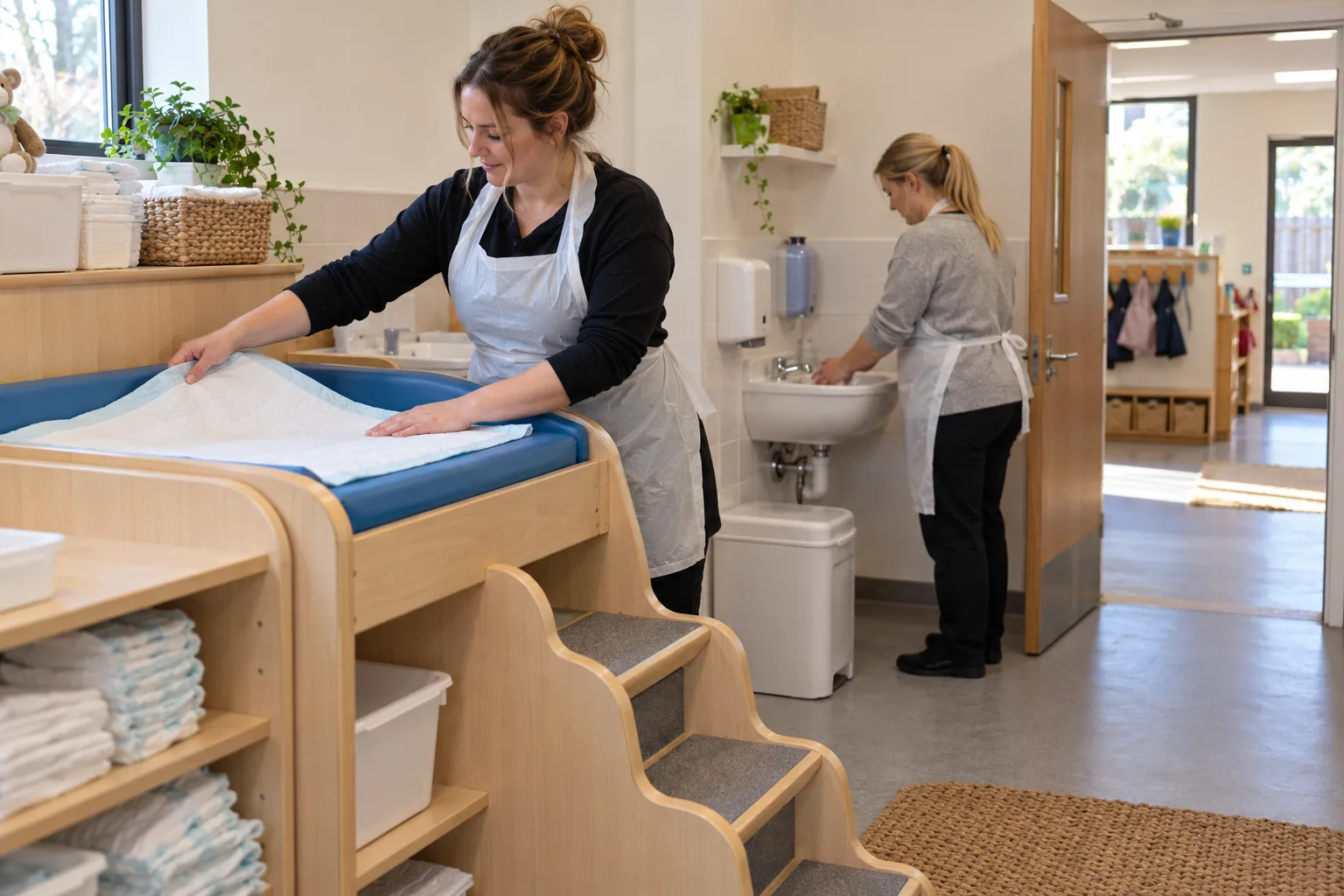
- The EYFS (law for early years providers). Paragraph 3.88 of the group and school-based framework in force from 1 September 2026 says “Providers must ensure”, among other things: “There are suitable hygienic changing facilities for changing any children who are in nappies. Children's privacy is considered and balanced with safeguarding and support needs when changing nappies and toileting. There is an adequate supply of clean bedding, towels, spare clothes, and any other necessary items.” The privacy sentence first appeared in the framework effective from 1 September 2025 (then paragraph 3.86) and was renumbered in 2026. Paragraph 3.87 of the EYFS statutory framework for childminders carries the same requirement. It binds nursery and reception classes in schools as well as nurseries, pre-schools and childminders.
- The Safeguarding Vulnerable Groups Act 2006 (law). Schedule 4, Part 1, paragraph 1 makes “relevant personal care” regulated activity relating to children, which includes “physical assistance which is given to a child who is in need of it by reason of age, illness or disability and is given in connection with: (i) toileting (including in relation to the process of menstruation), (ii) washing or bathing, or (iii) dressing”, along with prompting and supervising a child who cannot decide to do those things alone. Unlike teaching or supervising children, it carries no frequency condition.
- Keeping children safe in education 2026 (statutory guidance for schools). KCSIE 2026, in force from 1 September 2026, names the need for intimate care as one of the barriers to recognising abuse of children with SEND or certain medical or physical health conditions (paragraph 249), restates the regulated activity rule (paragraph 317) and gives working one-to-one behind a closed door as an example of a low-level concern (paragraph 509).
- Supporting pupils with medical conditions (statutory guidance for schools). Section 100 of the Children and Families Act 2014 requires governing bodies of maintained schools, proprietors of academies and management committees of pupil referral units to make arrangements to support pupils with medical conditions, and the DfE's Supporting pupils at school with medical conditions (December 2015) is the guidance they must have regard to. It governs continence and other care that arises from a medical condition. It does not apply to nurseries: “Early years settings should continue to apply the Statutory Framework for the Early Years Foundation Stage.”
Infection control comes from a fifth, advisory source, the UK Health Security Agency, covered in section 05. Childminders registered only on the Early Years Register, or with an early years childminder agency, need not write their policies down, but under paragraph 3.6 of their framework they “must be able to explain” them, so a childminder's intimate care arrangements can be spoken rather than written – they cannot be absent.
What an intimate care policy should cover
Because no statute lists the contents, an intimate care policy is a set of decisions the setting makes and writes down so that every adult gives care the same way. The sources above fix some of those decisions; the rest are the setting's to make, and a good policy says which is which. In practice it should settle:
- Who gives care. Named, trained members of staff with an enhanced DBS check including the children's barred list, because intimate care is regulated activity. The policy should say what happens with students, apprentices, agency staff and volunteers (section 04), and which named member of staff covers when the trained adult is absent.
- Where. A designated changing area that is private but not secluded, so that the privacy EYFS 3.88 requires is balanced with the safeguarding it also requires. Many settings use a screened area within sight or earshot of other staff, or a door left ajar.
- How many adults. No primary source requires two adults. Insisting on two can cost a child privacy; one adult alone behind a closed door is what KCSIE lists as a possible low-level concern. Most policies have one adult give care and make sure another member of staff is aware when and where it is happening. Whatever the setting decides, the policy should say so plainly.
- Dignity and the child's voice. Treating every child with dignity and respect: explaining what is about to happen, asking the child's permission in a way that suits their age, stage of development and understanding, letting them do as much as they can for themselves, helping them learn that their body belongs to them, and working towards independence. The policy should also say how the setting responds to a family's cultural or religious wishes and to a child's preference about who helps them.
- Menstruation. Spare sanitary wear, discreet disposal and who an older pupil can ask – care that the SVGA definition expressly includes.
- Devices. EYFS paragraph 3.6 requires safeguarding policies to include “How mobile phones, cameras and other electronic devices with imaging and sharing capabilities are used in the setting.” An intimate care policy should state that no personal device is used or carried in a changing area.
- Plans, hygiene, recording and parents. When a child needs an individual plan (section 03), the hygiene routine (section 05), what is written down each time, and how parents are told.
- Reporting concerns. What a member of staff does if they see a mark, if a child says something, or if they are uneasy about a colleague's practice – the setting's safeguarding procedure, not a separate one, and which senior member of staff they tell.
1. Purpose and scope (which children, which tasks, which places, including trips) · 2. Legal basis (EYFS 3.88 or childminder 3.87, KCSIE 2026, SVGA 2006 Schedule 4, the medical conditions guidance for schools) · 3. Staff: checks, training, named carers and cover · 4. The changing area and equipment · 5. Giving care: privacy, the child's voice, independence, culture and religion · 6. Individual intimate care plans · 7. Hygiene and protective equipment · 8. Devices · 9. Recording and communication with parents · 10. Safeguarding concerns and allegations · 11. Review date and owner
Your local authority or safeguarding partnership may publish a model intimate care policy to adapt; check it against the 2026 sources, since many predate KCSIE 2026 and the September 2026 EYFS frameworks.
The individual intimate care plan
The policy sets the rules for everyone; an individual intimate care plan records what one child needs. Settings usually write one when a child needs care beyond the routine for their age: a child not yet toilet trained at school age, a child with a continence condition, a child with a learning disability or other additional needs, a pupil with a medical condition, or an older child who needs help with menstruation. It is agreed with the parents or carers and, wherever possible, with the child, and it records the child's intimate care needs: what help is given, by whom, with what equipment, any moving and handling risk assessment where the child needs lifting or a hoist, what the child can do for themselves, how they communicate discomfort or refusal, and what to tell parents and carers each day.
In schools, where the need comes from a medical condition, the plan is an individual healthcare plan. The medical conditions guidance says governing bodies should make sure the school's policy covers the role of individual healthcare plans and who develops them (paragraph 12), and that plans are “reviewed at least annually, or earlier if evidence is presented that the child's needs have changed” (paragraph 13). Its non-statutory advice adds that plans “should be drawn up in partnership between the school, parents, and a relevant healthcare professional, e.g. school nurse, specialist or children's community nurse or paediatrician”, that “Pupils should also be involved whenever appropriate”, and that where the child has an education, health and care (EHC) plan “the individual healthcare plan should be linked to or become part of” it. A school can fold the intimate care plan into the healthcare plan rather than keep two documents.
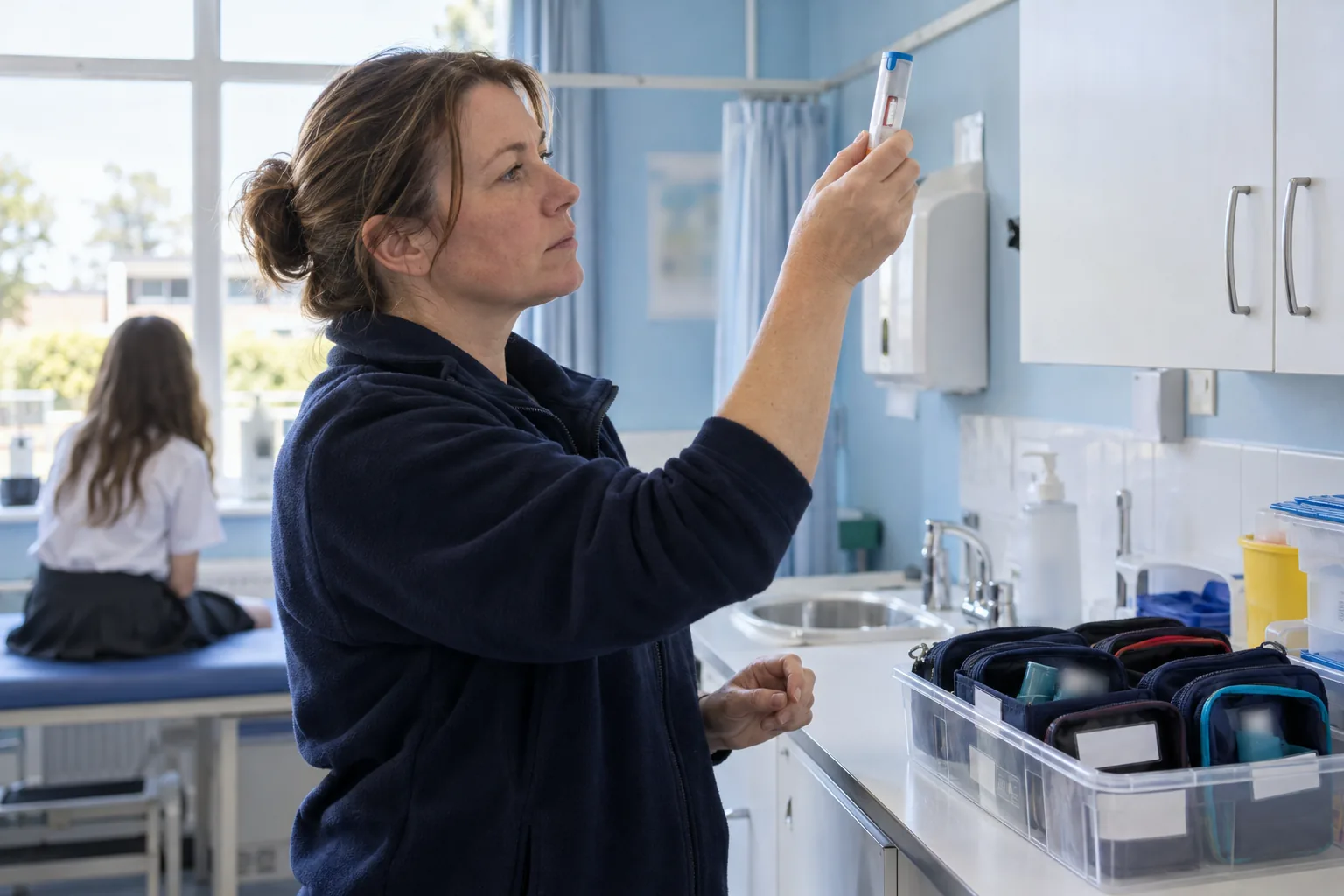
Clinical procedures are not routine intimate care. Inserting a suppository, catheterisation, stoma care and similar procedures need training agreed with a healthcare professional and belong in the healthcare plan. Paragraph 18 of the guidance says the school's policy should be clear that any member of staff supporting a pupil with medical needs “should have received suitable training”; its advice says the relevant healthcare professional “should normally lead on identifying and agreeing with the school the type and level of training required” and that “A first-aid certificate does not constitute appropriate training in supporting children with medical conditions.” Health care given by or under the direction of a health care professional is itself regulated activity under Schedule 4. Early years settings apply the EYFS instead of the DfE guidance, and it has no equivalent rule on care plans: its nearest requirement is that staff “must have training if the administration of medicine requires medical or technical knowledge” (paragraph 3.61). In practice a nursery agrees the plan, and any training a clinical procedure needs, with the parents and the health professional involved.
Review the plan regularly – in schools, at least annually where it is a healthcare plan – and whenever the child's needs change, after any incident or concern, and when the named staff change, and keep it where the adults who give the care can read it without it being on open display.
Safeguarding: regulated activity, vulnerability and staff
Regulated activity, even once. KCSIE 2026 paragraph 317 says a person is in regulated activity if they, among other things, “engage in intimate or personal care or healthcare or any overnight activity, even if this happens only once.” Its regulated activity box adds that personal care “includes helping a child with eating and drinking for reasons of illness or disability or in connection with toileting, washing, bathing and dressing for reasons of age, illness or disability”. A person barred from working with children must not do it, and schools and early years providers obtain an enhanced DBS check with a children's barred list check for anyone who does. The EYFS adds that providers “must not allow individuals to begin working or volunteering at the setting until they have received the applicant's enhanced criminal records and barred list check” (paragraph 3.17).
Volunteers since 1 September 2026. Section 139 of the Crime and Policing Act 2026 (commenced by SI 2026/939) removed every supervision exclusion from Schedule 4 to the Safeguarding Vulnerable Groups Act 2006, paid and unpaid: among them paragraph 1(2B)(b) and (2C), which took unpaid work in a school, nursery or other establishment listed in the Schedule out of regulated activity when it was under regular day-to-day supervision, and paragraph 2(3A), (3B)(b) and (3C), which did the same for supervised teaching, care and supervision of children. Relevant personal care was already regulated activity whatever the supervision or frequency, so the change does not alter who may give intimate care; it widens the checks on the adults around it. The EYFS's only exception is for “supervised volunteers who only help out occasionally, such as parents or carers helping out on a trip (but not overnight or if providing personal care)” (footnote 20). A parent helper, student or work-experience pupil without the checks should never be the adult who changes a child. If your policy still links to the DfE's separate advice on the scope of regulated activity, update it: the DfE removed that advice from the KCSIE publication page on 1 September 2026 pending an update, so cite Schedule 4 and KCSIE 2026 instead.
Why intimate care is a safeguarding matter. Children who need intimate care are particularly vulnerable, and KCSIE paragraph 249 says governing bodies and proprietors “should ensure their child protection policy reflects the fact that additional barriers can exist when recognising abuse, neglect and exploitation” in children with special educational needs, disabilities or certain health conditions, including “the need for intimate care or that these children are isolated from others” and that they “are more likely to be dependent on adults for care”. Paragraph 250 adds that reports of abuse involving children with SEND “will therefore require close liaison with the designated safeguarding lead (or a deputy) and the special educational needs coordinator (SENCO)”. The intimate care policy should point to the child protection policy rather than repeat it.
Protecting staff as well as children. KCSIE paragraph 509 gives “engaging with a child on a one-to-one basis in a secluded area or behind a closed door” as an example of conduct that may be a low-level concern. A clear policy is what tells staff, and anyone looking at a concern later, which one-to-one care is expected and how it is made visible: another adult knows it is happening, the door arrangement is the agreed one, and the care is recorded the same day. A member of staff who departs from the plan, or a colleague uneasy about another's practice, raises it under the setting's procedure; an allegation follows the setting's procedure for allegations against staff.
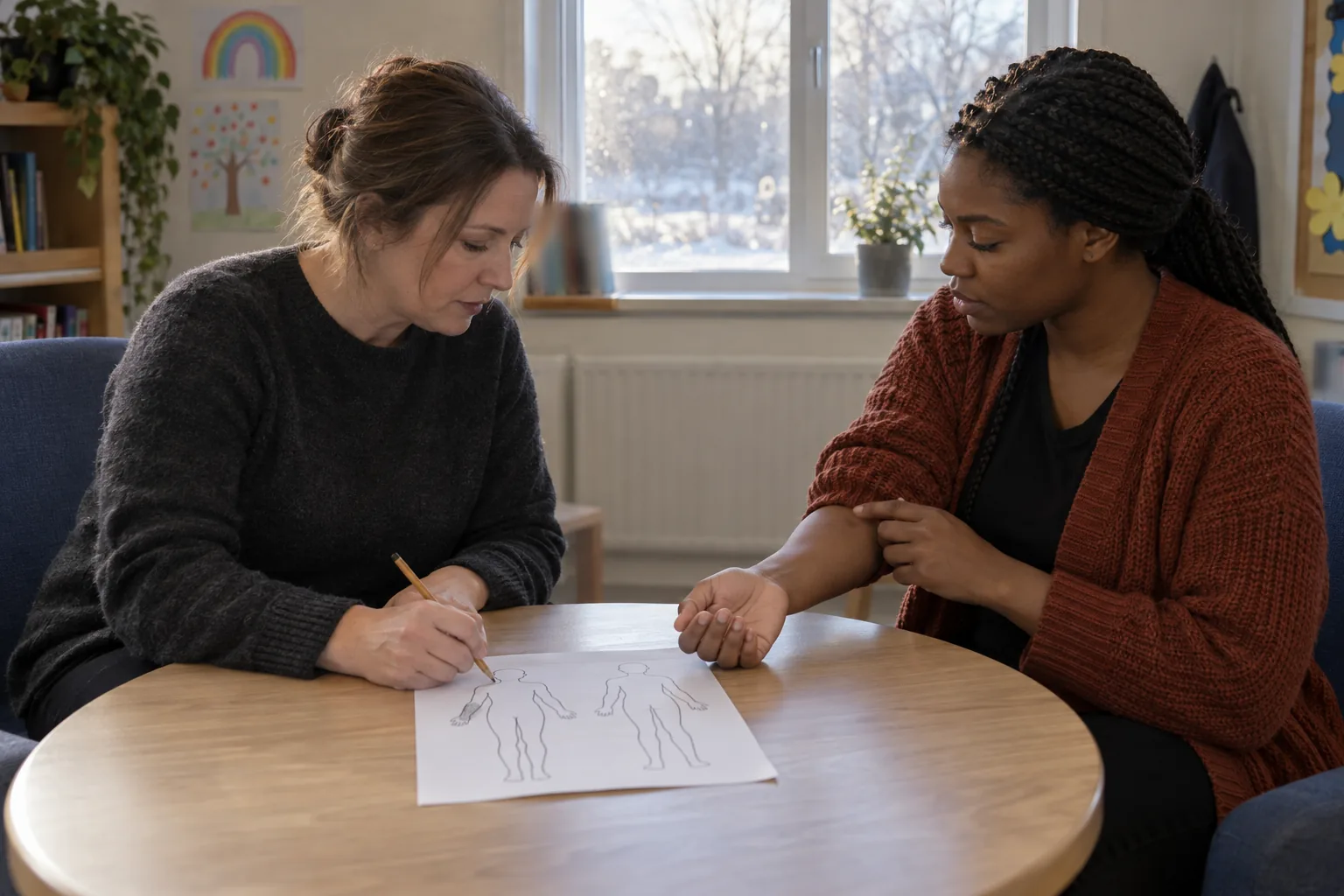
Marks and disclosures. Changing a child is often when a bruise or mark is first seen. Record it as the body map guidance describes, tell the designated safeguarding lead the same day, and in a nursery follow the early years safeguarding records requirements. Do not photograph the mark on a personal phone.
Cameras. As at 28 October 2026 the Government has not decided whether to require CCTV in childcare settings: the DfE said on 22 June 2026 that an independent expert panel is examining it, and the September 2026 EYFS frameworks contain no CCTV requirement.
Hygiene, the record of care and telling parents
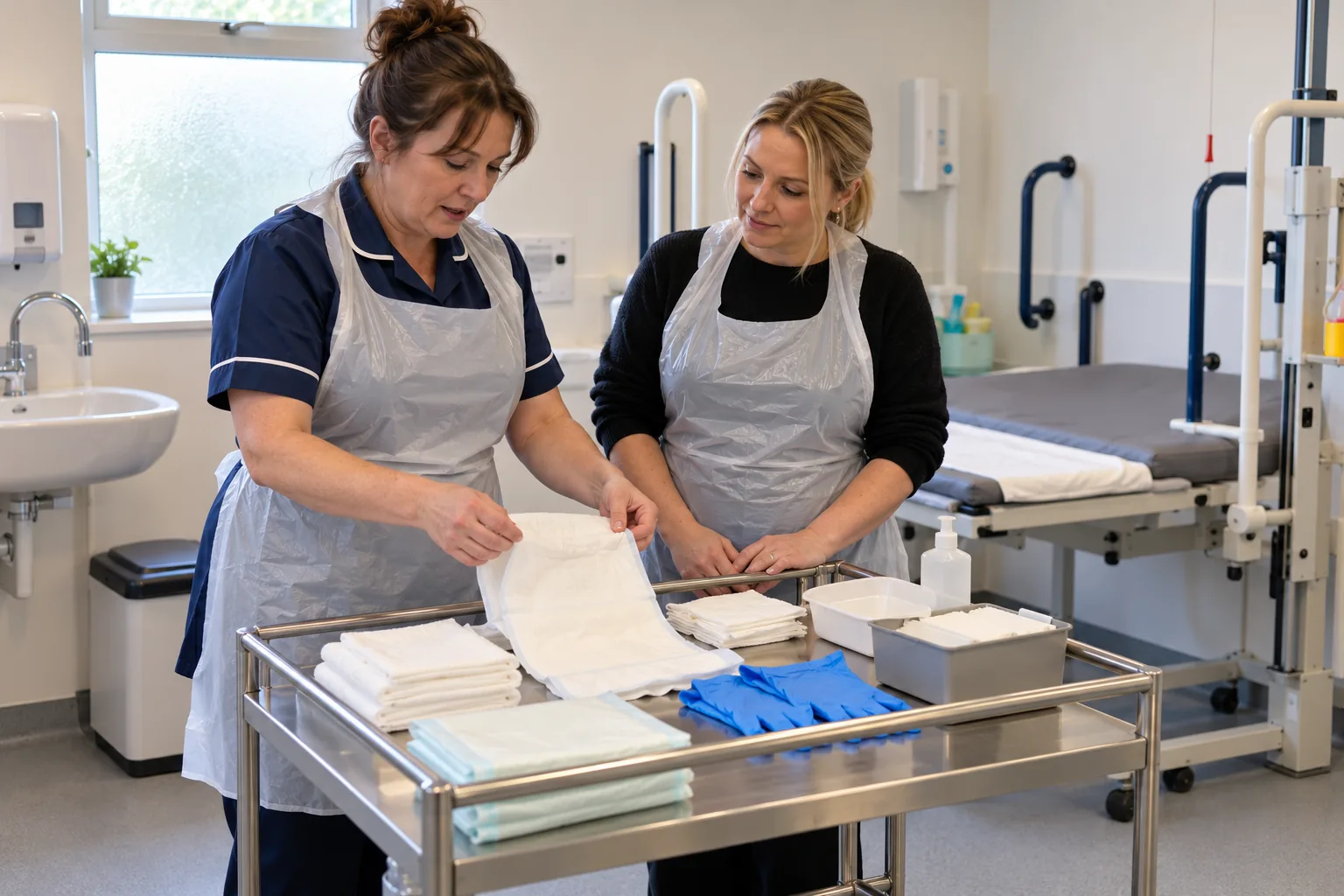
The UK Health Security Agency's Preventing and controlling infections guidance for children and young people's settings (updated 7 September 2026) is advice, not law, but it sets the hygiene routine most intimate care policies adopt:
- “Create a designated changing area for children and young people using nappies”, where possible away from play facilities and anywhere food or drink is prepared or eaten.
- Staff “wash and dry their hands after every nappy change, before handling another child or leaving the nappy changing room”.
- “label nappy creams and lotions with the child's name and do not share with others”.
- “wipe changing mats with soapy water or a mild detergent wipe after each use and at the end of each day”.
- “Change continence pads in a designated area”, with disposable gloves and a disposable plastic apron changed after every child or young person, and encourage children who use continence aids “to be as independent as possible”.
The record of care. No regulation requires a log of every nappy change or toilet visit. Most settings keep one anyway, because it protects the child and the adult and gives parents an accurate picture of the day. A useful entry records the date and time, who gave the care (and who else knew), what was done, any product or cream used, anything unusual – a mark, soreness, distress or a change in the child's behaviour – and what was passed on to parents. Keep it with the child's other records, readable only by those who need it; anything that becomes a safeguarding concern goes to the designated safeguarding lead and into the safeguarding record, not only the care log.
Parents. The policy should say how parents and carers are told about care given during the day, about accidents and changes of clothes, and, as soon as possible, about anything that worried staff. A child who goes home in different clothes with no explanation leaves a parent guessing. Agree with the parents of a child on a plan how they would like to hear, and keep their requests and the setting's replies with the plan.
The messages around intimate care
The care log is kept on paper or in the setting's own system. The conversation about intimate care rarely is. A parent messages the class teacher at eight in the evening asking why her son came home in spare clothes. A teaching assistant texts the SENCO that a child flinched and cried during a change this afternoon. The trained adult is off sick, and cover for the morning's change is agreed in a staff group chat on personal phones.
Each of those messages bears on the duties above. The parent's question and the reply are part of how the setting communicated with the family about the child's care. The assistant's text is the first record of a possible safeguarding concern, and the time it was sent matters. The cover arrangement shows who gave care and whether they were checked and trained to. On a personal phone they belong to nobody: the designated safeguarding lead cannot see them, and the setting cannot produce them if an allegation is made about a change months later.
ComplyChat is designed to keep those conversations on the setting's record. Staff, and parents added by their mobile number, talk in channels the setting controls; a mobile number verified by SMS is an identity, so a parent or a bank member of staff does not need an account on the school's or nursery's systems; messages are recorded on the server as they are sent; and everyone added is told the channel is on the record and can object or leave. On paid plans, once the setting's tenant is connected, conversations are kept under the retention schedules within its own Microsoft 365 subscription. ComplyChat is not a care plan, a daily diary or a safeguarding case management system: the intimate care plan, the care log and the concern record belong in the systems your policy names.
A question for the designated safeguarding lead: if an allegation were made tomorrow about a change last term, could the setting show who gave the care, who else knew, and every message that was exchanged about it?
Questions people ask
What should an intimate care policy include?
An intimate care policy should say who gives care and how they are checked and trained, where care is given, how privacy is balanced with safeguarding, how the child's views and independence are respected, when an individual plan is needed, the hygiene routine, what is recorded and how parents are told, and what staff do with a concern. No statute lists the contents in England; they come from EYFS paragraph 3.88, KCSIE 2026, Schedule 4 to the Safeguarding Vulnerable Groups Act 2006, the DfE's medical conditions guidance and UKHSA's infection control advice, and EYFS 3.5 lets a school meet EYFS requirements through an existing policy.
Is intimate care regulated activity?
Yes. Under Schedule 4 to the Safeguarding Vulnerable Groups Act 2006, relevant personal care – physical help with toileting (including menstruation), washing or bathing, or dressing, given because of a child's age, illness or disability – is regulated activity relating to children, with no frequency condition. KCSIE 2026 paragraph 317 puts it plainly: “even if this happens only once”. A barred person must not do it, and schools and early years providers require an enhanced DBS check with a barred list check for anyone who does.
Do volunteers need a DBS check to help with toileting?
Yes. Personal care is regulated activity whatever the supervision, and the EYFS excludes personal care from its only exception for occasional supervised volunteers. Since 1 September 2026, section 139 of the Crime and Policing Act 2026 has also removed the supervision exclusions from the rest of regulated activity, so regular volunteers in a school or nursery generally need the enhanced check with barred list too.
What is a SENCO's responsibility for personal and intimate care?
KCSIE 2026 names the need for intimate care among the barriers to recognising abuse of children with special educational needs and disabilities (paragraph 249), and says reports of abuse involving those children require “close liaison with the designated safeguarding lead (or a deputy) and the special educational needs coordinator (SENCO)” (paragraph 250). Beyond that, the SENCO's role is set by the school: in practice the SENCO often coordinates the individual plan with parents and health professionals and links it to the child's EHC plan.
Can a school ask parents to come in to change their child?
For a pupil with a medical condition, the DfE says it is not generally acceptable to “require parents, or otherwise make them feel obliged, to attend school to administer medication or provide medical support to their child, including with toileting issues.” That line is non-statutory advice in the DfE's Supporting pupils at school with medical conditions, applies to schools rather than nurseries, and is about medical conditions; the guidance adds that “No parent should have to give up working because the school is failing to support their child's medical needs”.
Can teaching assistants refuse to change nappies?
No law settles it: whether intimate care is part of a teaching assistant's role depends on their job description and contract, and a school should agree it before a child arrives rather than when a change is needed. The DfE's line that staff “cannot be required” to support pupils with medical conditions is non-statutory advice about medical conditions, not age-related toileting.
Official guidance and your next step
The sources are paragraphs 3.5, 3.6, 3.17 and 3.88 and footnote 20 of the EYFS framework for group and school-based providers and paragraphs 3.6 and 3.87 of the childminders' framework (both in force from 1 September 2026); paragraphs 249, 250, 317 and 509 of Keeping children safe in education 2026; Schedule 4 to the Safeguarding Vulnerable Groups Act 2006 as amended on 1 September 2026; the DfE's Supporting pupils at school with medical conditions; and UKHSA's Preventing and controlling infections. Quotations are from those documents as published on 28 October 2026.
This guide covers England, and Schedule 4 also applies in Wales. Northern Ireland has its own Department of Health Intimate Care Policy and Guidelines Regarding Children (2006); Wales and Scotland have their own education guidance, which this guide does not cover. It is not legal advice.
Then do one thing: pick the child in your setting with the most complex care needs and check three things – that every adult who has changed them this term has an enhanced check with barred list, that their plan has been reviewed since their needs last changed, and that their parents could find out from your records what happened at each change.
We build ComplyChat for the work conversations organisations need to keep, and the messages between staff and parents about a child's care are often among them. Explore Free personal messaging, or compare the paid plans if your school or nursery needs to meet its retention schedules within its own Microsoft 365 subscription.
Sources
Every document this guide quotes or links to, in the order it first cites them.
- EYFS statutory framework for group and school-based providers assets.publishing.service.gov.uk
- EYFS statutory framework for childminders assets.publishing.service.gov.uk
- Schedule 4, Part 1, paragraph 1 legislation.gov.uk
- KCSIE 2026 assets.publishing.service.gov.uk
- Supporting pupils at school with medical conditions gov.uk
- KCSIE publication page gov.uk
- Independent expert panel gov.uk
- Preventing and controlling infections gov.uk
- Intimate Care Policy and Guidelines Regarding Children health-ni.gov.uk